

Cleaning Vs. Descaling: What's The Difference?
We may receive a commission on purchases made from links.
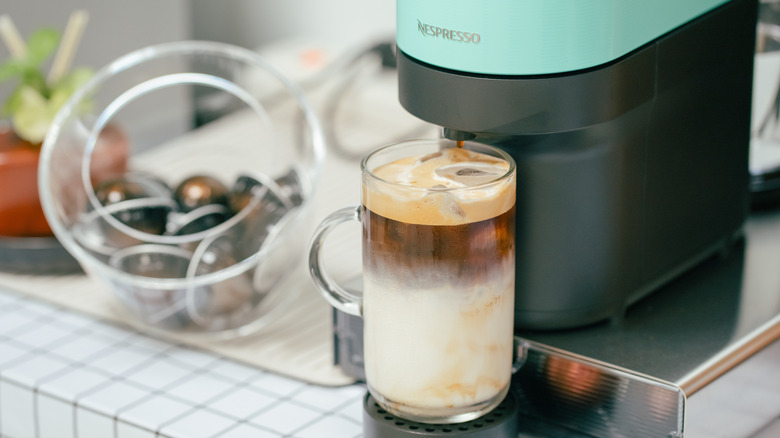
Ever wonder why coffee tastes so much better at a café? If you make your own coffee at home, you've probably heard about descaling your machine — something coffee shops do regularly. It's not the same as cleaning, and both need to be done frequently for a better-tasting brew. In simple terms, cleaning removes oils from the coffee, while descaling gets rid of the hardened mineral deposits left behind by water — something dish soap can't do. But cleaning and descaling isn't exclusive to coffee makers; many appliances need to be cleaned and descaled regularly to function properly.
Routine cleaning typically calls for the same supplies you need for any hand wash job: soap, water, and a soft sponge. A coffee maker is one of those kitchen things you should clean every Sunday, but some of its removable components need attention more often. KitchenAid recommends cleaning its coffee maker's brew basket and carafe daily because stale coffee oils can affect the flavor of a fresh pot.
As for other appliances, the right cleaning schedule depends on what they hold and how often you're using them. For something like an electric kettle, a quick clean after each use should suffice. For an appliance like a humidifier, the Environmental Protection Agency recommends emptying portable humidifier tanks and cleaning them every third day. Similarly, how often you descale your appliances will vary, but there are certain signs that it's time.
When to descale your appliances
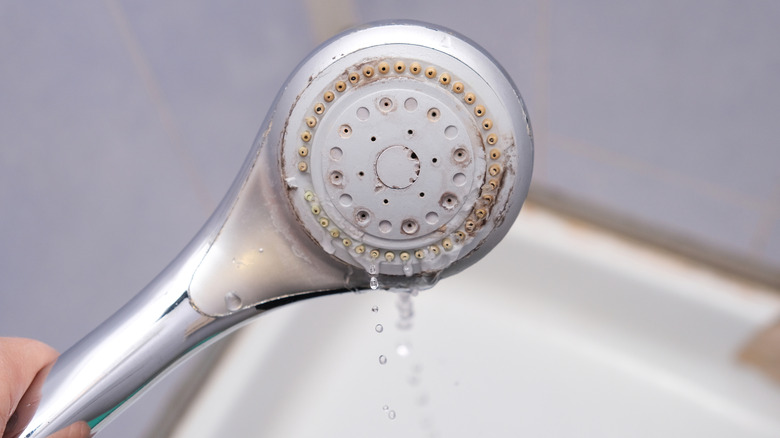
Descaling is needed after dissolved calcium and magnesium in hard water leave a chalky white or gray buildup behind. Knowing how to easily clean and remove these hard water stains is especially useful for appliances and fixtures that repeatedly hold or heat water. The list is long — in addition to coffee makers, things like electric kettles, humidifiers, dishwashers, washing machines, and shower heads will all need descaling at some point. If you notice a white film, reduced water flow, slower brewing, or longer heating times, scale may be accumulating and need to be broken down.
Use the descaler recommended in the product manual if there is one. You may be able to make a homemade coffee descaling cleaner with distilled white vinegar. Run the vinegar through the appropriate cycle, then flush the appliance with fresh water until no vinegar smell remains. The same vinegar may be used on shower glass by adding a few drops of dish soap; just spray the cloudy areas, allow the solution to sit for about 10 minutes, scrub gently, and rinse. Note that vinegar can damage certain glass coatings, and many stones are sensitive to acid. Double-check the materials that make up your shower before scrubbing, and use a smaller brush near any stone to prevent getting the vinegar on it.
There is no universal descaling schedule. KitchenAid suggests monthly descaling as a general coffee-maker guideline, whereas Keurig directs owners of certain models to descale every three months. Just look for that white, scaly buildup or the other signs we mentioned earlier, and you'll be good to go.