

Can You Use Clorox Wipes On Quartz Countertops?
We may receive a commission on purchases made from links.
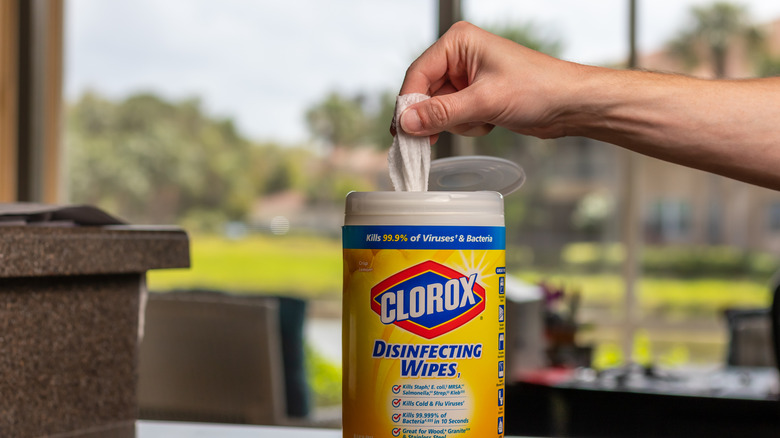
One of your favorite go-to cleaning products could be slowly harming your beautiful countertops. Using certain Clorox disinfecting wipes to regularly clean quartz countertops can damage them over time. The culprit is specifically the citric acid in Clorox Disinfecting Wipes Lemon Fresh. Although quartz countertops are designed to be much more resistant to acid damage than natural stone like marble, they are still vulnerable in two main ways.
Quartz countertops are made from a blend of quartz, resins, pigments, and other materials. The other materials category is where the rubber meets the road, or where the acid etches the stone. On its own, quartz is very resistant to etching from acid exposure, but some quartz countertops contain calcium-based additives to mimic the look of natural stones like marble. Just drop some lemon juice on a pure marble countertop and you'll see the calcite start to bubble as it dissolves! Those specific areas of quartz countertops that contain calcium-based additives can be susceptible to etching from the citric acid that's in some Clorox disinfecting wipes and many other cleaning products.
Okay, but what if your quartz countertop is just pure quartz with zero calcium-based additives? While a drop of lemon juice is not going to burn a hole in a pure quartz countertop, citric acid can cause silicate dissolution and speed up the natural mineral weathering process and attack the resins that contain the color pigments and hold the material together, so just skip the lemon fresh Clorox disinfecting wipes. And as a general rule, you should not use any cleaning product that is either very acidic or very alkaline on quartz. That includes citric acid, vinegar, and ammonia-based cleaners, so we can add quartz to the list of things to avoid cleaning with Windex at all costs.
How to properly clean and care for quartz countertops
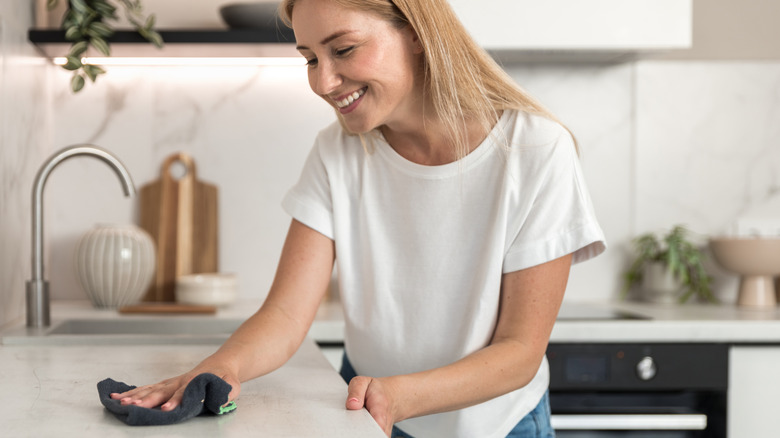
Cleaning and stone preservation experts recommend a mixture of dish soap and warm water as the best way to clean quartz. If you have a stubborn stain that just won't yield to the power of Dawn, step it up a notch with isopropyl alcohol. The last line of cleaning defense for the most stubborn of stains on a quartz countertop is the tried and true baking soda paste.
If dish soap and warm water, isopropyl alcohol, and baking soda and water all fail, you may start searching for a dedicated quartz cleaner like this Bar Keepers Friend Granite & Stone Cleaner & Polish. A quick look at the ingredients, though, show that this product is mostly water and isopropyl alcohol, plus a surfactant to break up stains and glycerin to add shine. In all cases, avoid using abrasive scrubbers like steel wool or scouring pads on quartz. A microfiber cloth is usually more than enough for routine cleaning and even tough stains, with the addition of quartz-safe cleaning products and the application of some elbow grease. If you need a little extra help, an old toothbrush or a Scrub Daddy can help clean up stuck-on stains without scratching quartz.
A few other simple best practices will keep your quartz kitchen countertops in tiptop shape. Don't cut food directly on the countertop surface: Use a cutting board. Clean up spills quickly so they don't have a chance to set. And don't set hot pots or pans down directly on the countertop as the rapid temperature change can leave heat stains and may even cause cracking.