

Don't Choose Driveway Gravel By Color Alone
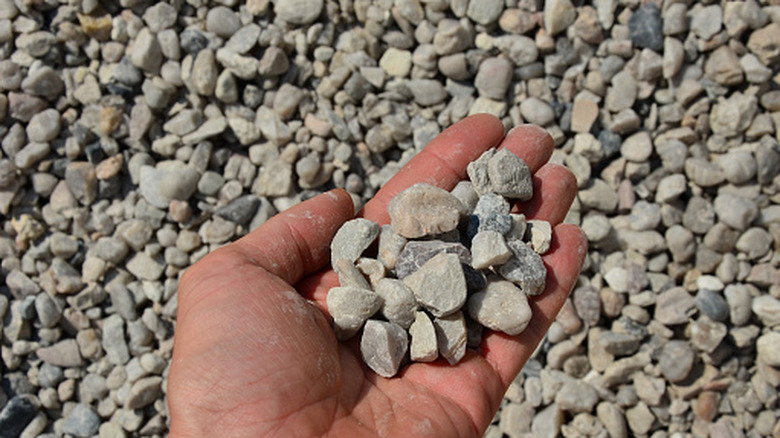
There's something rustic and nostalgic about the crunch of a gravel driveway, but aesthetically they aren't always great. It might seem like an obvious choice to pick the gravel that looks the best with your home and landscape, but that could be a mistake. There are many different types of gravel for driveways, and color is not the most important factor when it comes to choosing the right one for you. You don't want to completely ignore the gravel color, but gravel size and shape have a much greater impact on how functional your driveway is.
The size and shape of the gravel you use will determine how well your driveway compacts and how easily water is able to drain through it. If you're prioritizing aesthetics, you might end up with small, smooth stones that are pretty to look at, but make for a poor driveway. Angular stone pieces are a better choice for driveways, as they compact nicely, forming a stable surface for your vehicles. They're also less likely to roll away. Gravel driveways are cheap and easy to install, but that doesn't mean you want to replace it constantly. When it comes to size, you'll likely want a mix, with one to one and a half inch gravel at the bottom and gravel that's between half an inch and an inch above that. This provides stability and allows water to drain more freely than using smaller gravel. Your base and middle layers will almost always be covered, so color doesn't matter at all for them.
What factors does gravel color impact?
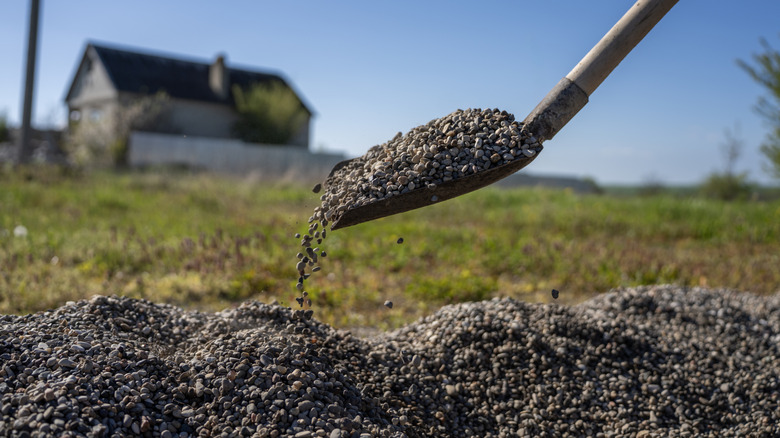
Color isn't the most essential aspect when it comes to choosing gravel for your driveway, but it is still tied to other important factors. Once you've determined the right size and shape for your gravel, it's a good idea to consider the different colors that gravel type is available in. There is the aesthetic question of what looks best with your home style and decor, but color can also influence or be tied to the cost of the gravel. Artificially dyed gravel is generally more expensive, since it has to undergo extra processing to color it. Color can also be tied to the type of stone your gravel is made of. For example, black star gravel is made from basalt, which is a deep black color. This is aesthetically nice, but if you picked it for the color alone you'd be in for a shock. Black star gravel comes with a much higher than average price tag.
Beyond cost, the color of your gravel also impacts how hot your driveway gets. Darker colors absorb more heat, meaning they can feel hotter to the touch and retain that heat for longer. Lighter colors reflect light, causing them to warm up more slowly and cool off quickly. This might be worth taking into consideration if you live in a place with extreme temperatures. Dirt, grime, and debris are also generally more visible on lighter gravel colors. While you can easily clean gravel with a rake, it does still take time out of your schedule to maintain.