

Keep Gravel Landscapes Smooth And Clean With An Easy-To-Use Handheld Tool
We may receive a commission on purchases made from links.
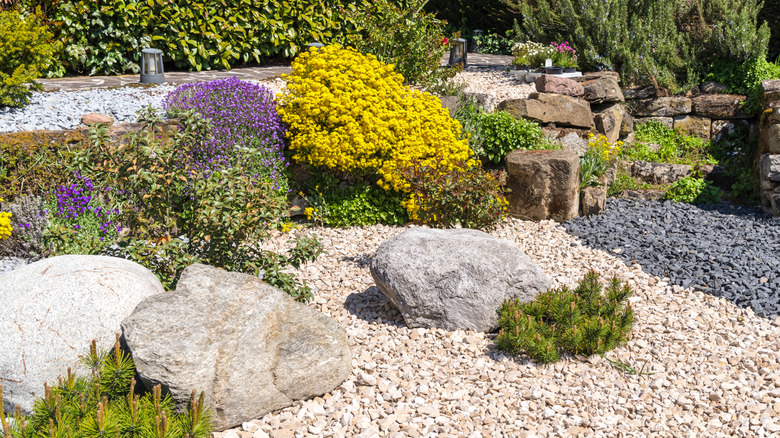
The smooth, even look of a gravel flower bed or a transformed gravel patio enhances many of our outdoor spaces. With numerous types of gravel to choose from, you can almost always find a color or texture to flatter your flowers. But once it's in place, how do you keep your gravel bed free of debris and smooth it out when needed? The answer is a stone rake. What is a stone rake? It's not one of those groovy-looking bamboo rakes with wooden pegs for teeth (keep one of those around for a decoration, not for use). A stone rake, also called a bow rake, has a steel head with 16 to 18 teeth and a sturdy handle, like the Bully Tools Bow Rake from Amazon. While perfect for working gravel, its primary purpose is removing stones from garden beds — hence the name. There are a surprising number of rake types: leaf, garden, shrub, thatch, landscape ... the list goes on. But for working with gravel, a stone rake is what you need.
The advantages of a stone or bow rake are the strength of its teeth and the relatively wide spacing between those teeth. If you try to use a leaf rake on gravel (with either plastic or metal tines), you'll just be tickling the surface. A stone rake, with wide, strong teeth oriented at about 90 degrees to the plane of the handle, will dig into the gravel surface and allow you to remove embedded debris with much less effort.
Rocking a stone rake
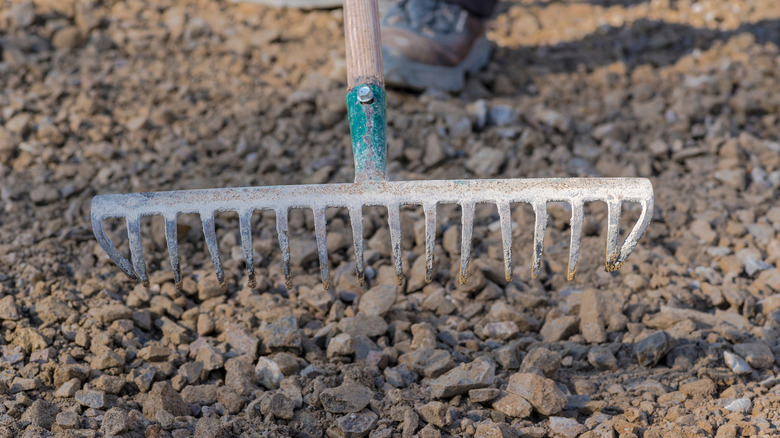
The best quality stone rakes have a steel head forged from a single billet of steel. Teeth welded onto a bow rake are a bit more likely to break off when prying away at an underground obstacle. The rake should have a strong handle that is screwed or bolted onto the rake head. This joint is the most common point of failure in bow rakes. Robust fiberglass handles are the top-of-the-line option in modern stone rakes, and they should be outfitted with rubber or a similar type of cushioning at the top of the handle. Wooden handles can break and crack, although you can find lots of used stone rakes with intact wooden handles at yard and garage sales for bargain prices — not a bad option.
When using a bow rake to smooth and clean your standard gravel beds, it is a good idea to start by raking from the outside edge of the gravel bed, before moving toward the middle. Clear away any sticks, leaves, wayward oversized rocks, and any other detritus that might have set up an unwanted home in your gravel. A leaf blower can come in handy here. Then, with very light strokes, start brushing back and forth on the gravel, distributing it smoothly and evenly. Some folks even turn the rake over, so the teeth are pointing up, and use the back of the rake to help smooth out the stones. Once you try a stone rake, you will quickly see that it is a perfect tool for this job.