

You Don't Need Coffee Grounds: Use This Garden Staple To Deter Snails
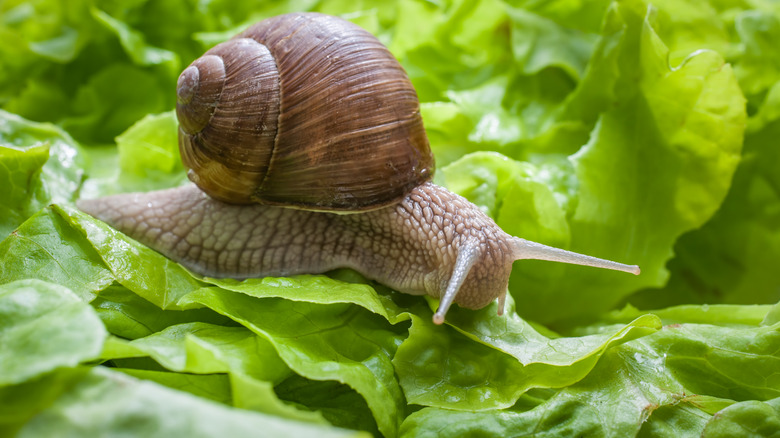
Using coffee grounds to deter snails from your vegetable patch and flower garden might seem like a genius way to reuse old coffee grounds instead of tossing them. But if you've tried this method before, you might have already noticed that it's unreliable at best. And with fall approaching, you might be waking up to your lettuce and hostas full of holes — some snails simply crawl over coffee or a bout of rain can wash it away. Its effectiveness also depends on you getting the coffee-to-water ratio just right. In fact, excess coffee grounds might even slow the growth of plants. So, wondering what you should put on hostas to repel these bugs? Well, you can forget coffee grounds because there's a better way to banish snails: gravel. A ring of small, sharp-edged gravel around vulnerable plants creates a surface that these pesky pests can't cross.
Before you lay down any gravel, though, clear away the leaf litter and other debris near your plants. Damp hiding spots like these give snails a place to shelter right beside the plants you're trying to protect, which can undercut the barrier. Also, make sure to work the soil at least 4 to 6 inches deep to get rid of such sites. Even then, don't water your garden in the evening, as moist soil is an open invitation to these mollusks.
How to use pointy gravel in the garden to keep snails at bay
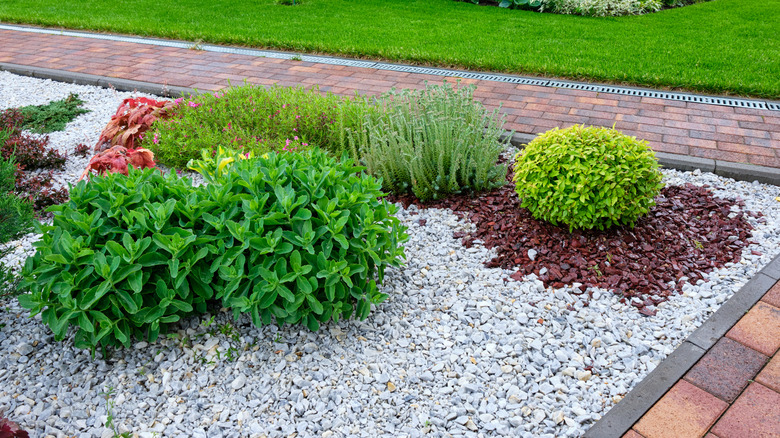
Simply put a ring of pointy and coarse gravel around your fruit and vegetable garden, and your snail-repelling barrier will be ready. This works because snails have to generate more mucus than usual to turn their feet slippery enough to cross a ring or path of pointed stones around your vegetable patch. And even if they somehow manage to do that, the gravel can injure their soft underbelly, deterring them from moving forward.
If the problem is acute in your garden, mix other rough materials, like crushed rock, crushed oyster shells, or mulch, in your gravel to make it sharper and more damaging. They also avoid crawling over anything dusty or scratchy, so you can mix some wood ash, sand, and coarse sawdust in the gravel, too. If you can get your hands on diatomaceous earth (made using fossilized aquatic animals called diatoms) and it's not raining in your area, then you can use this as well besides gravel as it can injure their underbellies. For best results, your gravel band should be at least 3 inches wide and 1 inch deep — after you've already prepped the garden.