

How To Make Concrete Stronger: 8 Additives That Are Safe To Use
We may receive a commission on purchases made from links.
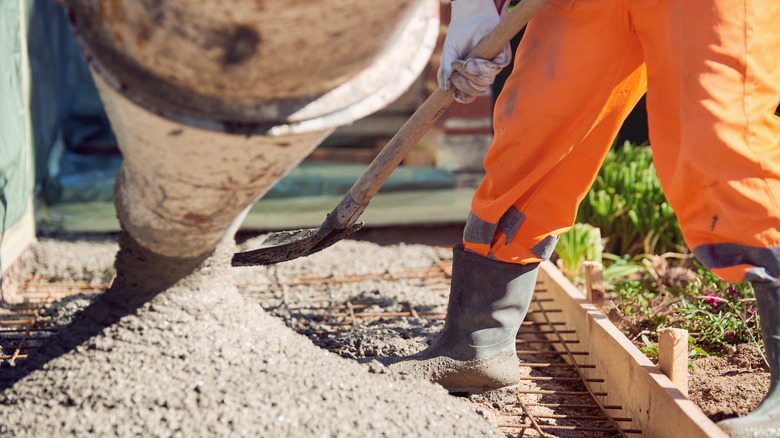
The simplest concrete — cement, water, and aggregate — is supposed to just stand there, strong and solid like an old cowboy with a ridiculous moustache. You don't expect it to involve polymers and emulsions and chemistry, at least not any more than you'd expect the cowboy to have a kettlebell routine. But the uncomplicated strength of cement and rock is enhanced with additives, admixtures, fortifiers, and modifiers that all add up to better concrete through chemistry. And — meaning no disrespect to that old cowboy — it is loads better.
It's better, in fact, in just about every way. There are a lot of safe and effective ways concrete can be made stronger, and there are several types of strength. Strength could mean capacity, as in a certain amount of compressive strength, and it might mean durability ... resistance to damage and longer lifespan.
Factors like concrete's slump (that is, its flowability or workability), water content, and time to set have a lot to do with its durability, and they can be manipulated with liquid and powder additives that optimize the concrete's performance for specific applications. (For simplicity, we'll use "additives" as an umbrella term in its title for the various materials used to improve concrete, though some professionals make a distinction between additives and admixtures.) They might be chemical or mineral, they may improve the contractor's workday, or they could even disimprove it for good cause, but what they all promise is a stronger finished product ... sometimes much stronger, as when making ultra-high-performance concrete.
Water-reducers, superplasticizers, and accelerators
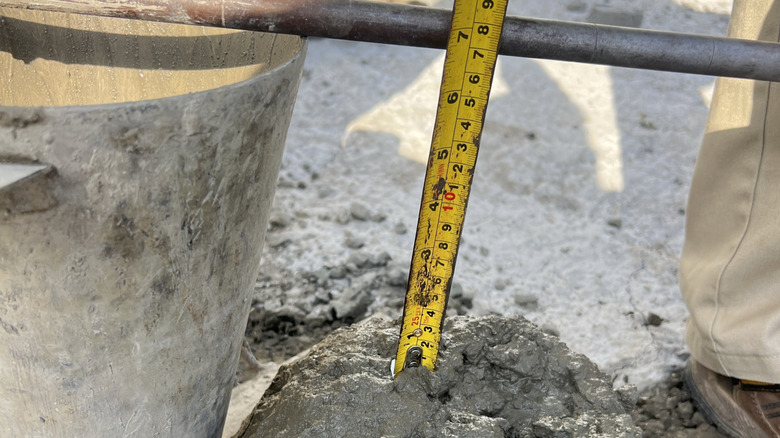
There's a lot of overlap in the ways many concrete additives improve strength and lots of ways to categorize them. And it's no less confusing because things are named strangely. Consider water reducers, also called plasticizers (high-range water reducers are called superplasticizers). The water-to-cement ratio is the key factor in concrete's slump and overall strength, so water reducers lower the amount of water needed for the mix by 5% to 12%. Meanwhile, superplasticizers like Rapid Set Flow Control reduce the water demand even more. These products are easy and safe to apply to a mix and will significantly increase the concrete's finished compressive strength while leaving the wet blend workable. Greater strength might be a goal of a concrete project, but it might also make up for other decisions that weaken the concrete, often for the sake of sustainability and other goals.
It's also confusing that set-time accelerators and retarders may strengthen concrete while simultaneously helping to relax the 90-minute rule for mixed concrete. What they actually do, in general, is redistribute the times at which concrete becomes strong. Accelerators can improve the early strength of concrete but not its long-term resilience. They are critical, however, in preserving concrete's finished strength in certain conditions, including cold application temperatures where freezing could ultimately hinder it. Meanwhile, set-retarding admixtures like Rapid Set Set Control often improve finished strength and are particularly helpful in hot conditions.
Bonding agents, fortifiers, and water-resisting additives
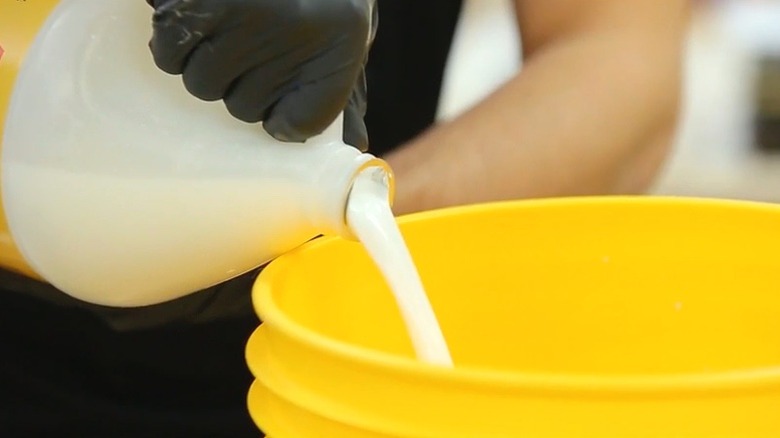
Concrete bonding agents and fortifiers can sometimes act like plasticizers, but they're better thought of as what they essentially are: PVA, epoxy-based, acrylic, and latex (and often acrylic/latex) glue added to the concrete. Specialized PVA (yes, it's similar to the stuff wood glue and white glue are made of) is a common bonding adhesive that can be used in repairs to stick bits of new concrete to bits of old or set concrete, but glue also enhances internal bonds within concrete to make it stronger overall. It may help improve concrete's flexibility, and therefore its crack resistance, while improving its water resistance and durability.
PVA isn't the only game in town. Even chemically improved PVA is slightly prone to rewetting ... that is, becoming liquid again to some degree when exposed to water. And waterproofness is certainly another contributor to strength. So, acrylic and latex fortifiers enter the picture in the form of products like SikaLatex Concrete Bonding Adhesive and Acrylic Fortifier as a more waterproof way to strengthen concrete and improving curing and plasticity. These products and other water-resisting admixture options, such as butyl stearate and petroleum-based materials, reduce concrete's permeability, lowering the amount of water that finished concrete will absorb. The concrete doesn't necessarily have significantly more compressive strength, but it is more resistant to damage and failure. You will typically see less corrosion of reinforcement materials (like rebar), fewer instances of efflorescence, limited absorption of damaging chemicals and minerals, and a lower susceptibility to freeze-thaw damage.
Mineral and fiber concrete additives
Chemical admixtures are great and all, but some of the simplest and most useful concrete additives are less laboratory and more stone quarry. Mineral additives and reinforcing fibers are added to cement and concrete to improve their strength, and don't always involve lots of Nobel-caliber chemistry. Mineral admixtures like silica fume, fly ash, and slag probably sound like more fun than they are, but they're certainly effective. They are pozzolans that act like Portland cement by forming cementitious materials with water. Although some may regard them as similar to plasticizers, pozzolans actually replace a percentage of the cement in a concrete mix, bringing qualities like increased strength and impermeability, changes in water requirements, and slower chemical reactions (and therefore lower temperatures) to the concrete. They're sometimes thought of as fine aggregates, as they help to fill small voids and produce denser results, but they also create more internal bonds by reacting chemically with the lime in the concrete mix.
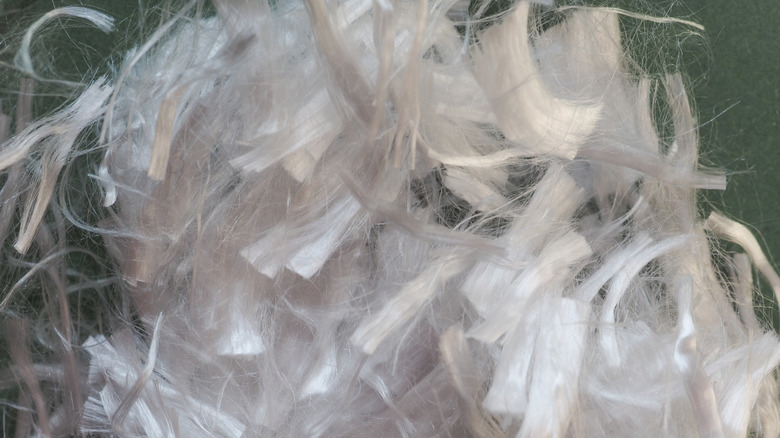
Concrete-reinforcing fibers are less-complex but very effective and safe-to-use additives. Fibers of various lengths made of things like fiberglass, basalt, and glass strengthen and improve the durability of concrete along every axis. These fibers, which you can buy by the bag online or in home improvement stores, generally lend to a more stable product, often by reducing shrinkage and cracking, improving impact and freeze-thaw durability, or resisting corrosion. Fiber reinforcement is a bit of modernized ancient technology, like when an old cowboy sits up on his horse and says, "You know, this wrangling business would be a darn sight more effective in a helicopter."