

Should I Sharpen Lawn Mower Blades In The Fall Or Spring?
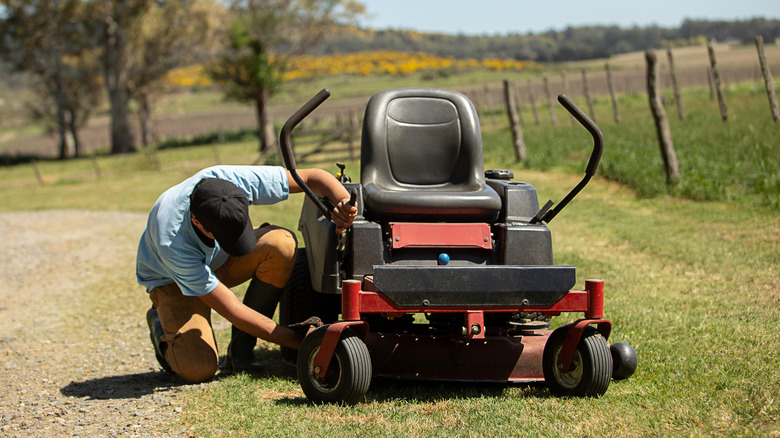
One of the secrets to an immaculate lawn is sharpening your mower blades. But when is the ideal time? A common rule of thumb is to sharpen in spring, and then once or twice during the growing season. However, fall could arguably be even better than spring for sharpening your lawn mower's blades. The main thing is to have the blade sharp when the grass starts growing. If you do it after the final mow of the year, you can leave your mower stored with the blade clean and sharp for next year's growing season. Plus, sharpening after the last mow makes sense because you need to remove accumulated cuttings under the deck and give the whole thing a thorough clean before storing.
The last mowing will not necessarily take place on the same day in every region. Some grasses grow more actively during spring and fall, while others do most of their growing during summer. Lawns in mild climates may require mowing much later in the year. Instead of picking an arbitrary date to sharpen in fall, wait until the grass has stopped growing quickly enough to need another cut.
Perhaps even more important than picking between fall or spring is knowing at what other points in the year your blades need sharpening. For a frequently used mower, it's probably insufficient to sharpen the blade once a year. Most blades will need sharpening after around 20 hours of cutting, but this can vary based on conditions.
Let the blade decide when it needs sharpening
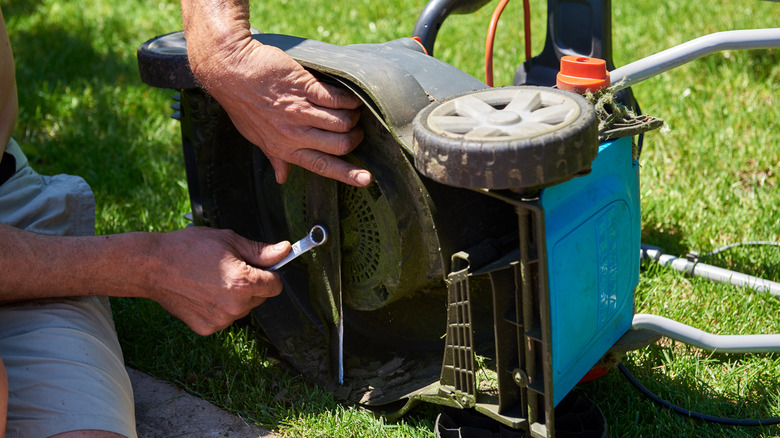
Although fall and spring serve as good reminders, it is better to pay attention to the blade itself rather than the time of year. In the case of a small lawn, your lawnmower blades might need to be sharpened less often, as they probably won't get dull within a season. But for big yards, sandy soils, and rougher conditions — like strewn sticks or stray stones that hit the blades — you'll need to sharpen more frequently.
One easy way to figure out if your blade needs sharpening is to check the lawn soon after mowing. A sharp blade cuts grass evenly, while a dull blade cuts unevenly and creates torn ends, which can even turn brown. Other signs of a blunt blade include a patchy cut, problems with passing through tall grass, a nicked cutting edge, or a round cutting edge. Running out of gas or battery power faster can also be a signal that it's time to sharpen your mower blades.
Before you take out the blade for sharpening, refer to the manual of your mower. On a gas mower, disconnect the spark plug wire; on a cordless one, remove the battery; and on a corded mower, unplug it. Take a photograph of the blade prior to its removal for reinstallation in the right position. Always grind the blade along its bevel rather than grinding it into a new angle. Also, do not make the edge excessively sharp. Always take out a similar amount of metal from both ends of the blade and then check its balance. As far as tools for sharpening mower blades go, you can use anything from a bench grinder to a hand file, rotary tool, or even a drill with a sharpening attachment.