

Turn A Thrifted Duck Into An Adorable Lamp That Has Vintage Charm
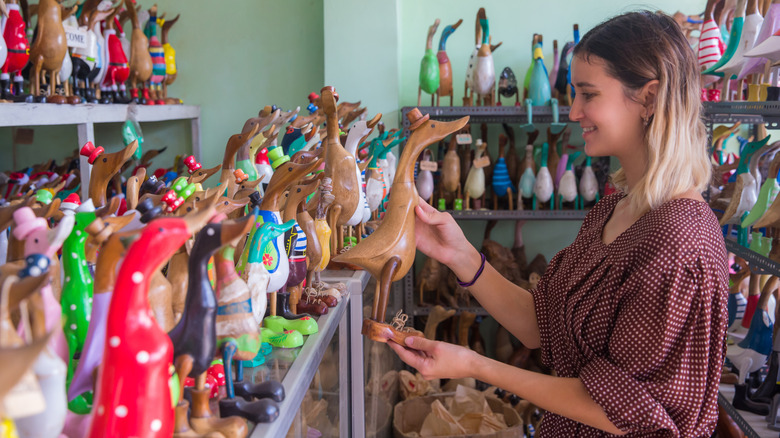
We may receive a commission on purchases made from links.
Vintage lamps can add tons of charm to a nightstand or side table, but finding one that looks beautiful, actually works, and doesn't cost a fortune can be tricky. Older lamps were typically more ornate and sculptural than the mass-produced styles you'll find on the shelves at your local home goods store today. If you're bored of basic bulbous shapes and prefer your decor on the whimsical side, consider turning a thrifted duck into an adorable lamp. To make one, you'll simply use a diamond bit to drill a small hole into a vintage duck decoy or glossy ceramic figurine before installing a lamp kit and topping it off with a coordinating shade.
When you're illuminating your home using lamps, this one-of-a-kind solution may seem best left to an electrician. However, unlike the often complicated process of rewiring a vintage lamp, a lamp kit makes the DIY process surprisingly simple. Highly-rated options like the EMNOOTI Lamp Rewire Kit from Amazon come in antique brass hues that can help achieve a vintage aesthetic. Look for kits that include 3-way knobs, extra-long cords, harps, finials, and easily-installed hardware. You can find them online, at your local home improvement warehouse, or at big box stores like Walmart, for under $15.
Getting your ducks in a row for this project also requires a few other supplies. While you could use a solid figurine made of wood as the base for your lamp, the process will be much easier with a hollow ceramic or porcelain figurine. A diamond drill bit and a little painters tape will help to avoid cracking. If your duck waddles too much, you may also want to consider adding a wooden base with a little construction adhesive.
How to make a DIY lamp using a thrifted duck figurine
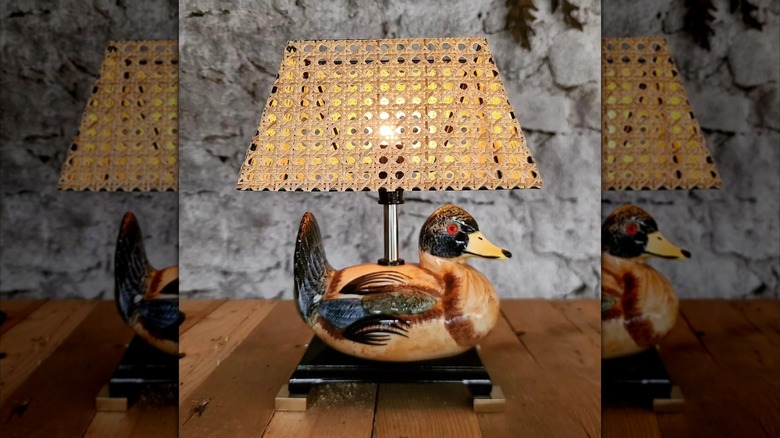
While DIY table lamps don't have to be expensive, carefully drilling through your thrifted duck is an essential step if you want your finished result to look high-end. Understanding how to drill holes in ceramic or porcelain will help you avoid ugly chips or quacking, er, cracking your duck beyond repair.
Start by placing your figurine on a towel instead of a slippery work surface to ensure it doesn't move around as you drill. Once you've determined where you want the neck of your lamp to be, place a few pieces of painters tape directly over it in a criss-crossed fashion. Next, spray the area you're about to drill with a little cool water. This will help keep your diamond drill bit from overheating as you create your hole. Begin by drilling slowly, at a slight angle, until you've created an opening large enough to thread your lamp kit through.
You may need to repeat this process on the bottom or tail end of your duck to accommodate the lamp kit cord. Each lamp kit will have a set of washers to secure the lamp pipe and harp in place. After assembling it according to the manufacturer's instructions, the final step is adding a lamp shade. While you can often thrift unique woven versions at secondhand shops, for a truly customized look, consider making a lampshade from scratch. Plaid or gingham patterns in emerald green or woody browns would pair nicely with mallard figurines from the 1950s, while solid pastel or saturated hues could liven up a glossy white find from the 1980s.
Other types of figurines can be turned into lamps too
After turning on your adorable duck lamp for the first time, converting other thrifted items into table lamps may suddenly seem like a very bright idea. It's hard to say exactly what's responsible for the passionate hatred so many of us have for "the big light", but making a bold statement with smaller task lighting is right on trend. Unfortunately, it can also be extremely expensive.
Charish currently has dozens of charming figurine lamps for sale at prices ranging from a few hundred dollars to over $1,200. Many of these feature bases made using Staffordshire porcelain pieces, from canine companions to dancing couples to solemn monks. We've also seen DIY lamps made from vases and urns. The possibilities are endless, and the DIY process remains largely the same regardless of the subject you choose for your lamp base.
Of course, before you start drilling holes in every charming vintage vessel or figurine you can find, it pays to do a little research first. There are many valuable collectible items you should never overlook when shopping at estate sales or flea markets. Check for maker's marks or signatures on the bottom to shed some light on their history, provenance, rarity, and desirability on the collectibles market before making any permanent modifications.