

Should You Fertilize Your Lawn Before Or After Using Aerators?
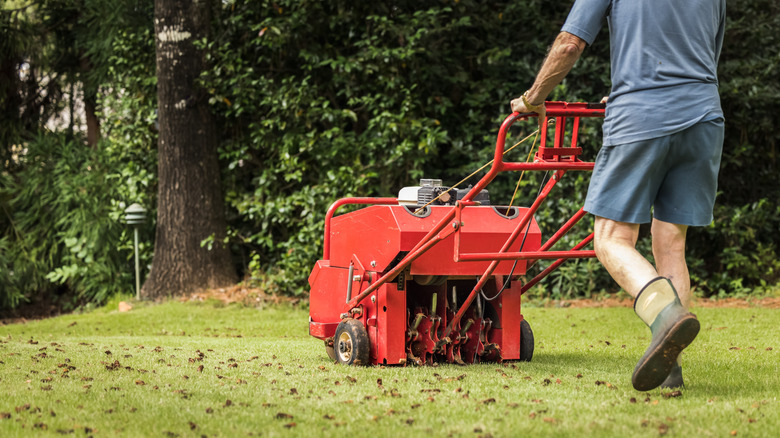
Aerating and fertilizing your lawn are both essential practices to ensure grass stays healthy and happy. While you might have all the right equipment and even the best lawn aerators on hand, chances are you also have an important question: Should you put down fertilizer before or after you aerate the lawn? Generally speaking, it's best to fertilize your lawn after aeration to help promote healthier turf, but there are other considerations about the timing of both practices worth knowing, too.
Aeration and fertilization serve two different purposes, which is why the correct order here is critical. First, aeration helps to alleviate problems with soil compaction, which is common in home lawns due to foot traffic. Addressing compacted soils underneath your turf grass helps to reduce water runoff on top of the lawn while also ensuring water reaches the soil for continuous growth. Aeration also stimulates new grass growth while enhancing oxygen and nutrient absorption – which includes nutrients provided by commercial fertilizers.
Fertilizers can indeed provide lawn soil with all-important nitrogen, as well as phosphorus and potassium, if needed. Once you've aerated your lawn, you can apply fertilizers immediately to ensure these nutrients are efficiently absorbed. According to Iowa State University Extension and Outreach, the opposite order may also promote healthier grass before aeration, but the general rule of thumb is to still fertilize after aerating your lawn.
Other timing considerations for aerating and fertilizing your lawn
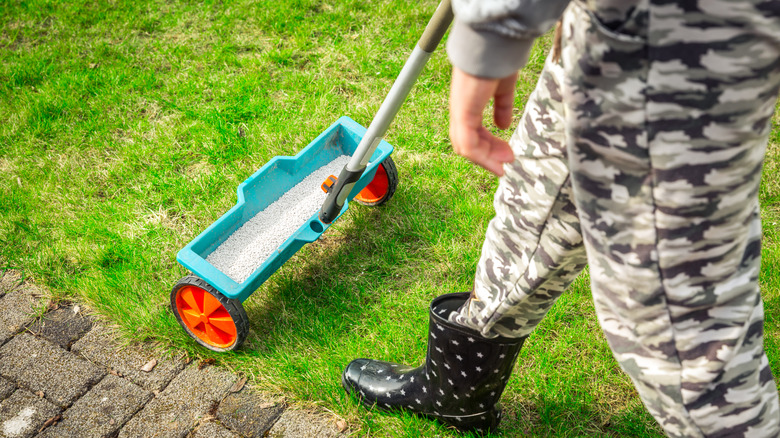
Aside from the correct order, you might understandably have different questions regarding the time of year to best aerate and fertilize your lawn. Aeration timing all boils down to the type of grass and soil you have. Warm-season grasses benefit from aeration in the late spring or summer, while cool-season grasses are best aerified in the fall. It's also ideal to aerate your lawn when the soil is moist, but not completely wet. Yet if your lawn consists of heavier clay-based soils, you might want to consider aerating it twice a year, per Iowa State University Extension and Outreach. According to North Dakota State University, you can usually aerate an already-healthy lawn every 1 to 5 years, especially if there's little foot traffic. If your soil is extremely compacted or you have a lot of foot traffic, the Clemson Cooperative Extension says it's possible it may need additional aerification of up to two to four times every growing season.
Correct fertilizer timing and frequency is also dependent on the type of grass, with higher maintenance lawns needing up to four applications of nitrogen a year, according to the University of Minnesota Extension. You might not need to aerate your lawn as frequently. But when you do, consider planning ahead to fertilize the soil after aerating. Fertilizers also are safest for turf in cool temperatures, and when the grass is not wet. As for when to fertilize your lawn, this depends on whether you have cool or warm season grasses. Apply fertilizers during the growing season for your type of grass, and not when it's dormant.