

The Best Way To Attract Birds To Your Yard Isn't A Birdbath Or Feeder
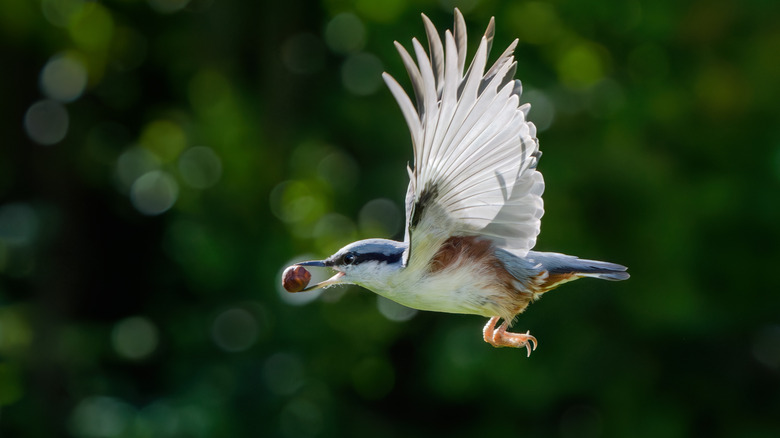
Baths and feeders may seem like necessities to those who want more birds in their yard. While they can help, making your yard enticing to your feathered friends doesn't require either product. Instead, growing native plants is a foolproof way to attract birds to your yard and garden. Becca Rodomsky-Bish, project leader for The Great Backyard Bird Count and Garden for Birds at The Cornell Lab of Ornithology, spoke exclusively with Hunker about why native plants are the best way to attract birds. "Native plants are one of the things that are disappearing from our landscapes," she said, adding, "Birds need to be able to find what they need foraging-wise in the spaces that we live. When we do have land that we have autonomy over, we need to make sure that we create food resources for birds."
Rodomsky-Bish explained that birds love the fresh berries, seeds, and nuts from native plants, and your garden won't require refilling like a feeder. You can also forgo buying a hummingbird feeder and grow native plants instead, offering local flowers with delicious nectar. Traditional birdbaths and feeders require more work and cleaning, Rodomsky-Bish noted, while native plants offer a natural, lower-maintenance alternative.
Native plants also provide something baths and feeders can't— shelter. Trees, bushes, and plants in your yard give your feathered friends places to hide from predators and nest. To ensure your feathered friends stay nearby and have what they need, add native plants to your outdoor space.
Why native plants are a better food source than bird feeders
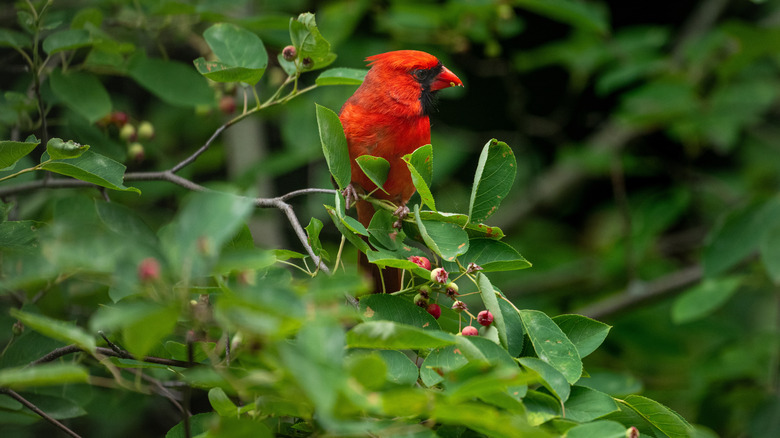
It may seem like the seeds from native plants would be just as beneficial as offering a feeder full of tasty food. However, these vital plants have additional environmental impacts that affect the diet of birds in your area. Rodomsky-Bish explained that native plants are also attractive to insects as a place to lay eggs, particularly moths and butterflies.
The young caterpillars that hatch on native plants are a crucial food source for your feathered friends and play a more important role than you may think. "Most North American songbirds – there are exceptions like the American goldfinch – actually do not feed their young seeds and fruit. So even though the birds might be able to get seeds and fruit foraging on native plants, which is great, they still need to be able to feed their babies as the next generation of birds," Rodomsky-Bish said.
While adult birds can enjoy food offered from a feeder, 95% to 98% of songbirds in North America feed bugs like caterpillars to their young, according to Cornell Lab's Garden for Birds. Access to insects is vital for birds to thrive, which is a big part of why Rodomsky-Bish suggests native plants over feeders and baths.
What kinds of native plants to grow for attracting birds
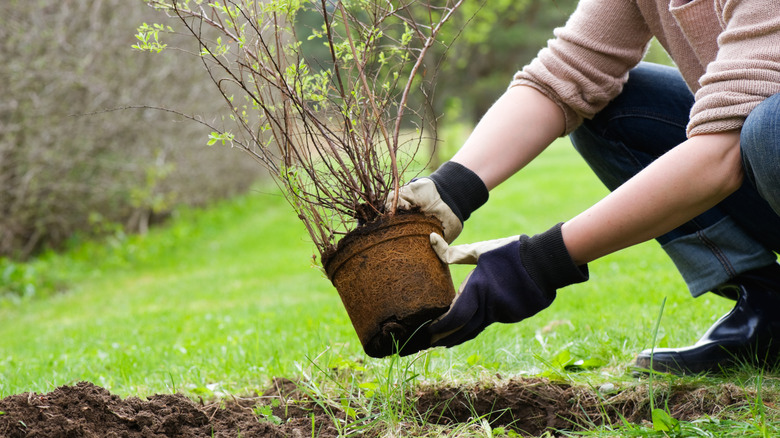
Depending on where you live, different plants will be native to your area, so it's important to check the status before planting. When creating a friendly bird-garden at home, consider what plants will grow best in the conditions of your yard, the amount of space, and what will best support local birds. Rodomsky-Bish told Hunker that she typically recommends shrubs because they are often absent from landscaping, yet good for birds. She suggested red osier dogwood as a beautiful flowering shrub that attracts pollinators in addition to birds, and elderberry shrubs to offer your feathered friends berries they love.
Native flowers are also beneficial, and Rodomsky-Bish recommended sunflowers. Plant flowers plant near baths or feeders that are in your yard to make them even more enticing. For example, native marigolds and cosmos can be attractive flowers, and birds will flock to your birdbath when you plant these two flowers around it. If you like to watch a specific kind of bird, research its favorite foods and grow corresponding native plants.
For those with larger properties, Rodomsky-Bish explained how great native trees can be for helping birds. "Another one I would recommend, the number-one species that supports the most birds and biodiversity across North America are oaks," she said, adding, "But if people have space to plant trees, any oak that's native to their state is going to do the most for biodiversity. It supports the most birds, the most insects, the most mammals actually of any other species."