

What Happens If You Put Corn Syrup On Your Lawn?
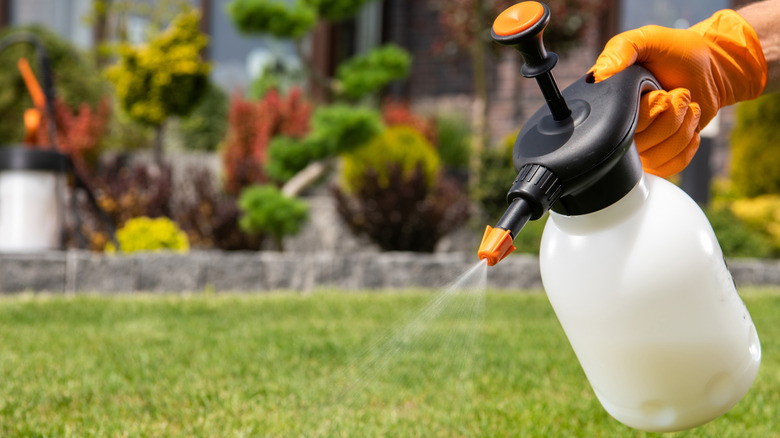
There are dozens of DIY lawn care recipes out there, some of which are helpful and many of which are less so. Mouthwash, beer, and yes, high-fructose corn syrup are just a few ingredients some swear to help their lawn grow. But why?
High-fructose corn syrup likely earned its reputation as a lawn additive because, in some cases, putting sugar granules on your lawn can help prevent weeds and enrich the soil. It's not a guaranteed result by any means, but it is science-backed, as sugar can affect the level of microbes in your yard soil. High fructose corn syrup is likely a variation on that — one that automatically comes in liquid form and is therefore easier to use in your garden.
However, there's no proof that putting corn syrup on your lawn will do much for its overall health. Anecdotally, some gardeners say that odd concoctions like corn syrup and mouthwash have made their lawns greener. Some popular lawn care recipes also stem from celebrity gardeners like Jerry Baker, who famously used corn syrup in a recipe that also includes beer and ammonia. Needless to say, such recipes are highly controversial, aren't science-backed, and can be unsafe to use.
The downsides of corn syrup — and alternatives
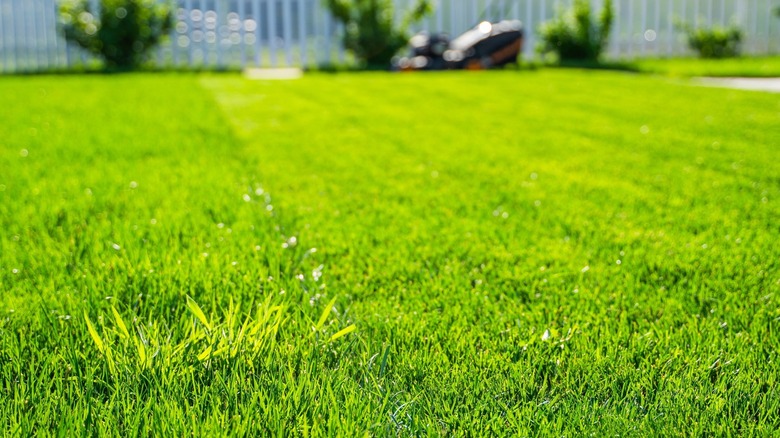
While corn syrup might be a neutral additive for your grass — neither helping nor harming it — it can still have other negative side effects. Sugar is known for attracting pests, so using corn syrup in your garden could attract unwanted insects. Experts generally recommend using sugar in the garden very sparingly — otherwise, you'll end up giving yourself a pest infestation. Needless to say, pests aren't good for the health of your lawn.
It's tempting to DIY your lawn care additives, but purchasing lawn fertilizer from your local hardware store or nursery is often the best bet. You'll first want to test your soil to see what nutrients it lacks and determine which type of lawn food or fertilizer is best for you. This way, you'll get guaranteed results instead of a home method that may or may not work.
For other at-home methods proven to help your grass, you could leave your grass clippings on your lawn after mowing. Like compost, the clippings add nutrients to the soil as they decompose. If you do get a soil test and find that your soil is deficient in magnesium, you can try adding Epsom salts to your lawn. But overdoing it with random lawn-care concoctions is never the right answer, as you could end up damaging your lawn instead of addressing a real nutrient deficiency.