

Save On Lawn Fertilizer: There's A Cheaper Way To Enrich Your Grass
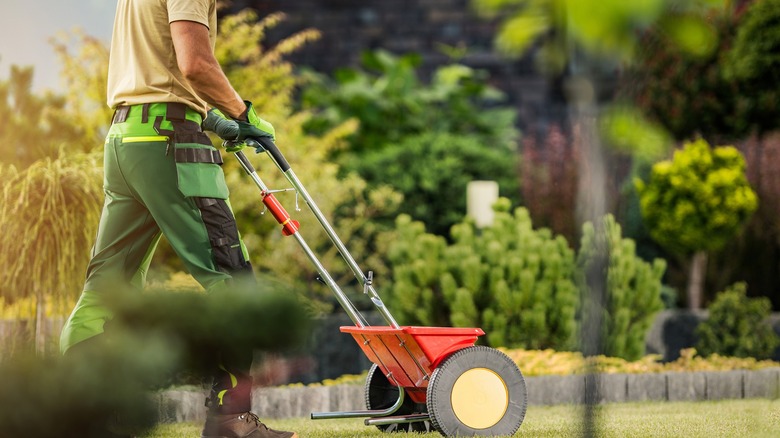
Even before the Strait of Hormuz blockade began driving up costs, the price of lawn fertilizer was rising, jumping 22% from February 2025 to the same month a year later, according to the Bureau of Labor Statistics. Now, you can expect to pay between $0.02 and $0.08 per square foot for fertilizer (or between $871 to $3,484 per acre), depending on where you live, and a continuing closure of Hormuz would make it even more expensive in the coming months and years. Fortunately, there's a way around the fertilizer shortage, and it's as easy as leaving the clippings on the lawn every time you mow.
This isn't just a workaround to save money, but a recommended practice. As lawn clippings decompose, they return nutrients that grass needs to the soil, including nitrogen, phosphorus, and potassium, in ratios recommended for maintaining healthy turf. They are particularly high in nitrogen, which keeps the grass looking green and disease resistant, and potassium, which improves resilience and drought tolerance. In short, lawn clippings are a great way to fertilize your grass and make it greener.
A common reason for picking up grass clippings is to avoid thatch buildup on the lawn, but this is actually based on a myth. As Alec Kowalewski, an urban landscapes specialist and professor at Oregon State University, explained, "Virtually all research conducted with turf has shown that grass clippings do not increase thatch. In most cases, thatch increases as mowing height increases." The real cause of thatch, he says, is above-ground stems, and they only grow on certain species of turfgrass, particularly those used on golf greens.
How to get the best fertilizing benefits from grass cuttings
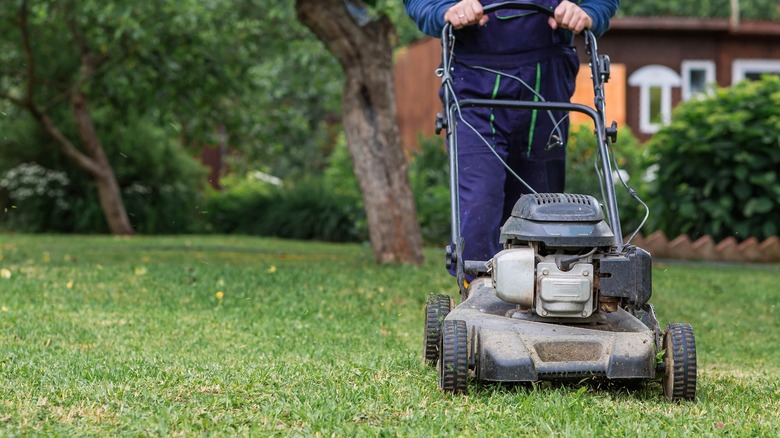
Grass clippings may not cause thatch, but they will contribute to an existing thatch layer. Once this layer exceeds half an inch in thickness, it's important to remove it, or the clippings won't be able to reach the soil. You can do this with a dethatching rake if you have a small lawn, but you may want to rent a power dethatcher if you have a large one. Dethatch cold-season grasses in early spring or early fall and warm-season grasses in late spring or early summer to avoid stressing the lawn. Aerating the soil after dethatching will help the grass breathe and the soil absorb nutrients from the grass clippings. You can even use a simple DIY aerating tool to keep prices down.
When mowing, the rule of thumb for a healthy lawn is to remove about one-third of the grass blades. If you let the grass grow long, you'll have longer clippings that will clump on top of the grass rather than falling to the soil, so increase your mowing frequency to avoid that; the aforementioned Alec Kowalewski recommends once a week. If you're going to be using lawn clippings as fertilizer, then a mulching mower is better than a regular one, because it grinds grass into smaller pieces (and is also much more convenient).
While leaving grass clippings on the lawn eliminates the task of collecting and disposing of them, you may still have to do this in some circumstances. For instance, if you let the grass get too long, or you mow when the grass is wet, the clippings could smother the lawn if you don't remove them. Aside from that, your clippings will work as wonderful fertilizer for a greener, healthier yeard.