

Not Sweet Pea, Not Roses: The Feathery Flower That Adds Vintage Charm To A Garden
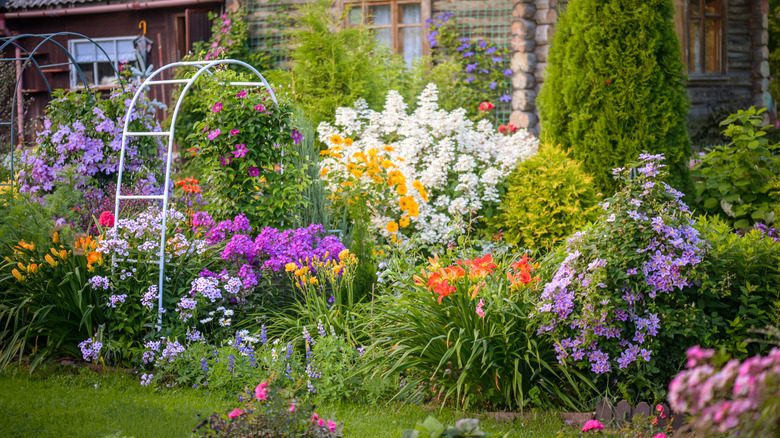
Do you wish your outdoor space looked more like a charming, vintage garden? If you want a plant with a wispy, soft elegance to help create a dreamy yard, this flower is a must-have. Astilbe plants feature spire-like plumes with hundreds of beautiful flowers on each, and the biternata variety, also known as Appalachian false goat's beard, is native to North America. With stunning colors of pink, white, or cream, these tall groupings of flowers will move gently with the wind and have an exquisite, feather-like effect. If you're looking for gorgeous flower bed ideas to wow your neighbors this spring, consider planting some astilbe for blooms throughout the end of spring and the beginning of summer.
Astilbe biternata is a tall perennial, growing 3 to 6 feet in height. Its stature makes this flower perfect for framing your garden and creating a timeless, vintage look. The leaves of astilbe plants are also attractive, similar to those of a fern, with a hue ranging from dark green to bronze-like. These flowers are also full of nectar, attracting butterflies, bees, and other pollinators to your yard for a majestic setting.
Depending on your preferences, you may choose a different cultivar of astilbe to get flowers of varying colors and alternating bloom times. The Europa variety, for example, has pale pink blossoms that look delicate and graceful, and would be perfect for designing an English cottage garden. To enjoy the blooms for longer, plant multiple types of astilbe that flower at different times.
How to care for charming astilbe flowers
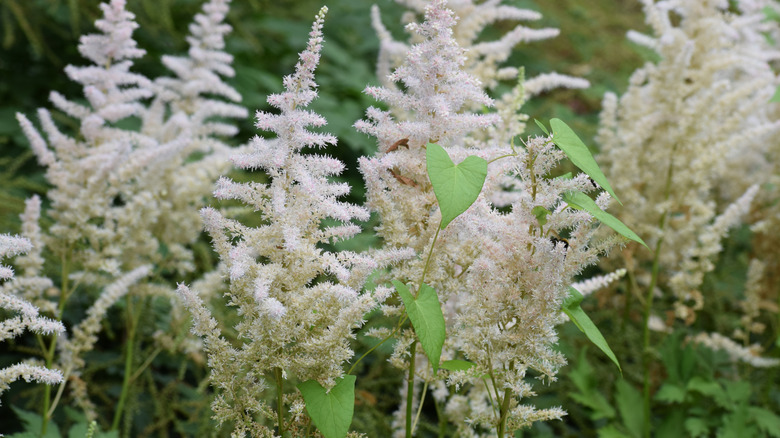
Astilbe flowers can generally be planted in USDA hardiness zones 3 through 9 depending on the variety. However, astilbe biternata fares better in zones 5 through 8. Though these plants look so ornate and delicate, it's not too difficult to learn how to grow astilbe. Many astilbe flowers, including astilbe biternata, grow best in spots with partial shade throughout the day. While they can survive in areas of total shade, the plant will likely produce less blossoms. Astilbe may also tolerate full sun if watered more frequently.
These tall, feathery flowers like soil that's well-draining but is kept a little damp. Astilbe plants prefer more fertile soil with a somewhat acidic pH. Heavier soils like clay can become overly wet for astilbe flowers unless modified. These plants benefit from a little compost being added to the ground as well. Give the flowers a drink often, especially when it's hot outside, so that the soil does not totally dry out between waterings. If your flowers aren't getting enough water, the leaves may start turning brown.
Even after the blossoms have died, astilbe plants still maintain their charming appearance. Beautiful spikes with a brown color will replace the spent blooms for an ornate garden display throughout fall and winter. While roses and sweet peas are classic flower bed additions, astilbe flowers have a vintage vibe with and without active blooms. Astilbe that has done well for a few years can be divided into more plants to fill your vintage garden.