

Upcycle Old Wood Pallets Into A Lawn Mower Storage Solution With A Genius DIY
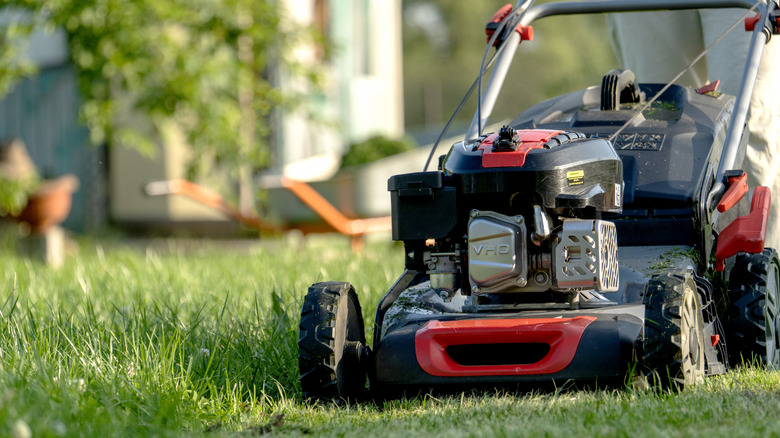
When a tarp no longer cuts it and garage space is scarce, a few old pallets can give your lawn mower a proper home. This exciting wood pallet project uses the reclaimed wood to form a compact, weather-resistant shelter sized specifically for the machine so you can stop tripping over it when it's not in use. Unlike a prefabricated shed that can be large and costly, this DIY can be scaled to perfectly fit a mower in an overlooked corner of the yard without consuming precious lot space.
For this project, you'll start by measuring the mower at its widest and tallest points, including the handle in its storage position, then leave enough clearance to roll it inside comfortably. The basic shopping (or scavenging) list includes clean, structurally sound pallets, gravel, exterior screws, a weather barrier, roofing material, hinges, a latch, plywood, and some 2-by-4s. You will also need a drill, saw, pry bar, staple gun, level, square, and protective gear. Skip the pallets stamped "MB," which indicates methyl bromide fumigation (a toxic substance, according to the EPA).
Before you build the perfect storage shed for your yard, choose a location next to the garage or in an underused area with level, well-drained ground. Add a sloped roof and construct your shed on some gravel to help keep the elements away. And if you plan on storing gasoline-powered equipment, ventilation is necessary. Make sure you also keep fuel containers in a separate location away from any potential ignition sources.
Build your mower a weather-ready home
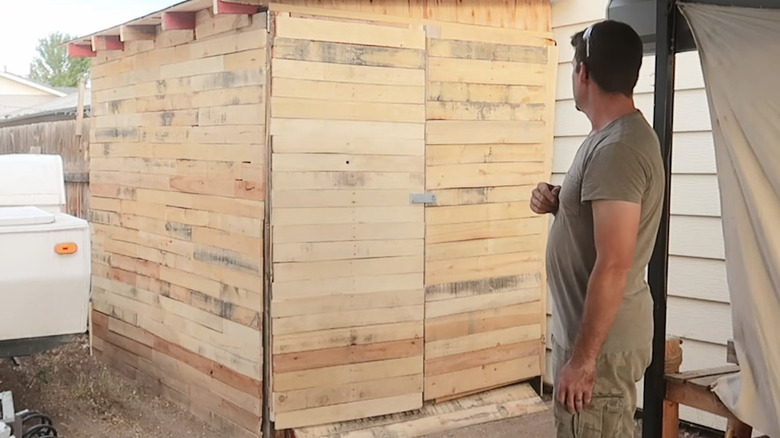
You'll want to start by marking a footprint that leaves clearance around the mower and an opening wide enough for its wheels and handle. Level the site over compacted gravel or concrete pavers. Gravel is a good idea for this project since it's affordable and allows water to drain instead of collecting beneath the wood, creating a potential rotting situation. Arrange the pallets in your desired position, but don't fasten them yet in case you need to rearrange their positions. Check each one for protruding nails or hazards before making any cuts, and don't forget the gloves and eye protection. Join the strongest pallets through their thick support boards to create the floor using exterior structural screws.
Next, stand additional pallets upright along the back and sides of the platform, stacking two on top of each other. Screw each wall pallet into the floor and neighboring panels, adding 2-by-4s along corners, seams, and the top edge for reinforcement. Cover the floor with plywood to create a smooth surface for wheeling your mower in and out with ease. Then, leave a front opening wide enough for your machine and cover the outside walls with an exterior weather barrier. Dismantle spare pallets, remove every nail, and attach over the barrier as siding, with staggered seams helping to conceal irregular lengths. Finish the structure with a sloped roof and an overhang that directs rain runoff away from the doorway and your home's foundation to avoid flooding.
Customize the shed with a ramp, paint, or extra storage
If things are feeling a bit wiggly and your structure needs more support, add angle brackets wherever the walls flex or additional 2-by-4s across the pallet panels. Installing shelves or pegboard is an easy way to make your outdoor shed work double duty while keeping lawn accessories tidy. Just secure them to the reinforcement so their weight does not pull directly on the thinner boards.
For the double-wide entrance, frame the opening with 2-by-4 jambs and a header, then build out two doors from additional pallet boards attached to lumber frames. Fasten exterior hinges into the jambs, then secure one door with a sliding bolt and add a latch and lock to keep your valuables safe. If you're feeling fancy, a plywood ramp is a great addition for a riding mower (or just general convenience). Choose exterior-rated plywood, which is designed for long-term weather exposure thanks to the use of waterproof glue. Just make sure to support it with lumber and apply traction tape to avoid slipping.
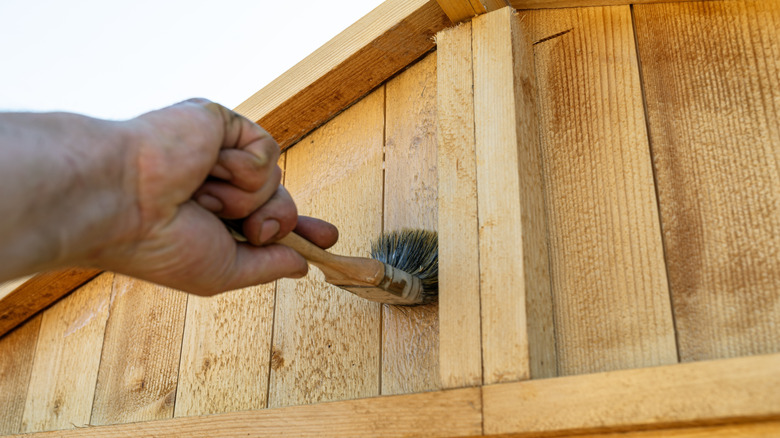
For the exterior, you can leave the pallet boards as is for a charming rustic look or cover them with exterior-rated plywood siding. If you're painting, sand the rough areas first and remove the dust before applying exterior wood primer, followed by weather-grade acrylic latex paint. Get creative with the color or match the shed to your house or fence. You could even paint the doors a funky design for a whimsical feel.