

Skip Concrete — There's A More Attractive, Weed-Resistant Option For Your Patio
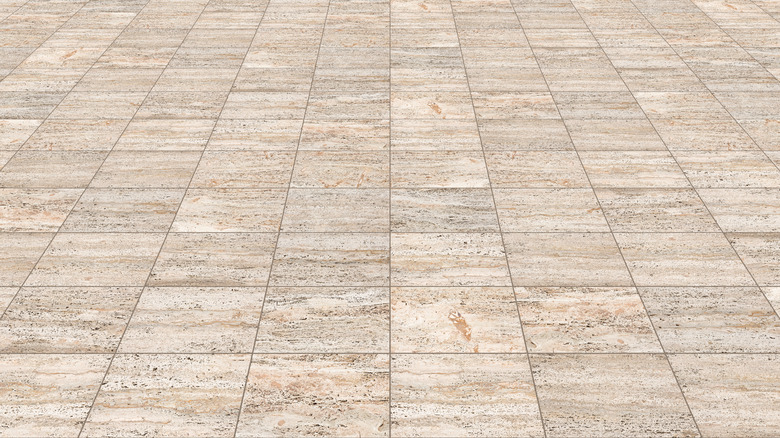
When it comes to building a DIY backyard patio, concrete may be the gold standard, or, more fittingly, the greige standard. However, if the thought of staring at a plain gray slab doesn't exactly inspire you, consider swapping basic concrete for travertine pavers. This natural stone offers plenty of variation in color and texture, creating a distinctive aesthetic while still providing the durability you need from a high-traffic outdoor surface. Better yet, when travertine pavers are properly installed with polymeric sand between the joints, they can create a patio that's highly resistant to those pesky weeds that keep cropping up.
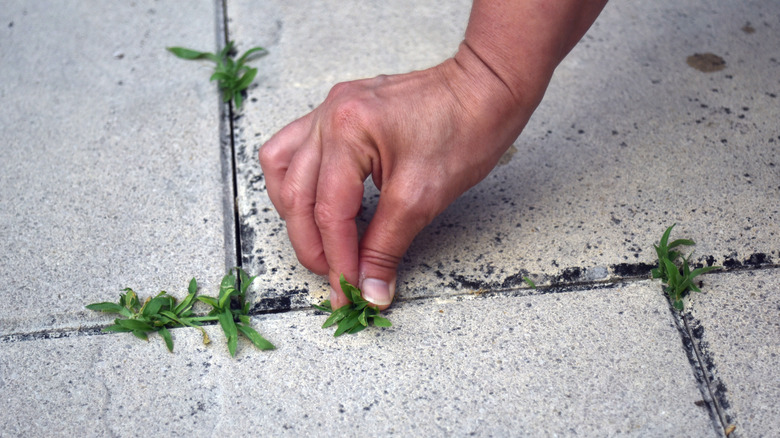
Of course, travertine is by no means the only material of its kind to repel weeds, since weeds don't typically grow through solid stone. Instead, the problem starts when stray weed seeds settle into the joints between pavers, where accumulated dirt, dust, and other organic debris give them somewhere to take root. That's why preventing weeds from growing between pavers on a travertine patio largely comes down to how the pavers and their joints are installed and maintained, rather than simply the stone itself.
Building a travertine paver patio with polymeric sand joints
Polymeric sand is the key ingredient to keeping weeds out of your pavers. Unlike ordinary joint sand, polymeric sand contains additives that help it harden and stay in place after it's properly applied and activated with water. However, polymeric sand isn't an impenetrable weed barrier: Established weeds and roots beneath an existing patio may still eventually return, making proper preparation especially crucial.
If you're starting from scratch, it's crucial to install travertine over a properly prepared, compacted gravel and sand base and fill the joints with polymeric sand. Once the patio is finished, be sure to regularly sweep away leaves, dirt, and other debris that can accumulate in the joints, as these are easy avenues for weed seeds to take root. If any do manage to pop up, always take care of them promptly by applying weed killer or pulling them up by hand.
Polymeric sand also needs to be installed correctly to do its job. Joints should be filled to the proper depth, and the pavers should be completely dry before application. Also, adding the right amount of water during activation is crucial for allowing the material to fully harden. So, while no patio is permanently weed proof, combining the natural beauty of travertine with properly installed polymeric-sand joints can give you an aesthetically better-than-greige surface that is considerably less welcome to weeds.