

3 Washing Machine Makes And Models To Avoid Buying — And Why
We may receive a commission on purchases made from links.
If you want clean laundry, you need a washing machine. But, more than that, you need a machine that will actually do the job — removing stains and odors from your clothes and linens without being too hard on the fabric. There's a lot that goes into choosing a washer, as you need to consider size, top or front loading, agitator or impeller, and so on. Here's another thing to consider: the machines that are best avoided.
Not every washing machine is capable of tackling your worst laundry day stains. Some washing machine brands are unreliable and not worth spending your hard-earned money on, and even normally dependable brands have some iffy models. We rounded up washing machines that have a significant number of negative reviews and complaints from customers, plus high rates of repair calls and a reputation for being rough on clothing, to put together a list of the three washers you definitely don't want to turn to on laundry day: Samsung top loaders, an Amana machine, and a compact Whirlpool unit. It may be little surprise that each of the bottom three washing machines is a top loader — front loaders tend to be better at cleaning, gentler on your clothes, and more energy efficient.
Samsung top-loading washing machines
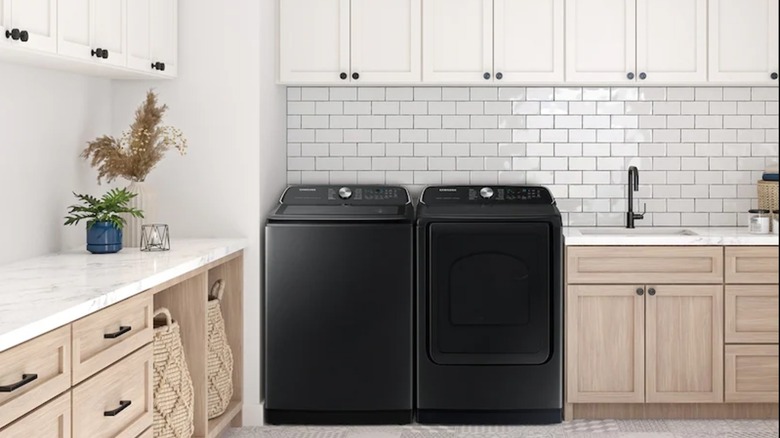
Let's just say that Samsung doesn't have the best track record when it comes to top-loading washing machines. In 2016, the brand issued a voluntary recall for nearly 3 million units due to some of the machines presenting a risk of impact injuries. The washing machine's lid could detach during the cycle, fly across the room, and hit someone. Then, in 2022, it issued another recall, this time for top loaders with the Super Speed feature, as the machines could potentially short circuit, overheat, and cause a fire.
Those recalls were a few years ago, but the brand has been plagued by even more issues since. A 2024 class-action lawsuit claimed that the company's top loaders corroded prematurely and the brand knew about the issue for more than a decade without doing anything about it. The lawsuit claimed this caused a domino effect of issues, including clogged hoses and debris buildup in the drum. People who tried to find a replacement flange to repair the one damaged by corrosion either had difficulty or ended up paying hundreds of dollars.
Despite all their issues, Samsung top loaders have a standard one-year warranty, so if something goes wrong after the first year, you're on the hook for repairs. In general, Samsung is considered by many to be among the most-serviced appliance brands. And since one of the more common complaints about the washing machines is that they need service sooner than expected, unless you plan to become BFFs with your repair person, you might want to pass on Samsung top loaders.
Amana 3.8-Cubic-Foot High-Efficiency Top-Load Washer
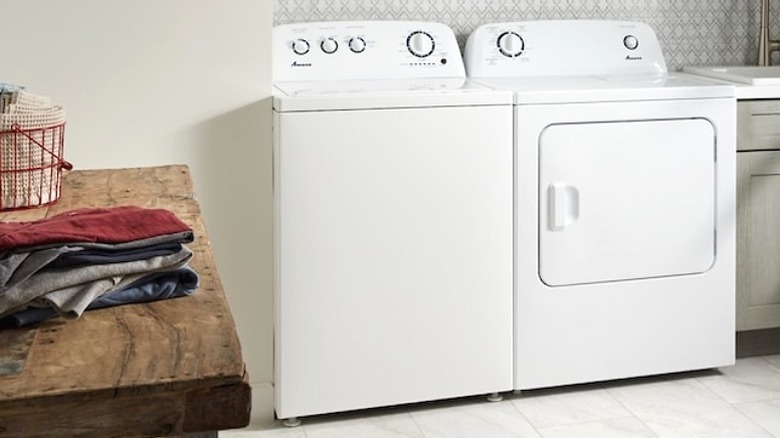
Amana's 3.8-cubic-foot top-load washer with a high-efficiency agitator (NTW4519JW) has inspired many passionate customer reviews. But they aren't all raves — the washing machine has a 3.9-star rating on the brand's website, with numerous people describing it as the "worst purchase ever." And it's not just customer reviews noting less-than-impressive performance – Consumer Reports gave it only a middling overall ranking among top-loading washers with agitators, and its owner satisfaction rating was one of the worst on the list.
A major issue with the Amana washing machine seems to be the draining feature. Multiple reviewers have stated that the drain pump continuously runs and won't stop until the machine is unplugged. More general reviews describe the machine as performing poorly overall, complaining that it doesn't clean clothes. When it comes to choosing the right washer size, it's worth noting that the 3.8-cubic-foot capacity is on the smaller side and can be easy to overload, and overloading washing machines is one of the most common causes of breakdowns. If you've got more than two or three people in your household, the Amana 3.8-cubic-feet top loader will likely be a definite skip — drainage issues aside.
Whirlpool 1.6-Cubic-Foot Compact Top Load Washer
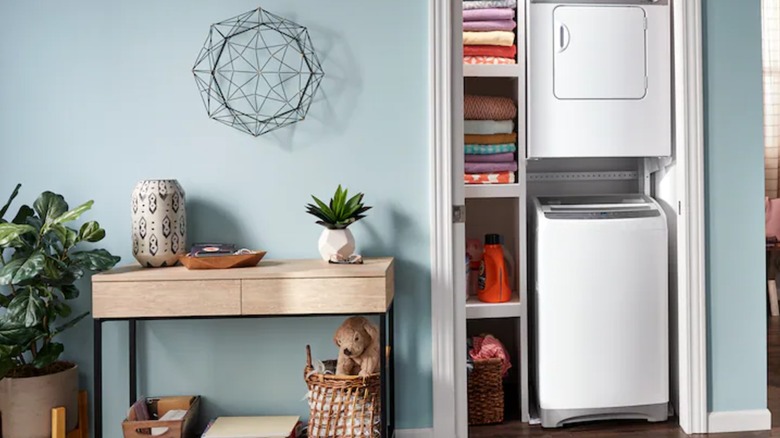
If space is at a premium in your home, a compact washer may seem like the way to go. Its small size means it will fit in a closet, and the flexible installation means you can connect it to a sink if you don't have a full laundry hook-up at home. But, despite their small size, Consumer Reports notes that compact washers often have big problems, calling out Whirlpool compact washing machines in particular as having some of the highest problem rates.
That may be surprising, as Whirlpool is generally one of the most reliable appliance brands. But, you can't win at everything. According to Consumer Reports, its compact washer is likely to have difficulty cleaning and may be prone to leaking, vibration, and noise. Reviewers seem to agree with CR's assessment, giving the 1.6-cubic-foot WTW2000HW an average of 3.6 stars on the Whirlpool site. On top of that, another issue with Whirlpool's compact machine is its cost. The washing machine itself may be small, but its price tag isn't; this little unit runs over $1,000, a less-than-budget-friendly option for people with limited space for laundry equipment.
How we selected the washing machines you should avoid
To determine which washing machine models to avoid, we consulted reputable review sites, including Consumer Reports and Wirecutter, to learn more about what makes a quality, reliable machine and find those units that earned consistently poor scores. We examined test data to see which models they recommend and which ones they advise against. We also reviewed repair technician surveys and recall or technical service bulletins to see which machines had a high rate of service calls or safety or technical concerns.
We then dug deep into the reviews of various top-loading models, as top loaders tend to have several strikes against them from the start — they're noisy, they use a lot of water, and they're rough on clothes. But, they are still popular. Looking at reviews, we zeroed in on the complaints that were repeated by multiple reviewers and issues that impacted machine quality and reliability, such as defects, difficulty using the washer, and concerns about effectiveness. Finally, we looked for recall information to see if there were any safety or other concerns associated with the washing machines.