

What Does Sugar Do To Concrete?
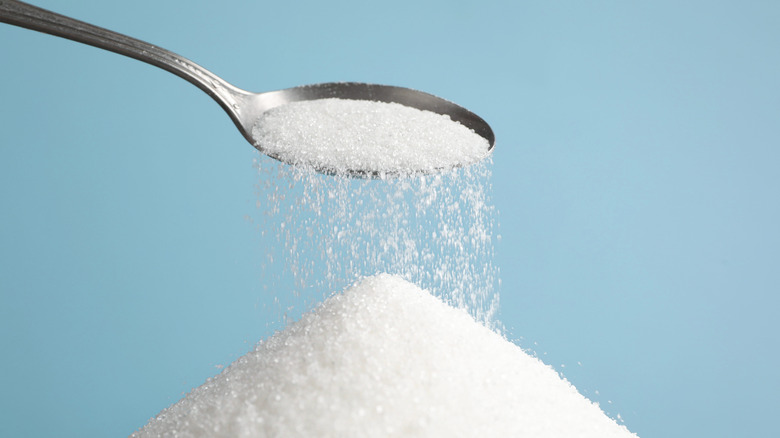
So, you've planned your concrete project down to the last detail and are now ready to get to work. There's just one problem: You have a sizable area to cover, and Mother Nature has turned up the heat. Hot weather can make concrete harder to work with because it speeds up the curing process, shortening your window to work with the mix. Even if you wisely schedule your project for spring or fall when it's not too hot or too cold to pour concrete, an unexpected hot day can complicate the job. The solution may be a common item in your kitchen pantry, however, as it's well known in the construction and concrete industries that sugar acts as a handy retardant for concrete.
Historically, cement, the binding powder in concrete, was sometimes stored in recycled sugar sacks. From that, the discovery was made that, in small quantities, ordinary table sugar can delay cement hydration. To understand why sugar works as a concrete retarder, it helps to know what's happening inside fresh concrete.
When mixing concrete, water binds the limestone and clay of cement, kicking off a series of chemical reactions called hydration. These reactions produce several compounds, including calcium silicate hydrate, the primary binding material responsible for much of concrete's strength. Sugar interferes with these hydration reactions, temporarily slowing the formation of hydration products. It does this by forming a barrier around mineral components, temporarily reducing their reactivity.
Understanding the long-term impact of mixing sugar with concrete
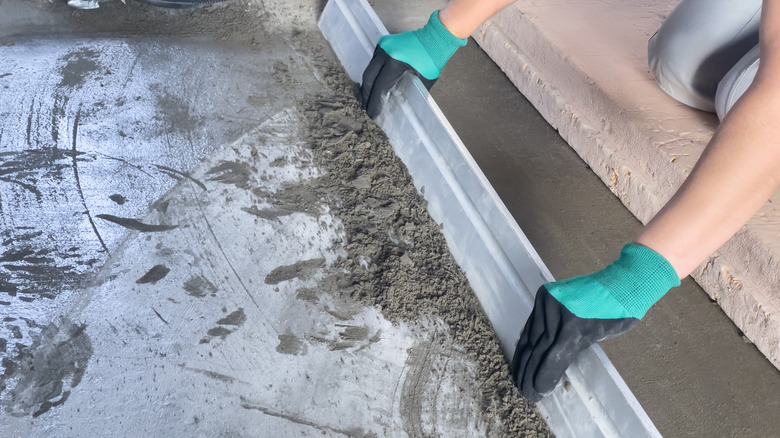
Before you start dumping sugar into your wheelbarrow, you should understand how it affects concrete after the job is done. In small quantities, sugar can slow cement hydration, providing more open time. Add too much, though, and that delay can postpone setting and interfere with the hydration reactions needed for concrete to develop its intended strength. In extreme cases, the concrete may remain soft or fail to develop adequate strength, leaving it weaker or less durable than expected.
Sugar can also lead to bubbles, increasing the mixture's air content. This extra air makes the concrete less compact, which may lead to durability problems. If the sugars aren't properly absorbed into the concrete, they could also retain rain or moisture in the air, opening the possibility for cracking. Mold, stains, and other defects are also possible.
If you're working on your driveway, you might use sugar to save money on commercial admixtures — but adding too much to the concrete mixture could ultimately be more expensive. You could end up with a failed pour that needs to be repaired or replaced. On the other hand, adding an amount that's too small to have a meaningful effect won't solve your original problem. Even if you use the best type of concrete for a long lasting driveway, the amount of sugar you add matters.