

Skip Traditional Landscape Fabric: Repurpose This Yard Scrap To Suppress Weeds
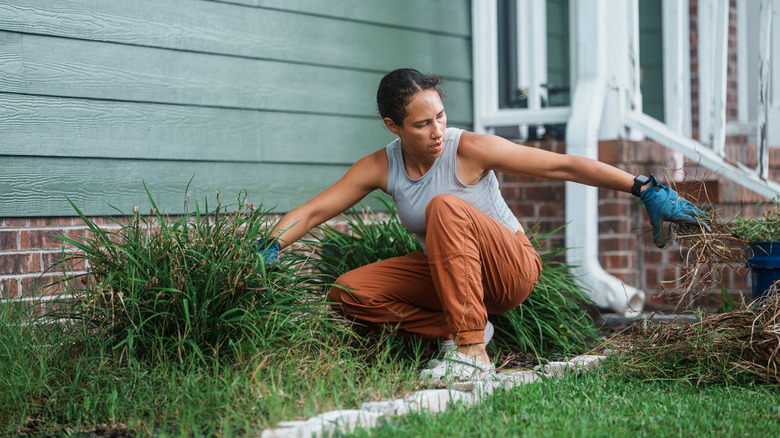
At first glance, landscape fabric may seem like a great idea for keeping your yard weed-free. However, there are disadvantages to using it, including the expense, restricted water and air flow, and fewer nutrients reaching the soil. A layer of landscape fabric also makes it more difficult to add plants to your garden, because you have to cut a hole before you can dig into the soil. After a while, you'll end up with pieces of shredded fabric sticking out around your plants, requiring you to manage the cost and labor of replacing or removing it altogether.
What's the alternative if you want to minimize weeds and not spend a small fortune? You may already know the benefits of using mulch for weed control, and it turns out that you likely have a great solution right in your yard — grass clippings. After all, grass clippings are free and replenished every time you mow your yard. You might even be able to get your neighbors onboard and get extra free mulch when they mow. Repurposing lawn clippings isn't just a cheaper landscaping option though; it's also a perfect way to reduce waste, increase organic matter, and improve the structure and nutrient distribution in clay or sandy soils. (Hint: That means you don't need as much fertilizer.)
Grass mulch is also versatile. You can use it around flowers, shrubs and trees, and even your vegetable plants. Just be sure you're using clean clippings that are free of weeds and seed heads and have not been sprayed with anything toxic. If your neighbors are donating their clippings to your cause, be sure to ask if they spray their lawn, as herbicides for weeds may stay on the grass and damage your plants.
How to use grass clippings to suppress weeds
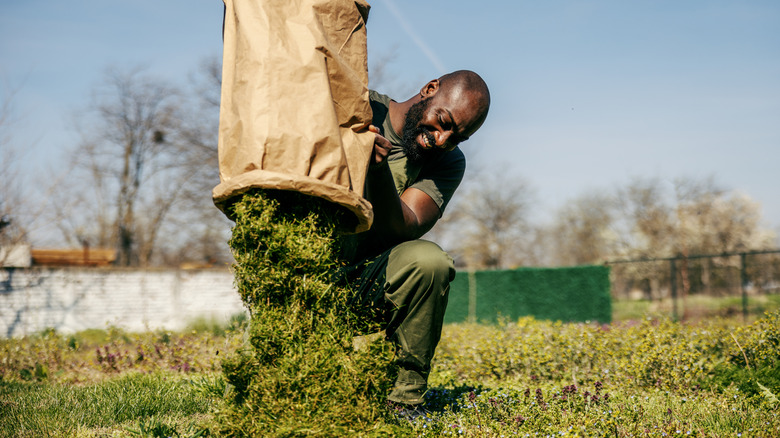
Using grass as a weed-suppressing layer probably seems pretty intuitive. Just spread the clippings around your plants, right? Yes, but there are a couple of things to keep in mind if you want to protect your desirable plants while effectively keeping weeds from establishing.
First, ensure that you are using dry clippings. Wet grass sticks together and is harder to evenly spread, creating an impenetrable mat that prevents water and oxygen from reaching the soil. The lack of air flow could also make the clippings smell bad as they start to break down. Second, only apply 1 or 2 inches of clippings. Adding more than that may invite unwanted pests to make a cozy home. At the same time, using too much mulch can cause rapid breakdown, essentially creating a compost pile. Compost creates heat that, while being potentially damaging to young weeds, might also hurt your garden plants. So, start with a light layer, and build it up gradually. Replenish your mulch with fresh grass every time you mow to continue keeping weeds at bay, and, if desired, use a pre-emergent product with your clippings to further help stop any unwanted growth.