

What Exactly Is Dry Cleaning, And Can You Do It At Home?
We may receive a commission on purchases made from links.
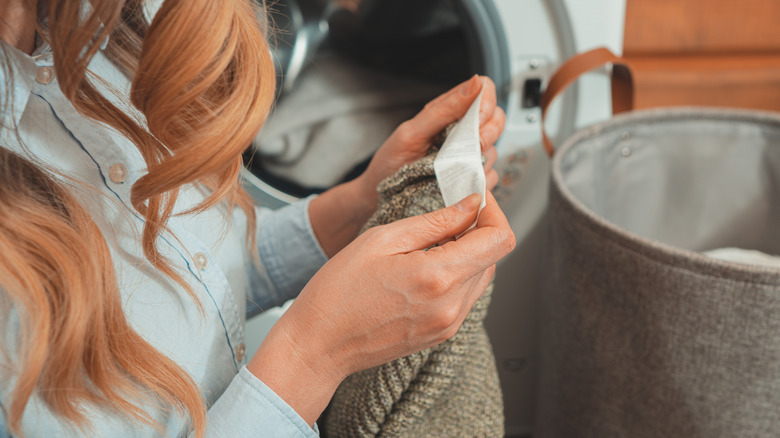
When the dog sheds all over your drapes, are you just so glad to get that weird musty smell out of the den and into the laundry that you forget to check whether they should get chucked into the washing machine or dry cleaned? Plenty of us have wrestled with whether it's best to shove a down comforter into the washing machine at home or take it straight to the dry cleaner. The same goes for cleaning crusty throw pillows or wool area rugs. Cotton may be the fabric of our lives, but between the clothes in your closet and the linens on your table, figuring out how to properly clean your favorite items can be a daunting task. But what exactly is dry cleaning, and can you do it at home? To find out, Hunker spoke with Ashley Matuska Kidder, founder and the CEO of Mountains of Laundry.
"Dry cleaning does just that, clean with OUT water," Matuska Kidder said during her exclusive interview. "Dry cleaners typically use a solvent method with silicone or hydrocarbon," she explained. These products are used during the pre-treatment, scouring, and cleaning cycles. Similar to a water-based detergent you use at home, they're intended to dissolve dirt along with oil-based stains and grime.
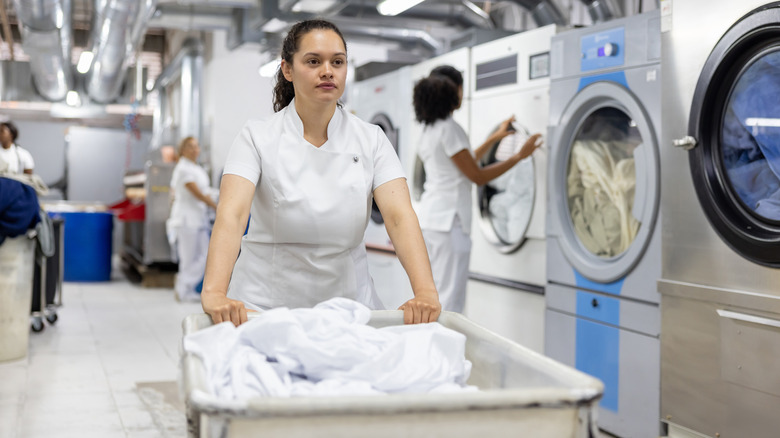
Despite using an entirely different process, dry cleaning does involve the use of washing machines, albeit specialized ones. "Dry cleaning uses very mild agitation and tumbling, which is much gentler on clothes. Typical washing machine methods use agitation and a more aggressive version of tumbling to lift the dirt and soil from the fabrics," Matuska Kidder told us.
Dry cleaning is necessary for certain items (and can be safer when dealing with stains)
While some easy tricks can make your clothes look freshly dry-cleaned, there are a few different reasons to lug your laundry to the cleaner instead of trying to wash it at home. According to Ashley Matuska Kidder, it starts with understanding when to choose dry cleaning over regular laundering. The first step? "Check the labels on the garments. It will tell you for certain what should be dry cleaned [by specifying] 'Dry Clean Only'," she emphasized.
It's extremely important to pay attention to these care instructions to avoid problems that can happen when you put dry clean only items in the wash. Wool blankets can shrink almost instantly. Silk sheets can lose softness and gain permanent water spots. Structured items can lose their shape, while delicate beading or lace accents can be damaged or even ripped right off pillow covers or other items before the end of the wash cycle. Matuska Kidder added, "Clothes that would normally shrink or 'bleed' when washed in a typical wet washing process are great candidates for dry cleaning."
Your neighborhood dry cleaner can also be a huge help if you're struggling to remove set-in stains. "Visible stains on 'dry clean only' fabrics/garments are a good sign that you should take the item to the dry cleaner," Matuska Kidder explained. There are two good reasons to do this. First, the heat from your dryer can permanently set stains into fabric. And secondly, if the stain is from a combustible fluid like gasoline, cooking oil, or certain cleaning chemicals, it can be a serious fire hazard.
At-home dry cleaning kits can help, but they're no substitute for the real thing
If you dread making a trip to the dry cleaners, you may be tempted to try solutions like the popular Dryel-at-Home Dry Cleaner Starter Kit, an $11 Walmart find that promises to gently clean delicate fabrics for a fraction of what it costs to have items professionally cleaned. While this and similar kits that use pre-treating stain pens and dryer-activated steaming cloths are highly-rated dry cleaning alternatives, Matuska Kidder said they're no match for the real thing. "Dry cleaners are using solvents and commercial equipment that people can not safely or cost-effectively reproduce at home."
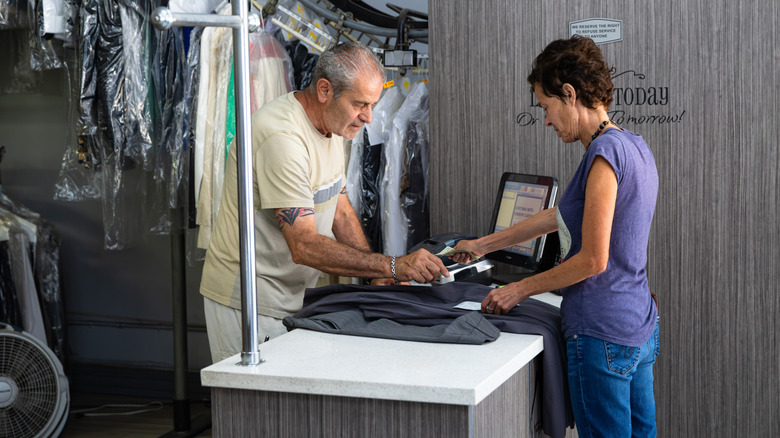
There are several things you should keep in mind while finding a reliable dry cleaner to put into your regular laundry rotation. When you're entrusting your sofa's slipcovers or costly curtains to a new dry cleaner, reputation matters. Ask friends or check reviews to find reliable local options. Dry cleaning costs vary widely depending on the type and number of items you need cleaned and whether stain removal is required. Shop around for pricing, and if you anticipate being a frequent flyer, ask whether repeat customer discounts are available.
The best dry cleaners are collaborative and willing to discuss your specific situation before providing an estimated cost and turnaround time. Remember to point out any stains or delicate embellishments during the drop-off process. And if you've tried making your own dry cleaning solvent but it didn't do the trick on a particular item, make sure to let your dry cleaner know what you used.