

Paper Wasp Vs. Hornet: How To Tell The Difference Based On Their Nests
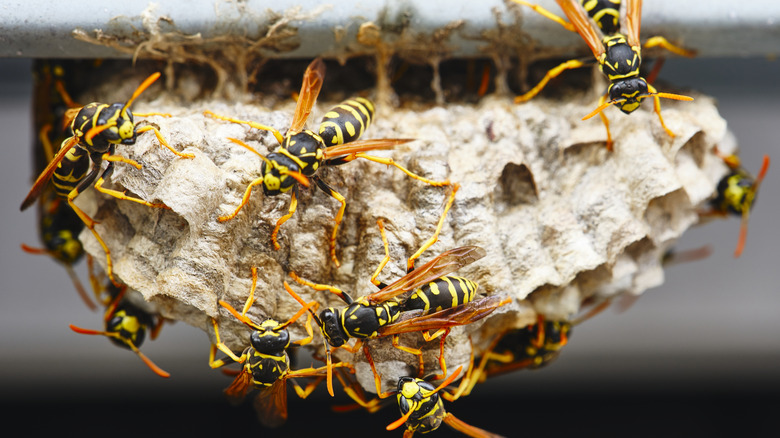
Finding any type of stinging insect in or around your home can set off the alarm bells. A lot of them have nests that look alike and are easy to misidentify, but knowing which insect has moved into your humble abode can help when calling an exterminator. One of the most common mix-ups involves paper wasp and hornet nests, but paper wasp nests look different from hornet nests once you know what to look for.
Since "paper" is right there in the name, you might assume paper wasps are responsible for any nest that looks like it was made from, well, paper. In reality, the enclosed outer shell of a hornet's nest also looks very much like paper. One way to tell the difference between these insects' nests is by seeing if you can spot the comb. If you can see the comb, chances are good it's a paper wasp nest. They build small, umbrella-shaped nests. If you look up under the nest, you can see exposed cells; the cells resemble a honeycomb. Hornets conceal the colony beneath a layered outer covering shaped like a balloon or football. The outer covering of a hornet's nest resembles paper mache.
Paper wasps and hornets build their nests in different spaces too. Paper wasps typically build in small crevices around a home. That preference could explain why wasps keep coming to your porch, especially if an overhang provides shelter. Hornets are more likely to nest in the open, like in the trees surrounding your home. Wherever you find one, stay back — both paper wasps and hornets may defend an active colony.
How paper wasps and hornets can affect you
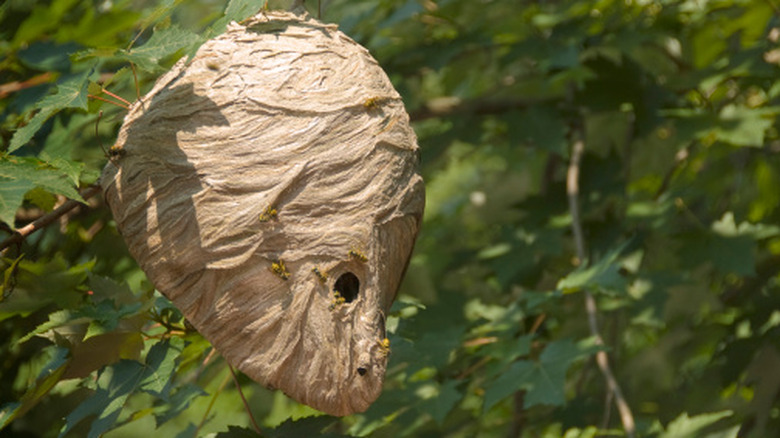
Paper wasps and hornets will mostly leave humans alone while flying around in search of food, but don't test your luck. That changes when they believe their nest is being threatened, so you need to be strategic if you're planning on removing it. Paper wasps tend to be less defensive than hornets, but either insect may strike if you swat at it or create vibrations nearby. It's not a once-and-done situation either — unlike honeybees, both can sting repeatedly.
Most of the time, a single sting won't cause any more damage than some temporary burning, redness, or swelling. It's a good idea to get checked out if you receive multiple stings in a short period or if you have any sort of venom allergy. Anaphylactic shock can set in quickly, so it's better to be safe than sorry.
An exposed nest can be treated during the late evening or early morning when it's cool with an aerosol specifically labeled for wasps and hornets. However, the safest choice is to call the exterminator if you need to get rid of a hornet or wasp nest. No matter what, never knock down, burn, flood, or seal an active nest, as that's a surefire way to make the insects angry.