

Ditch Plastic Garden Edging: The Cheaper, Eco-Friendly Option For A Rustic Look
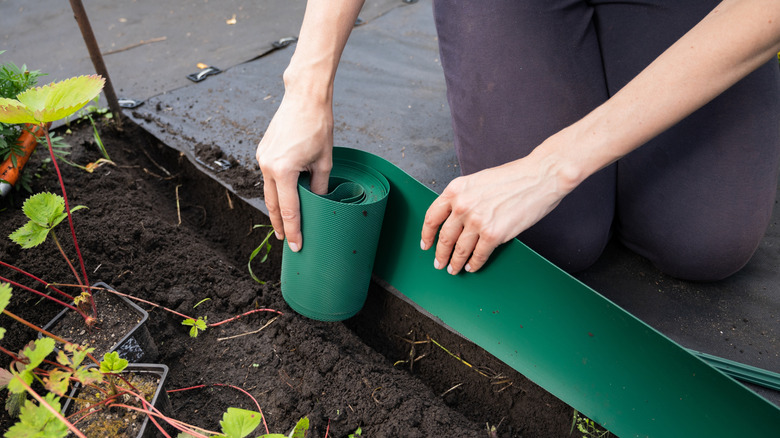
Garden edging keeps everything where it belongs: the grass stays in the lawn and the soil, mulch, and garden plants stay in the bed. It also creates a finished look and helps define your landscaped areas. Plastic edging is inexpensive with prices ranging from $1 -$3.50 per linear foot. Installing plastic lawn and landscape edging is fairly straightforward. But it lacks a lot in the visual appeal department. And it still costs money. A creative and even cheaper alternative is using sections of logs as your landscape borders. It could be a free option if you already have logs on your property to use.
For instance, that downed tree may be a gold mine for your own wood, but it can be pricy to turn it into usable lumber. Milling services — the process of making a log into usable lumber — typically cost between $35 – $120 per hour. This project uses the logs as they are, requiring only some minor cuts. Even better, log edging is an eco-friendly option compared to mass-produced plastic products. Reusing wood debris from trees keeps the remnants out of landfills and lets it serve a useful purpose instead of just being burned.
Making DIY garden bed borders is a good way to repurpose thick branches or full trees that you're removing from your yard. Even thinner branches can work as a simple fence-like edging, especially if you weave the branches into one another. Or, you might take old logs from neighbors or family members who are trimming their trees. In addition to the logs, you might need a saw to cut them into shorter lengths and a shovel to dig a trench for the logs edging.
Logs and thick branches offer a rustic edging material
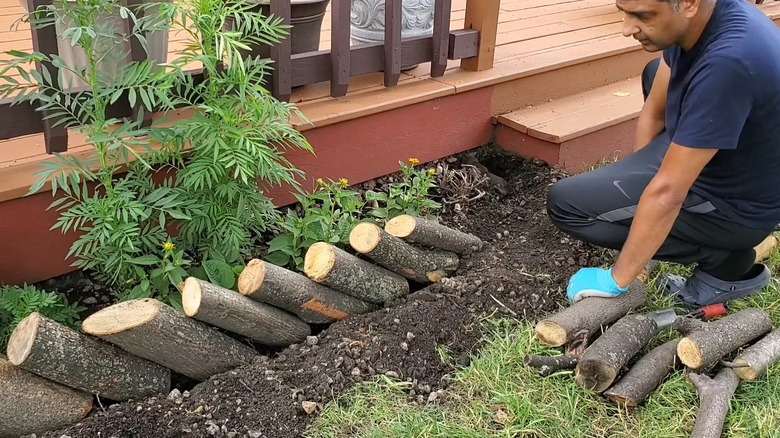
Choosing the best type of landscape edging for your garden beds often comes down to your style and budget. Log edging is ideal for a rustic, natural look in your garden. It can be particularly good for a garden with a naturalistic style where plants are less pruned or well-defined. But you can use it with any style of garden if you like the look.
If you have long pieces of thick branches or a thin tree trunk, you can leave them long and lay them horizontally along the edge of your garden. This option works well for long, straight stretches. For curved lines, cutting the log into shorter sections can work. You can also use those shorter sections (12 to 18 inches should work well, but you can adjust the length if needed). After that, simply line them in an upright position along the border, or slant them slightly, so the pieces rest on each other. Cutting the log at an angle makes it easier to put them in a slanted position.
Next, dig a shallow trench along the edge of the bed to give the logs a place to sit. This helps them stay in place. Once you have the logs positioned how you want, fill the trench up with soil to help lock the logs in place. If you use thinner branches horizontally along the garden's edge, overlap the branches slightly to help them stay in place.