

That Downed Tree May Be A Gold Mine For Your Own Wood
We may receive a commission on purchases made from links.
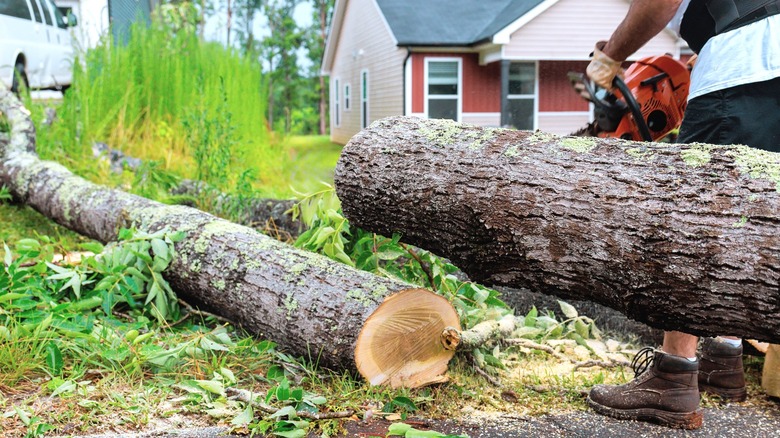
The stately oak in your yard has reached the end of its days, either blown down in a storm or cut down for safety reasons. As a professional woodworker, one thing I have always wanted is to make a project from a tree that I cut down and processed into lumber, taking the effort from forest to finish by myself. I have done this with smaller logs using my bandsaw and regularly harvest chunks of wood for woodturning projects, and it is extremely satisfying. After learning how to remove a tree in your backyard, you may have similarly thought: Since lumber is expensive, can I turn that tree into usable woodworking pieces? The answer is yes. Will that lumber become a gold mine and save you money? That answer is: It depends.
Large-diameter trees contain hundreds of board feet of lumber. Because freestanding trees grow up straight and unencumbered, the quality will often be very good. The variable determining the cost per board foot is how you process that round tree bole into rectilinear boards.
There are a couple ways to turn logs into lumber. The easiest is to hire someone. There are many small sawmills around the country, and most will mill your logs for a fee. Some folks with portable mills will cut the log on site. Otherwise, you'll have to somehow move the log to the sawmill, which may be expensive. Then, there will be a charge, usually hourly or per board foot, for cutting the log into lumber. Rates typically range from about $75 to $150 per hour. Once cut, you'll also need to pay to get the wood home, unless you do it yourself. If that all sounds like a lot, you could try to cut the tree on site by yourself.
Cutting a downed tree into boards by yourself
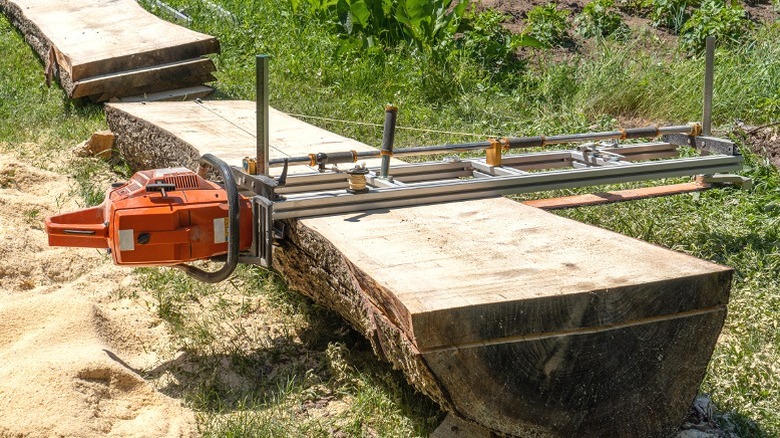
The second option to process a downed tree is totally DIY. There are devices called chainsaw mills, such as the Carmyra Portable Chainsaw Mill, that will allow you to cut your own lumber. Ripping lumber this way is cheaper but also hard work. You need a high-quality chainsaw with a guide bar over 20 inches long, which can cost upwards of $500. The chainsaw mill costs about $150 (prices vary) for a model of reasonable quality, and ripping chains (chains that effectively cut down the tree's length) and other accessories will run another couple hundred dollars. So, expect to pay about $800.00 total. A 24-inch diameter log at 16 feet long can produce over 400 board feet of lumber. Doing the math, that will get you lumber for about $2 per board foot. If your tree is a valuable species like maple, walnut, or cherry, that is a super-bargain price (though you will still need to surface the lumber). Plus, the initial investment will set you up to process any downed trees in the future.
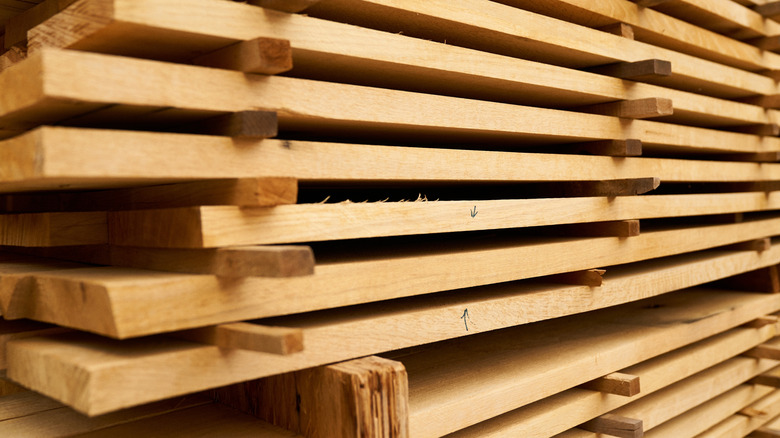
Drying the lumber is your next decision, as fresh-cut lumber is "green" and mostly unusable because it contains too much water. Air drying is the cheapest option but takes a long time. You'll need to store the lumber someplace dry and stack it with sticks between each layer of boards. Boards take about one year for every inch of thickness to dry. Kiln drying is a process you can hire out to dry lumber much faster (a few weeks or months), but it will cost you per board foot. A customer of mine recently had lumber kiln dried, and it cost about $5 per board foot. (I'm building her a custom desk from the lumber.)
Pros and cons of homegrown lumber
To my mind, the biggest benefit of cutting your own lumber from a downed tree isn't the savings but that you can use it to build a special project for yourself. That dining table or desk will take on personal and emotional value because of its origin. Another advantage is milling to your exact needs. You control the thickness of the boards and the grain pattern by having lumber quarter-sawn (aka Tiger oak) or rift-sawn, which is more desirable in certain species, like oak. Another benefit is making lumber from a species that is not usually available on the market. Box elder, butternut, mesquite, live oak, or even redwood are beautiful species that are difficult to find on the market, but if you have one growing in your yard ... Bob's your uncle. You've got high-quality wood at a bargain price.
The downsides to the DIY route are that it's a ton of work, air-drying takes a while, and there are risks. You may dry the lumber improperly, making is less usable, and some species are prone to insect infestation. And if you hire someone for milling and kiln drying, it's unlikely you'll save any money at all. In some cases, it may be cheaper to just buy quality lumber from a lumberyard. However, you'll still have saved that tree from being turned to mulch or sent to the landfill, and you'll get the extra enduring satisfaction of having built a special piece of furniture from the tree you lived with. So, will you turn your downed tree into a gold mine for future woodworking projects? Perhaps, but it may depend on if you are looking for actual gold or a treasure of the heart.