

Not Traditional Curtains: Cover Windows With An Affordable, Customizable Alternative
We may receive a commission on purchases made from links.
Curtains can truly elevate your space, but they're also a commitment that takes time and, often, a bit of money. If you're renting, have recently moved and haven't decided on your decor, or are saving up for the drapes of your dreams, then temporary window coverage at a low cost could be an ideal solution. Enter pleated paper shades, one of the best ways to cover windows on a short-term basis. Inexpensive and easily customizable to fit your space, this no-drill solution makes an affordable alternative to traditional curtains.
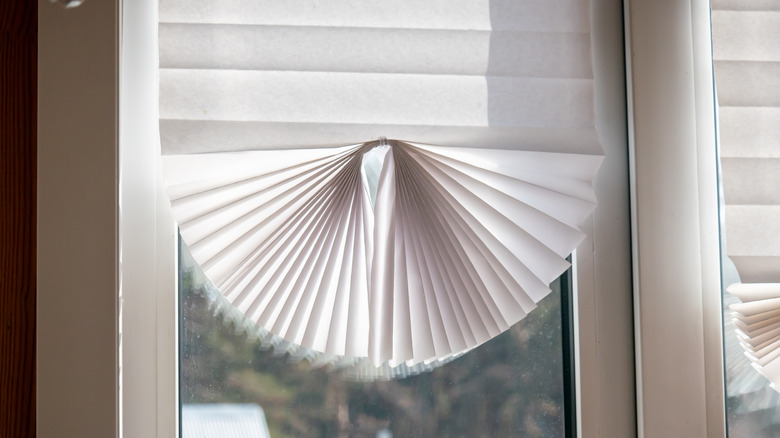
Like a paper fan, these accordion-folded shades unfold to offer complete window coverage when removed from their packaging. They can be applied either directly onto the window glass or to the frame above with a simple peel-and-stick adhesive strip that runs along one edge. Depending on the brand, they are often accompanied by a set of small plastic clips that will allow you to raise and lower the shades by hand. If your household includes pets or small children, this is an added bonus, as there are no dangerous or easily tangled cords. These shades can also be found in a variety of light-blocking levels ranging from modest light filtration to complete blackout, depending on your needs.
How to make paper shades work for you
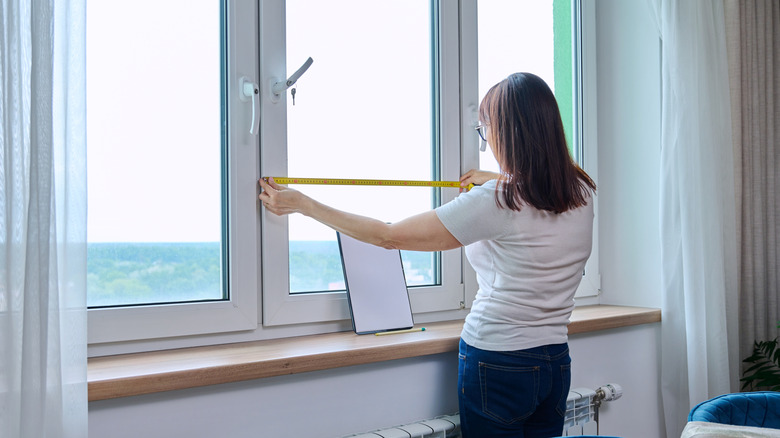
Home Depot offers a wide variety of these paper blinds in their Redi Shade line, which come in widths of 36 and 48 inches and are designed to fit most standard windows without any adjustments required. If you're looking for something a little sturdier, IKEA's Schottis pleated shade is made of 100% polyester rather than paper, and it costs $4.99 and can still be trimmed to fit your window. Most paper shades are designed to fit standard-sized windows, so you'll need to adjust your shades to fit a narrower frame. Simply measure the width of your window, and cut the shade accordingly while it's folded up. This will be much easier and more precise than trying to cut the shade after you've already hung it.
It's also important to think about where you apply the adhesive strip. Because these are paper shades, it's usually better not to apply them directly to the windowpane, where moisture or condensation might cause them to get mildewy. In a similar vein, you don't want to hang paper shades in steamy bathrooms or anywhere else in your house where they might encounter moisture. Remember, they're best treated as a temporary window coverage solution, not a permanent stand-in for real curtains or blinds.