

This Elegant Vintage Glassware Is A Rare Thrift Find That's Worth Hunting For
We may receive a commission on purchases made from links.
If you love browsing the glassware section at a thrift store but don't know how to tell Target trinkets from valuable vintage ones, listen up. There is one type of elegant vintage glassware that's worth hunting for on your next antiquing adventure. This rare thrift store find is distinguished by its soft pink color and cloudy hue. It's called opaline, and it differs from other ordinary pink glass in a very special way.
Unlike normal transparent glass, "opaline" glassware has an opaque appearance from minerals that have been added to the molten glass during production. This creates a milky finish that resembles porcelain. Different brands manufactured opaline in the 19th century and it was most commonly produced in France. Two of the most sought-after are the brands Baccarat and Portieux Vallerysthal.
But how much can you expect pink opaline glassware to be worth? The answer depends on the item itself, the glassmaker, and the object's quality, but the average price for a piece of pink opaline glass at 1stDibs is $1,200, so it's certainly one of the valuable items you should never overlook at flea markets or secondhand shops. And although hard to find, this collectible glassware could turn up where you least expect it.
What to look for when hunting for pink opaline at a thrift store
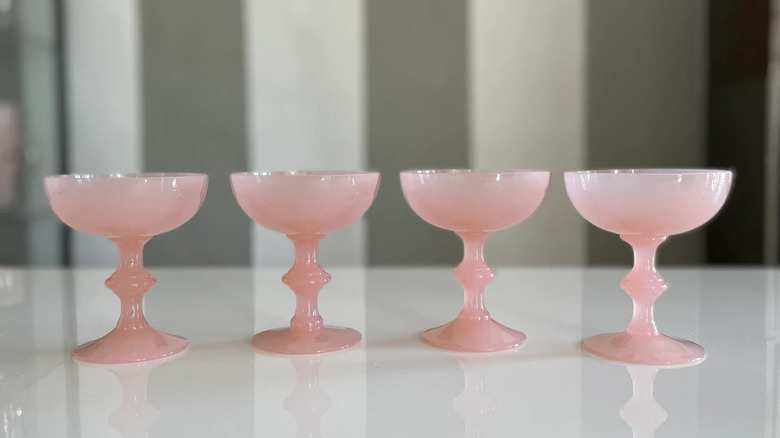
Like other colored glassware finds, the distinctive pink coloring of opaline makes it easy to spot on a crowded thrift store shelf. And yet, not every piece of pink vintage glass is opaline. To check for authenticity, look for the characteristic semi-opaque appearance, and be sure to hold the piece up against a natural light source to get a proper look.
Most antique opaline glass doesn't carry a maker's mark, but later versions or pieces from makers like Portieux Vallerysthal did include labels, so you can also look for stickers on the base. Another clue is a lack of seam marks on drinking glasses. Free-blowing techniques were common by the 19th century, so most pieces do not have seam lines. Instead, you may see a pontil mark on the bottom, made when the finished piece is broken off the pontil rod used in glassblowing.
Don't limit your search to drinking glasses, either. Vases, bowls, and perfume bottles were also made from opaline glass. Older variations that weren't mass-produced will be worth a lot more. For example, gorge-de-pigeon opaline is an especially rare type that was made to mimic the hue of a pigeon's throat feathers. It was made by using gold salts and other metal oxides, which made production costly and difficult. Any type of opaline is a worthy find, however, which makes it a type of vintage glassware to always look for in thrift stores . So, before you leave that pretty pink perfume bottle behind, be sure to take a closer look.