

The Fascinating Evolution Of Ryobi Tools Throughout History

When you shop for a power tool at Home Depot, you have a choice between high-end Milwaukee tools and less expensive — but still reliable — Ryobi ones. You might not know that they are manufactured by the same company, Techtronic Industries Company Limited (TTI), which also holds the license to make middle-of-the-road Ridgid tools. Together these three brands form a tiered offering that targets contractors as well as homeowners and DIYers. The story of the development of Ryobi tools, which represent the entry-level tier, involves both Japanese manufacturing proficiency and 21st century global marketing strategies.
The founder of the Ryobi Seisakusho Co., Ltd., Yutaka Urakami, established the company in 1943 as part of Japan's war effort. The company's purpose was to die-cast metal parts, and as soon as the war ended in 1945, it began supplying the automobile industry. The company had developed the ability to assemble lightweight finished products from die-cast metal and plastic forms in-house, and during the 1960s it began marketing consumer products like cameras, copy machines, off-set printing presses –and, in 1968, power tools.
Early Ryobi power tools were very different than those of today. They were heavier, corded, and a different color. The 18V ONE+ cordless line was introduced in 1996, and since then, the number of tools in that line has ballooned. Here's a look at some developments in Ryobi tools over the last 60 years.
Evolution of the battery pack
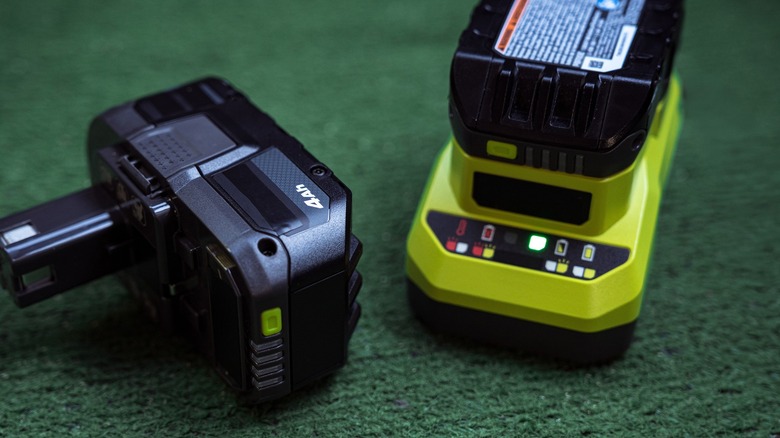
The heart of the 18V ONE+ system is the battery, and Ryobi is the only company to have maintained the same design throughout the years. You can operate any 18V ONE+ tool you buy today on a battery purchased in 1996, which is product continuity no other cordless tool manufacturer has duplicated. The battery chemistry has changed, however. The original 18V Ryobi batteries were nickel-cadmium (NiCad), which were bulky, heavy, and lost their charge over time because of crystallization. Lithium-ion batteries replaced them, and the company recently introduced 21700-cell Edge batteries, which provide more power and better performance.
In 2012, the company introduced a 40V battery to power lawn and garden tools like chain saws, push mowers and many others. More recently, it added an 80V battery pack to power a line of zero-turn riding mowers and heavier-duty push mowers. Neither of these larger batteries feature the same design as the 18V battery; they are slide-and-lock rather than push-and-lock. On the smaller side, Ryobi now sells 2Ah lithium batteries to use with its USB Lithium line of light-duty tools and lamps. You can recharge these batteries by putting them in a recharger and connecting it to a USB power source with any USB cable.
Introduction of brushless tools
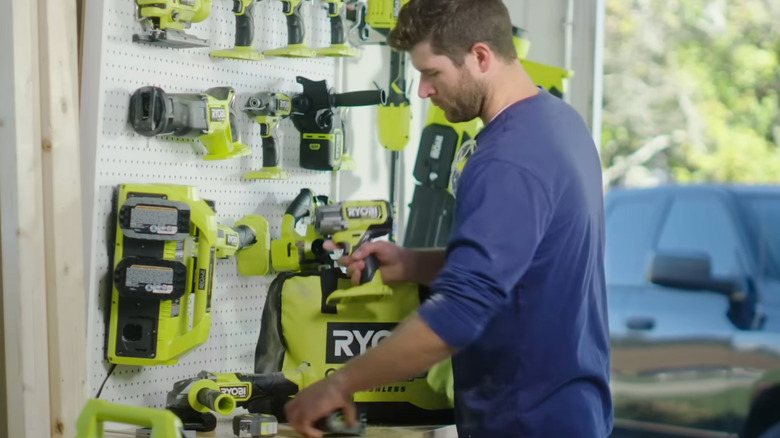
Ryobi introduced brushless drills to the Australian market in 2015 and to the American market soon afterwards. The brushless collection, which the company calls its High Performance (HP) line, launched with 48 tools and will probably continue to expand. The ONE+HP series includes saws, drills, and nailers, as well as landscaping tools like chainsaws, hedge trimmers, string trimmers, and lawnmowers.
And if you're wondering what a brushless tool is, the term refers to the fact that the tool's motor does not employ physical carbon brushes to transfer electricity to the part that rotates. Instead, it uses electronic controllers. They produce faster motor speeds, give users better control of the speed, and eliminate frictional drag. The result is that brushless tools are more powerful that brushed ones while using battery power more efficiently, so the battery lasts longer. Brushless tools pack more power into a more compact design, and the HP Brushless collection blurs the line between entry-level Ryobi tools and pro-grade Milwaukee ones.
Expanding product line and a new color
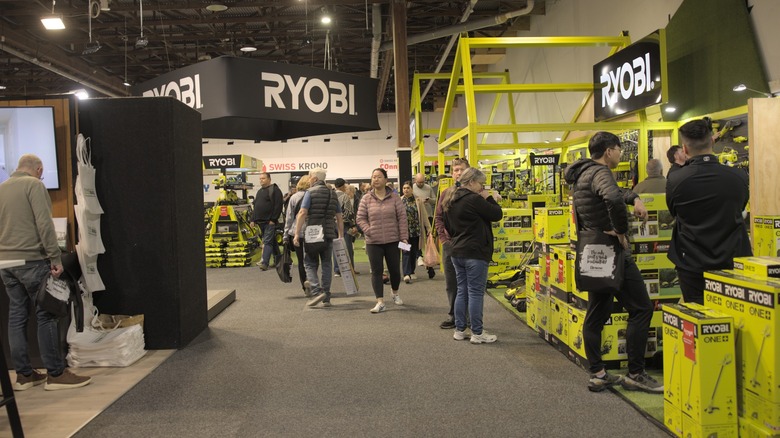
Just as significant as the improvements in product quality is the sheer number of new tools in the ONE+ line. It features drill and circular saws, as it always has, but now includes string trimmers, leaf blowers, and a whole array of saws, nailers, and other remodeling tools — over 300 in all. Add to that the 54 tools that are part of the current USB Lithium line, the 80V tool line, and the 85 lawn and garden tools that operate on the 40V battery, none of which were available prior to 2013.
Ryobi changed the color of the tools to the current yellow and neon green between 2007 and 2014 to accompany the transition to Li-ion batteries. The new color serves to remind consumers that the tools the company currently offers are more powerful and efficient than the turn-of-the-century blue ones. TTI claims that Ryobi is the world's number-one DIY tool brand, and if that's true, the flashy colors no doubt contribute to the brand's popularity.
The manufacturer has changed
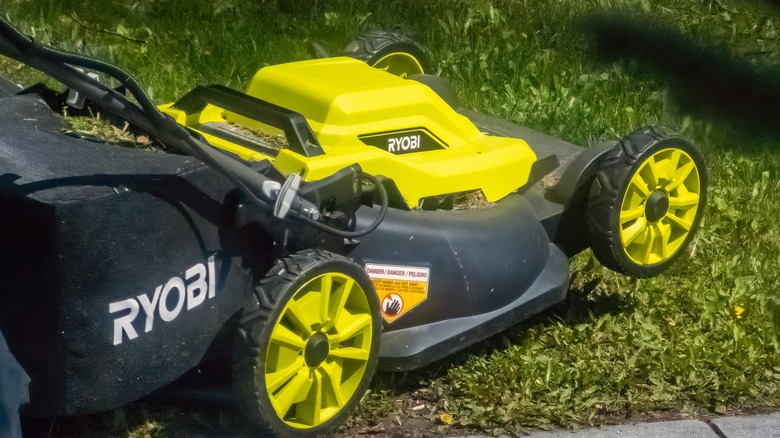
The Ryobi Seisakusho Co., which changed its name to Ryobi Limited in 1973, stopped directly marketing its tools in North America in 2000 and sold the rights to manufacture and market them to TTI. It also sold the rights in Europe in 2001 and Oceania in 2002. It retained the rights for Japan, but sold them to Kyocera in 2018 and returned to casting dies.
In the U.S., The Home Depot has exclusive rights to sell the tools, but some online retailers, like Amazon, Walmart, and Direct Tools Outlet, sell refurbished models or allow third parties to sell Ryobi tools through their platforms. When you buy a yellow-green Ryobi tool from Home Depot or an online store, you're purchasing a tool made by TTI, which is the company responsible for all the innovations of the last 26 years. When you buy a blue Ryobi tool, there's a better chance the tool was produced by the company whose name is on the tool: Ryobi Limited.