

The Durable Material For A Sleek Retaining Wall (Hint: It's Not Concrete Blocks)
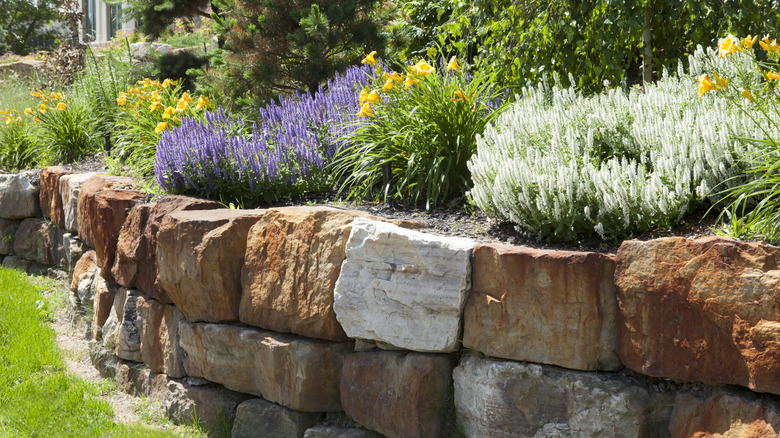
While retaining walls serve a vital function by bolstering sloped areas and preventing soil erosion, they don't have to be purely functional. Retaining walls can be constructed from a variety of materials, and each one has its own pros and cons ranging from price to durability to the general aesthetic it brings to your yard. Concrete is one of the most commonly used materials today, as a high percentage of retaining walls are made from concrete blocks or large slabs of poured concrete. On the other hand, a natural stone retaining wall provides an eye-catching alternative that adds a little more personality than concrete, particularly when it comes to one of the most popular types of natural stone: American granite.
Granite stands the test of time because it's highly durable, weather-resistant, and possesses an enduring style. Compared to international granite varieties, American granite tends to be more neutral in color, largely found in shades of grays and gentle pinks. Even though its color can be subtle, granite can create a more personal, timeless aesthetic for patios and gardens than, say, concrete blocks, which tend to feel more industrial. Of course, that's not to say American granite is a flat-out better option than concrete or other common retaining wall materials like brick, wood, or different natural stones such as limestone or sandstone. The final decision ultimately depends on your budget, design preferences, and individual yard, but American granite is versatile enough that it may perfectly suit your landscaping needs.
How American granite retaining walls compare to other materials
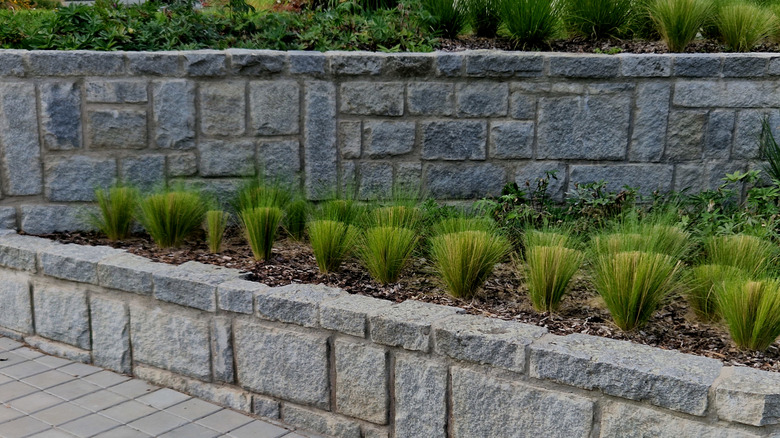
One of the first considerations when it comes to selecting a retaining wall is to decide whether it fits your budget. According to Angi, natural stone retaining walls are among the priciest options, varying between $20 and $100 per square foot, but granite tends to be at the lower end of that range. Concrete is generally considered a budget-friendly retaining wall option, along with timber and brick, but given soaring concrete costs, the savings aren't quite as drastic; in fact, Angi reports that concrete retaining walls cost between $30 and $50 per square foot. However, you may prefer to spend a little more on granite no matter what, considering its rustic, high-end look. The presence of natural stone usually helps to increase property value, which is another way to justify and offset granite's higher upfront cost.
While the process of building a granite retaining wall can be a little more intensive than concrete, you can count on granite to essentially last a lifetime. Natural stone walls should hold for over 100 years, making it one of the most durable choices. Building a mortared stone wall, as opposed to a dry-stacked one, is a way to maximize longevity. American granite is also able to withstand heavy precipitation and intense temperature fluctuations, allowing it to maintain its natural rich appearance for years to come. This sleek, durable material is certainly worth considering before installing a prominent retaining wall in your yard, along your driveway, or around your patio.