

How Soaring Concrete Costs Are Changing How People Landscape Their Yards
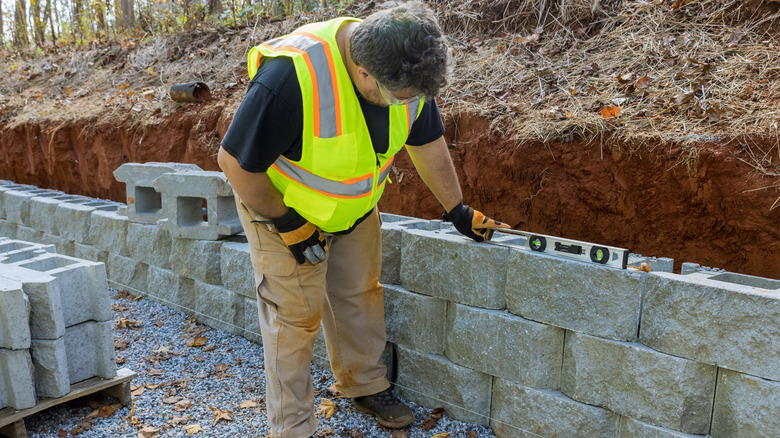
Whether you wish to build a retaining wall in your yard, make an addition to your house, or use the best material for garden paths and steps, you can't overlook concrete. However, this composite material's rising costs may give you pause and alter your landscaping plans. According to Gordian, the price of concrete went up 2.5% year-over-year in July 2026, bringing the per unit price to $2.46. To understand why this is happening and how it's affecting designers, builders, and homeowners, Hunker exclusively interviewed Brad Holley, owner of The UnDesign in Dallas.
"Concrete is a delicate mixture of ingredients, and every single ingredient in it must first be extracted from the earth," he explained. "Whether they're being scooped, drilled, pushed, cut, crushed, blasted or mined right out of the ground, every related action requires a lot of gas and a lot of oil." And since both fuel and electricity costs are on the rise, it makes sense why this material is getting more expensive.
Despite this, Holley said, "concrete has always been (and currently still is) one of the most economical choices you have when you need a hard, sturdy surface anywhere in a construction or renovation project." This isn't to say people aren't being cautious; some, he said, are putting their dreams on hold, while others are going the DIY route to avoid labor costs. He also said that some have cut down on a project's scope, compromised on its size, or opted for comparatively economical alternatives.
Affordable landscaping alternatives to concrete
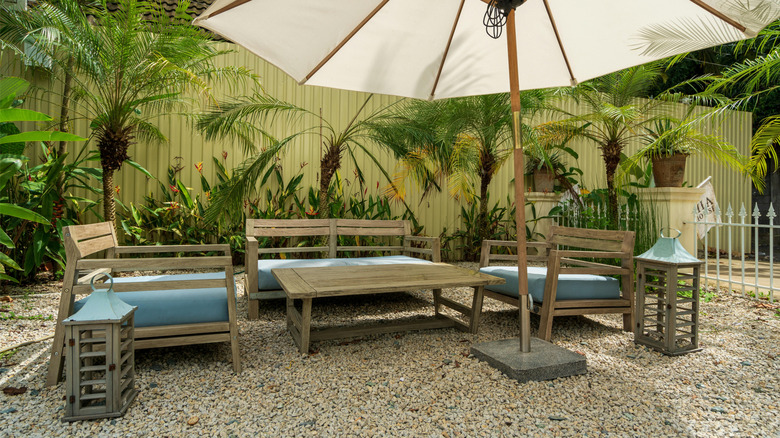
Though concrete is prized for providing a smooth and strong surface, there are landscaping projects that don't require it. For instance, when working on a next level outdoor DIY project to create a cozy fire pit or welcoming patio, you can leave concrete behind. "You could look into dry-laid pavers, or even covering your gathering space with crushed gravel," Holley revealed. "And if crushed gravel sounds compelling to you, you can even think about utilizing different types and colors at the same time to create beautiful designs and contrasting borders."
However, when it comes to exterior walls, concrete is usually the most popular choice. "Whether we're talking about retaining walls or planter bed walls," he said, "steel-reinforced concrete has always been a favorite because even when the ground shifts and the concrete cracks, it still stays together and continues to hold whatever it needs to." But if you're worried about the related costs, there's a cheaper way to build a retaining wall. "You can consider stacking stones, blocks or even landscaping timbers to create your walls," he explained.
Before going this route, however, Holley says there's a caveat you should know. "I do want to point out though that when walls get to a certain height, or when the load they're holding gets to a certain threshold, concrete will eventually become necessary again, so it's not always avoidable."
Landscaping projects you should still use concrete for, regardless of the cost
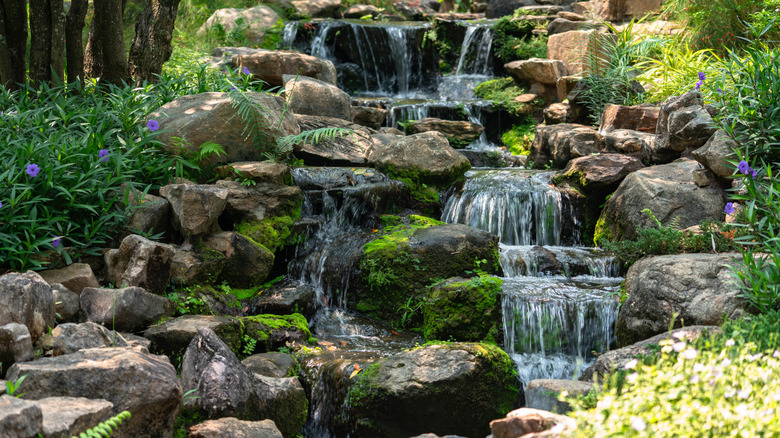
While your pockets might feel tight using concrete for landscaping projects, you can't substitute other materials where structural integrity is a priority. "Anytime you have an area or feature that will be under a heavy load, or needs to withstand lateral forces, concrete is often the only option," Holley said. "Whether you need a tall retaining wall that's going to be holding back 6 vertical feet of earth or an engineered slab that will be supporting a large greenhouse or outdoor living structure, there is no substitute for concrete."
He explained you should also rely on concrete when adding a water feature, like a small pond or fountain, to your yard. This is especially important if you're digging deep or you want the walls to be steep. "The reason being, when it rains, soil becomes saturated," he said. "Any time you have saturated soil that is also sloped ... it will want to move, slide or shift with the added weight of the water." When this happens, concrete can help stop the walls from caving in.
You should also go for concrete if you want to plant trees in your yard and keep them separated, Holley advises. Landscaping fabric can work, he says, but tends to wear out with time and isn't as effective at keeping the roots in check. "Over time, even a concrete wall can shift and crack," he adds. "But it's going to offer some of the highest reliability in the long term."