

Forget Pricey Concrete And Stone — There's A Cheaper Way To Build A Retaining Wall
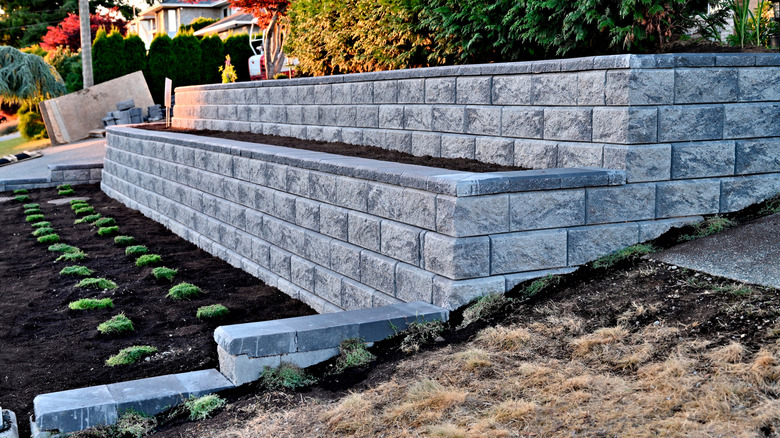
Anyone with a hilly property understands the difficulty of gardening and landscaping on uneven terrain. Retaining walls, which are elevated structures used to support sloping ground, are a great solution for this. While you can DIY your own cinderblock retaining wall with rebar and concrete, others may opt for more elegant structures made of durable materials like natural stones. However, these materials aren't cheap, often costing between $25 to $50 per square foot. If that's out of your price range, you might want to consider sandbags as a cheaper way to build a retaining wall.
Though many of us only ever make and use sandbags to contain flooding, the fact is that their strength and flexibility make them an ideal building material for retaining walls. Your average sandbag is just a large polypropylene or burlap bag that is filled with coarse sand and tied at the top. The flexibility and weight of the materials allow the bags to connect tightly together when stacked. This makes them excellent for holding back flood waters, but also for retaining soil and preventing erosion.
Now, pre-filled sandbags can be purchased in bulk, but you can expect a price point of around $1,200 for a 3,000-pound pallet. A much cheaper alternative would be purchasing a bundle of 100 empty 14 x 26-inch propylene bags for $47, which works out to $0.47 per bag. You can then fill them with sand, which can be bought in bulk, starting at about $25 per ton.
Building a retaining wall with sandbags
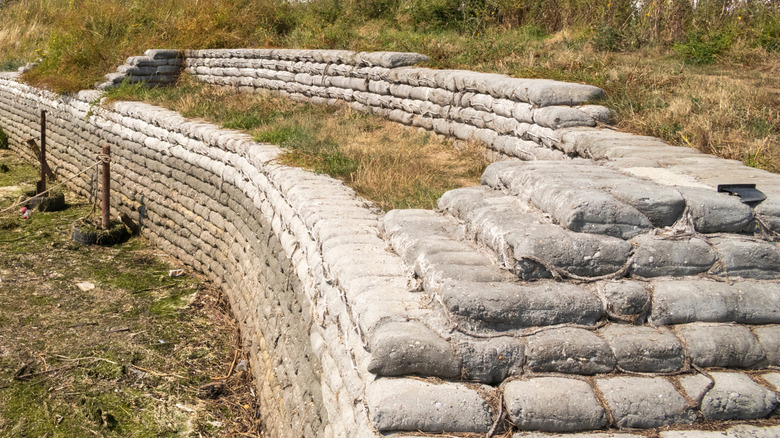
Building a simple retaining wall for your property is not a complicated endeavor. With sandbags, the project shouldn't take more than a weekend, and in many municipalities, you don't need to get a building permit unless the wall exceeds 4 feet in height (though be sure to check the guidelines for your area). When preparing your sandbags for building, it's essential that you only pack them no more than half full. This under-filling will increase the flexibility, allowing the bags to better conform to uneven ground and to one another when stacking.
When building with sandbags, any wall that exceeds a foot in height should have a base width that is three times the height of the structure. For walls lower than a foot, a single-file stack is fine. The taller sandbag walls can be stacked in layers of opposing right angles, with the tied tops tucked underneath the bag to prevent spillage. The bottom of the bags should face outwards on the wall edges, and make sure that each row is pounded with a hand tamper or mallet to ensure the bags are flat and properly packed together.
The main downside of using sandbags is that they aren't exactly attractive. This can be remedied by planting privacy shrubs like arborvitae or boxwood, or some kind of trellising vine in front of the sandbag retaining wall in order to cover it up. However, if you want your retaining wall to be a statement piece, you're better off spending the money on concrete or stone.