

Bed Bug Vs. Bat Bug: How To Tell Which One You're Dealing With

Bed bugs (Cimex lectularius) and bat bugs (Cimex adjunctus) have several traits in common. Not only do both of these pests bite humans, but they also look similar at first glance. Once you have an infestation of either of these bugs inside your home, they may also hide out in similar spots, such as bedrooms. Needless to say, it can be challenging to tell bed bugs and bat bugs apart, although it's not entirely impossible. While it's best to work with a pest control expert for identification and eradication, you may be able to tell bed bugs and bat bugs apart due to slight differences in physical traits and some of their locations, as well as the timeline of the infestation.
It's reasonable to mix up bed bugs with bat bugs (and vice-versa) because they can look so much alike. They are in fact similar in shape and size. Both bed bugs and bat bugs have reddish-brown colored bodies, too. The only known reliable method of bat bug and bed bug distinction involves comparing the lengths of the hairs on the bugs' thoraxes in relation to their eye width. A bed bug will have shorter hairs that are always smaller than their eye width. A bat bug, on the other hand, has longer hairs that extend past their eye width. Unfortunately, the only way you can definitively identify these features is if you're able to assess one up close via a microscope that has a magnification of 20 to 50 times, says North Carolina State University.
Location and timeline may also help you tell bat bugs and bed bugs apart
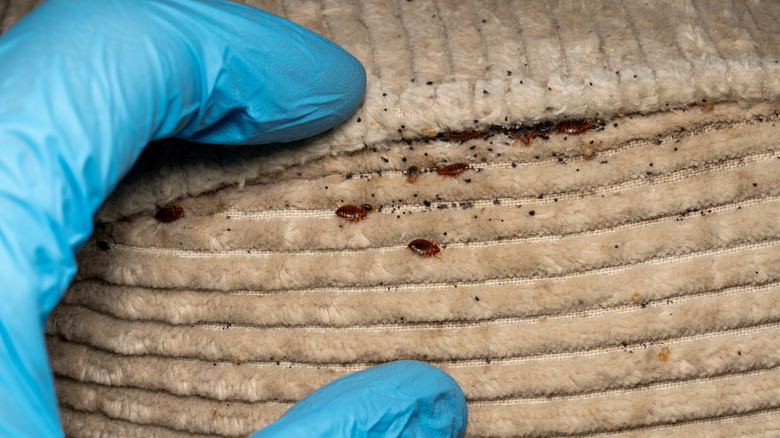
Since it may be challenging to identify bed bugs and bat bugs with physical features alone, their location in your home and timeline can offer other possible clues to help you determine which pest is in your home. First, bat bugs are primarily encountered when their bat hosts are in nearby areas, such as attics, chimneys, or sheds. In other words, if bats recently got in your house, chances are the subsequent bug encounters are indeed bat bugs. According to North Carolina State University, bat bugs may start migrating into homes in search of alternative food sources within 1 to 4 weeks of bats leaving or being eradicated. This timeline is important to know if you've recently had bats around your property.
Bed bugs, on the other hand, are notorious for hiding out in mattresses. However, they can also hide in other small spaces in your home you might look over, such as electrical outlets, picture frames, and baseboards. Bed bugs are located in all parts of the world, and can easily hitchhike from one place to another. If you don't have a known history of bats around your home, but you have traveled recently, had visitors, or perhaps brought in secondhand items into your residence, there's a chance the pests may be bed bugs.
What to do if you suspect bed bugs or bat bugs in your home

Despite using these tips for a more accurate identification, it's always best to contact a pest control expert about a suspected bat bug or bed bug infestation. Not only will they confirm the pests you're dealing with, but they can also help with a plan for eradication, as each pest requires different management. Getting rid of bed bugs and bat bugs is challenging to do yourself, and you certainly don't want to waste money on the wrong solutions based on an inaccurate identification.
Furthermore, if the problem turns out to be bat bugs, it's possible that a pest control expert may also need to remove nearby bats, too, since bats are their primary hosts. If bats are confirmed (or have recently been removed), you can help stop possible bat bug activity by sealing cracks and gaps around windows, doors, and electrical sockets in your home.
Unfortunately, the management process of these pests can require multiple treatment rounds. It's not uncommon to see both bed bugs and bat bugs for several weeks until they are fully eradicated. You'll need to continue looking out for the bugs until your pest control company tells you you're in the clear.