

How To Find And Identify Bed Bugs In Your Home

Finding bed bugs in your home quickly turns a good night's sleep into your worst nightmare. The tiny, wingless insects don't want a cup of warm milk and a bedtime story. They're after blood, preferably from a sleeping human who may not even notice them until they wake up with an itchy rash. Shannon Sked, Orkin National Technical Director, says there are luckily a few ways you can find and identify bed bugs in your home. However, getting rid of bed bugs can be a major ordeal and infestations often require treatment by a pest control professional.
First, you'll want to look for the most common signs. "If you suspect you have bed bugs in your home, begin by carefully inspecting the areas where they are most likely to hide, including mattress seams, box springs, bed frames, headboards, and nearby furniture," Sked tells Hunker in an exclusive interview. Because they are largely nocturnal, the pest control expert explained that you may find signs of activity before actually spotting the bugs themselves. Finding small, dark-brown or black spots on your bedding or mattress, rust-colored stains on your linens, or shed skins or pearl-white eggs near upholstered furniture all point to a possible infestation.
While young bed bugs can be hard to spot because they are pale or translucent in color, full-blown infestations may be more obvious because adult bed bugs can be seen by the naked eye. "Adults are approximately the size of an apple seed, measuring about a quarter of an inch long, with flat, oval-shaped, reddish-brown bodies, six legs and two short antennas," says Sked. When it comes to monsters hiding under the bed, they're among the worst.
What to do after finding bed bugs in your home
Even if you're the tidiest homeowner, you could still end up wondering how bed bugs snuck into your home. Since they're so small and flat, the small insects are great at hitching a ride on secondhand furniture or luggage. Though, once you've found and identified bed bugs in your home, Shannon Sked says there are several steps you should quickly take to prevent the infestation from spreading.
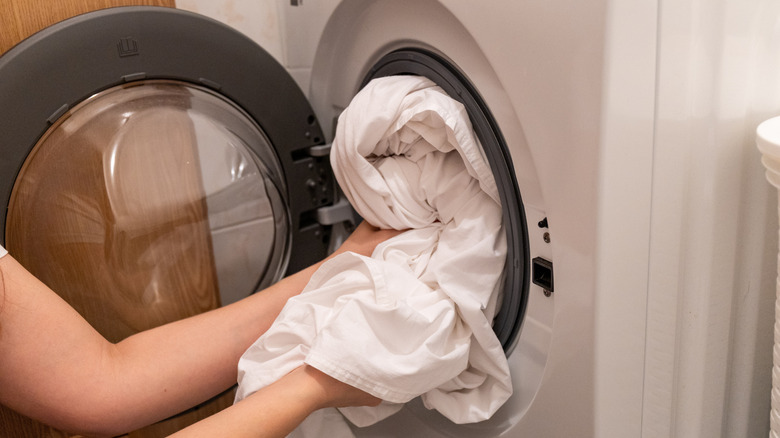
"Avoid moving items to other rooms," the pest control expert explains. "Relocating mattresses, bedding, or furniture can unintentionally spread bed bugs to other areas of the home if they have bed bugs in them." So although it might be tempting to move your sheets, blankets, mattress protectors, and pillow sham covers into the laundry room all at once, it's best to remove and wash them one at a time to avoid introducing the insects to a new space. "Wash and dry washable items using the highest heat setting the fabric allows. This may help eliminate bed bugs and their eggs on bedding, clothing and other washable materials. The heat from the dryer is what kills bed bugs and their eggs in your items," Sked says.
Unfortunately, even by taking these steps, you may not be able to fully eliminate a serious infestation. "Bed bugs are notoriously challenging to treat without an expert," Sked explains before adding that DIY or over-the-counter products usually aren't as effective as those used by pest control professionals.
Signs it's time to call a pest control professional (and how much bed bug removal costs)
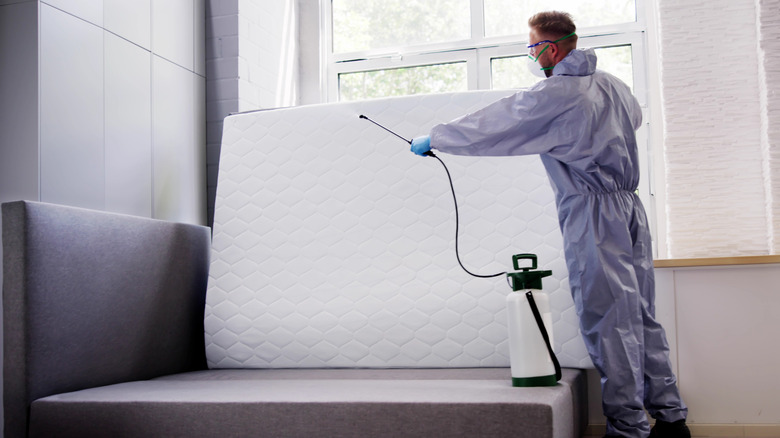
So, how can you tell a bed bug infestation needs a professional exterminator instead of a DIY solution? Unless you catch the problem very early, hiring an exterminator is a likely outcome. According to Shannon Sked, "At-home measures, such as vacuuming, may help reduce visible bed bugs, but they typically provide only temporary relief." He explains that bed bugs are hard for homeowners to remove because they often hide in small cracks and crevices and are able to quickly spread beyond the bedroom. "They are highly resistant to DIY or retail products, making it important to call a pest control professional before the situation potentially becomes worse," Sked cautions.
Bed bug extermination costs average between $1,000 to $4,000, per Angi, which is exponentially higher than the powders you'll find at Walmart or Home Depot. While there are some highly-rated DIY products out there, Sked maintains that hiring a pest control professional is the best solution if you have confirmed signs of bed bugs. "Early professional intervention can help identify the extent of the infestation and reduce the risk of further spread," he explains.
When DIY bed bug remedies don't work, you'll know pretty quickly, especially if new bites or rashes appear. The pest control expert advises that, "Recurring activity or evidence in more than one room may indicate a larger infestation that requires a professional inspection and customized treatment plan." While bed bug removal is an intricate process, don't panic and toss all of your items, because treatment is possible.