

More Than Just A Grid: Prevent Gravel Driveway Washouts With An Essential Material
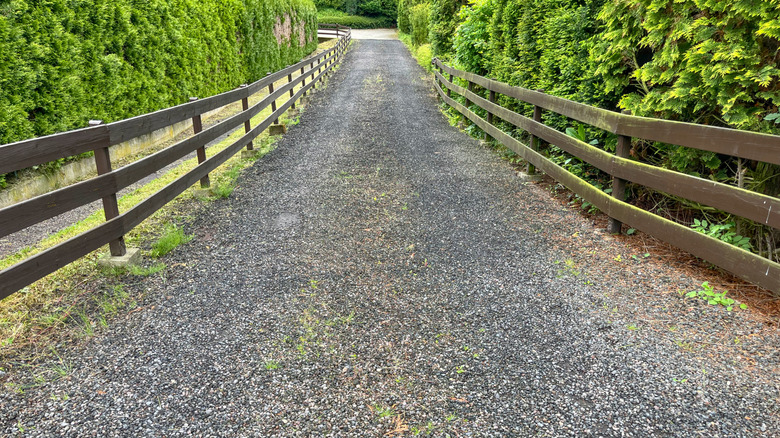
Many people dream of living in the country in a big house situated at the end of a long winding driveway. If you're living that dream, there's a good chance that driveway is gravel. That's because compared to asphalt, gravel is one of the cheapest driveway materials. It's easy to care for, and fits in well with more rustic surroundings. Sadly, every rose has its thorn, and gravel's is that it slowly washes away after a good, heavy rain. Also, if you drive in and out of your property frequently, you're probably used to backfilling bare spots at least once a year. Fortunately, you can help reduce maintenance costs and prevent those annoying washouts with angular crushed stones.
Washout is typically caused by improper construction of your gravel driveway. Chances are, whoever laid the foundation used smooth base rocks or stones, or they failed to build an adequate drainage system, like building a raised center or side slopes. Without these things, you'll end up with a driveway that has puddles where the gravel has completely washed away.
When looking for solutions, many homeowners turn to expensive plastic gravel grids that hold everything in place. A less expensive option is installing a layer of angular crushed stone. These rocks are natural stones that have been purposefully broken down by machines to create jagged edges. Smooth stones tend to naturally slip and slide against one another when you drive over them or shift during heavy rain. Angular stones create friction when they rub together, making them stick instead of sliding apart.
How to use angular crushed stones to repair your gravel driveway
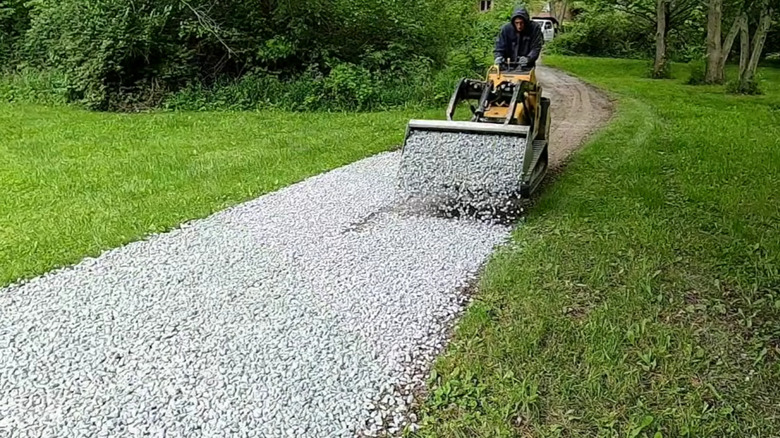
If you're looking to prevent washout, you've probably dealt with it before. The first thing you need to do is repair any current damage. A shovel or rake is perfect for smoothing shorter uneven gravel driveways. For longer ones, you can save your back by attaching a land plane to the back of your tractor or riding lawn mower. Smooth over your entire drive to eliminate uneven spots.
Next, attach a rear blade or scraper blade to your tractor to build the center of your driveway. Angle the blade so that it pushes loose gravel to the inside. Start on one outer edge of your driveway and make passes until you've built a raised center that's at least 2 to 3 inches higher than the rest of the drive. Repeat this step on the other side of the driveway. As far as the overall depth of the gravel is concerned, your drive should have at least 4 to 6 inches of gravel for standard cars and trucks. If you drive any heavy equipment over the path, you need around 8 to 12 inches for stability. Add enough angular stones to reach this height.
Be sure to pack down the new stones as you lay them because this will help them stay in place. Also, make sure you carve a shallow drainage ditch on either side of your driveway to encourage water runoff.