

Skip The Pavers And Bricks: Use This DIY Garden Edging To Add A Rustic Touch
We may receive a commission on purchases made from links.
You take meticulous care to pick the perfect plants for your garden bed, so why not put just as much thought into the border? With so many options, it's not always easy to pick the best type of landscape edging. Many people choose pavers or bricks because they're readily available and create a well-defined bed. But if you want something less formal and more natural-looking, a simple DIY alternative is rolled log garden edging.
Log-style edging features short pieces of small-diameter logs attached together, usually by wire. This Backyard X-Scapes Natural Eucalyptus Landscape Edging is a good example. But there are other wood varieties and styles, like this MGP Even Edge Bamboo Edging. What makes this option a rustic dream is the wood's natural, raw appearance — it looks like you chopped up a tree and turned the pieces into a mini wooden fence to surround your garden. Bricks and pavers create a more polished aesthetic that might not fit as well with a more natural, flowy garden design, like an English garden.
And it checks several boxes for ideal border material. You want something that separates your yard areas, keeps plants contained, and makes mowing easier without damaging your garden. The low profile creates a clear boundary while helping keep soil and mulch from spilling into the lawn. Other wood options exist, like upgrading your garden edge with a scrapwood DIY, but these log-style options are ready to install with no cutting or prep. They also skip one of the fussier parts of installing pavers or bricks: building a level sand base. It's a DIY garden edging project that you can handle relatively easily.
Border your garden with rustic log-style edging
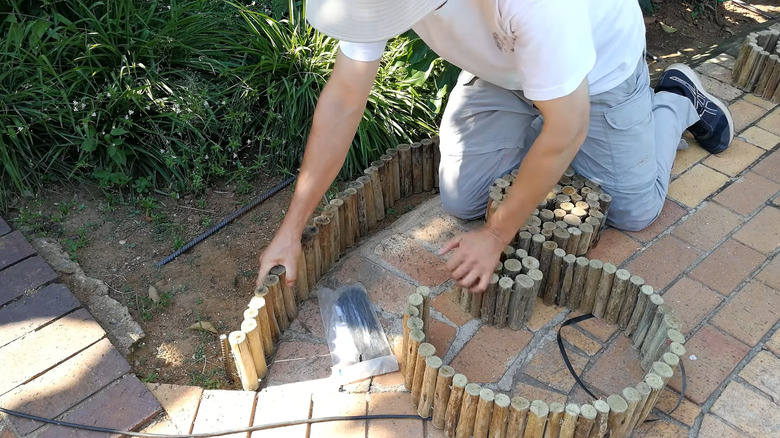
Installing a garden border is an easy DIY solution that prevents weeds from spreading into your flower beds, and products at home improvement stores simplify the process. Compare the wood type, log diameter, and edging height to find a good match for your garden beds. Some styles feature uneven tops with logs of varying heights to emphasize the relaxed, natural, rustic vibe. Others use logs cut to one consistent height. You can also choose between different finishes. For a more natural look, choose one that complements the existing wood, stone, and planting colors in your yard.
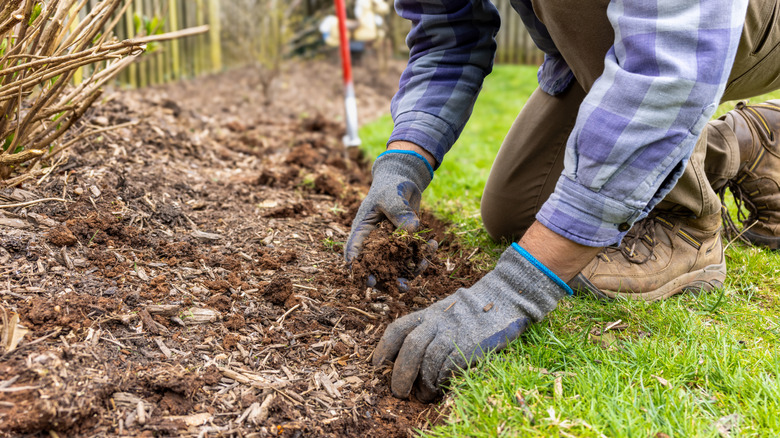
This type of edging works on straight and curved garden edges, so you have flexibility in where it goes. Some borders made of log pieces have built-in stakes at specific intervals to help secure the edging to the ground. Options with a more natural log appearance often have flat bottoms, though, so you may need to secure them with extra supports. Like most garden edging, a log roll product requires a trench for the installation. This lets you partially bury the wood — aim for about ⅓ of the height to keep the edging steady.
Once you position the section, backfill it with soil to help keep it in place. You can also use stakes or pegs for additional support, so the logs don't shift or tip. Pound the posts into the soil directly behind the installed edging, and use zip ties or wire to secure the log border to them. Check each section's stability to see whether it needs additional support.