

Trade In Landscape Gravel For A Cheaper, Weed-Resistant Alternative
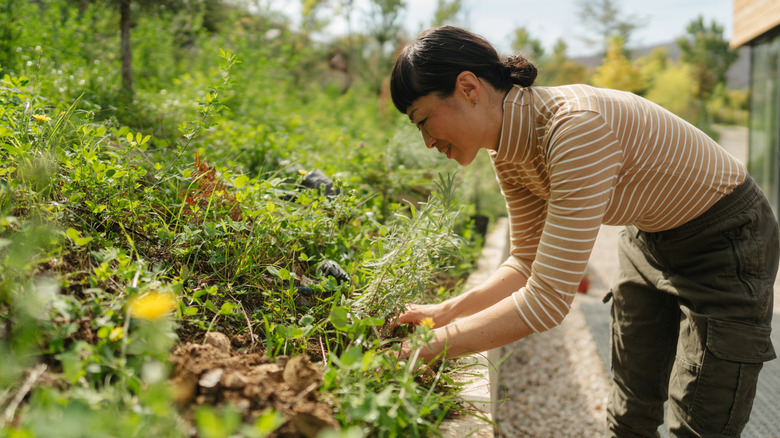
While it may seem like gravel would be a long-term solution for weeds, sometimes there are weeds gravel can't stop. In the case of using pea gravel as mulch, you may even have to add landscape fabric beneath the gravel to help with weed control. The other disadvantages of gravel include its high heat-retention, that it moves out of the bed area, and that it becomes challenging to remove.
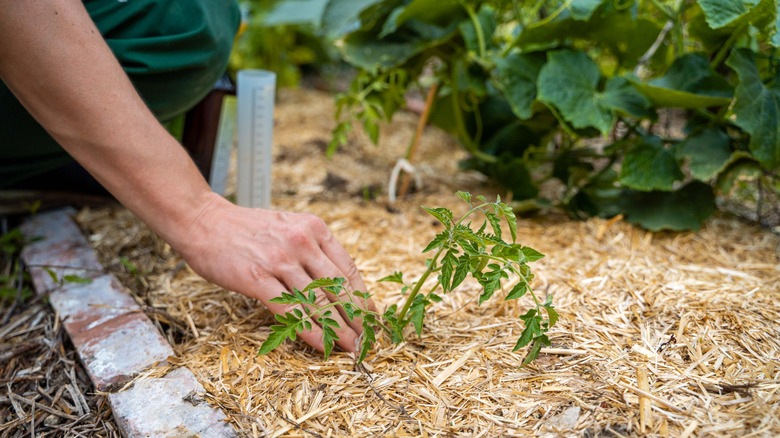
It's important to choose the best type of mulch for your project, and it turns out straw can be effective to cover a vegetable garden or planting bed, or even as a low-use walking path. The efficacy comes from completely covering the ground, hence blocking sunlight required by weed seeds to sprout. Straw can also slow moisture loss and gradually add organic matter to the soil as it decomposes.
Straw is also a budget-friendly option as opposed to buying many bags of decorative stones. The University of Arkansas System Division of Agriculture says that one rectangular bale of straw (about 2 by 3 feet) is priced at about $10, but pricing, size of the bales, and availability will depend on the locality. That makes straw a cheaper option than gravel, especially upfront. Additionally, one compressed bale of straw will cover a rather huge area. However, one bail of straw is not a permanent solution since it breaks down and requires replacement while gravel can stay put for many years.
How to use straw for effective weed control
Ensure that the product purchased is actually straw rather than hay. Straw primarily comprises dried stalks left from harvesting grains, whereas hay is a mixture of grasses and other crops grown specifically for livestock feed. In comparison to hay, straw has fewer chances of containing live seeds and traces of herbicides. Nonetheless, even if purchasing straw, ask for clean or weed-free straw and check it for any seed heads before applying.
With any mulching, start by removing existing weeds and watering the soil, especially if it is dry. Unpack the bales and spread the straw in a uniform layer, about 3 to 4 inches thick. A thinner layer will allow enough light for weeds to grow, while a too-thick layer can become overly moist and end up matted. Avoid placing the straw right on top of any plants.
For a lightly-trafficked garden path that uses loose mulch material, placing plain cardboard underneath the straw might prove effective as an often overlooked method to remove weeds. Timing is also critical for plants that have been planted in the soil. Since mulch cools down the soil, wait for the soil to warm up before applying the mulch on heat loving plants such as pepper and eggplants. Mulch is also a great place for slugs to hide during wet weather conditions, so keep an eye out for any squirmy visitors.