

Skip Vinegar: There's Another Pantry Staple That Kills Grass Between Pavers
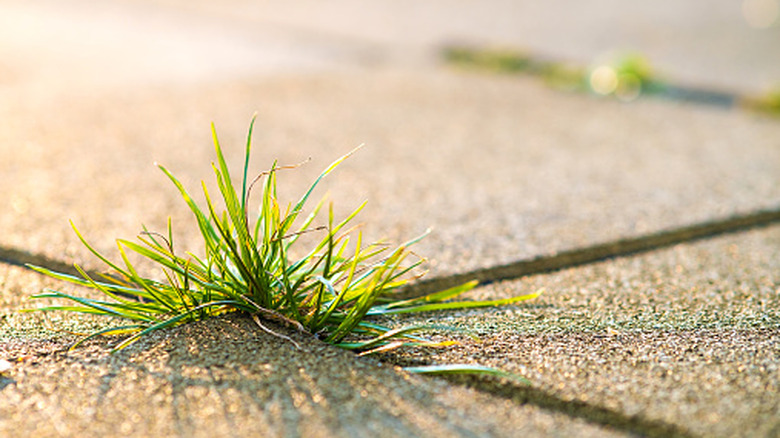
Pavers are a beautiful way to section off areas of your yard for entertainment and can create a solid footpath through your garden. When you lay pavers, the spaces between them eventually get overrun with stray grass and weeds, which can make these areas look overgrown and unkempt. To keep weeds out of your pavers, you may be tempted to spritz vinegar or even run to your local home improvement store for chemical herbicides. The good news is there's an alternative option you probably already have on your pantry shelf. Baking soda is one of the best ways to get rid of weeds in a snap.
Baking soda can help control those pesky invaders by acting as a desiccant that steals moisture from the leaves and roots. Vinegar is very similar. It breaks down the grass' outermost layer and prevents the plant from absorbing water. Baking soda takes a few days to actually work. However, unlike selective herbicides that target specific plants, it can kill both unwanted and healthy plants that have established themselves close by unless you cover them before applying the solution. That's why it's better to use it on walkways and not around flower beds. Another problem with baking soda is that it can slowly change the pH of the soil if you use it multiple times. Plants that do best in acidic soils, like blueberries and azaleas, may have a hard time next to a paved area that constantly gets treated with baking soda.
How to apply baking soda to weeds
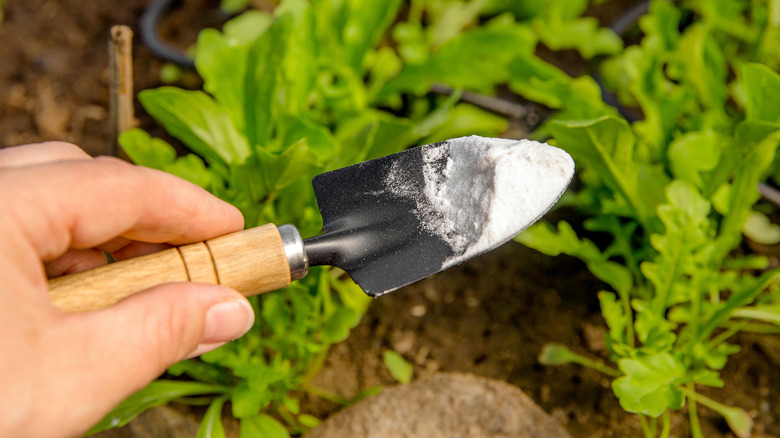
There are basically two ways to use baking soda as an organic weed killer alternative to chemical sprays to eradicate those obnoxious weeds. If you don't have a lot of wind and you're targeting a smaller area, you can apply the baking soda dry. Use a spray bottle filled with water to dampen the leaves, then fill a small shaker with baking soda and sprinkle the powder generously over the weeds. The water will help the dry baking soda cling better to the leaves.
If you prefer to apply the solution in one step, mix about 10 tablespoons of baking soda into a gallon of water. You could also add a few drops of horticultural oil or dish detergent to help the solution stick to the leaves. Shake well. Soak the tops of the weeds that are growing between your pavers. It's a good idea to briefly cover nearby flowers or plants you want to keep to prevent overspray. Keep in mind some weeds and grasses might have an established root base. If the baking soda solution doesn't penetrate these roots, the grass will re-grow, and you'll need to reapply.