

How To Keep Grass From Growing Around Pavers (Hint: It's Not Vinegar Or Baking Soda)
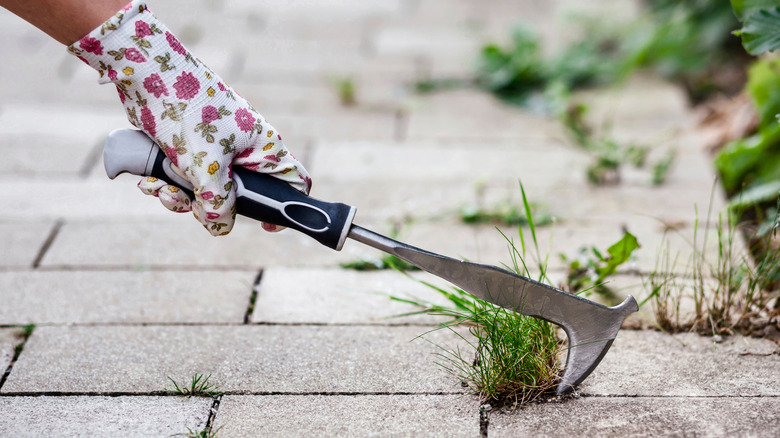
Are you struggling to keep up with grass constantly pushing its way into your paver walkways or patio? If you aren't a fan of using chemical weed killers, perhaps you've tried getting rid of weeds organically with natural weed killers like vinegar, baking soda, or other ingredients in your kitchen pantry. Or maybe you're intrigued by all the enthusiastic gardeners on social media who are burning grass and weeds to a crisp with handheld flamethrowers. While how to keep grass from growing around pavers is a problem for the ages, you might be surprised to learn that installing steel edging can make a big difference.
It may be hard to tell by looking at a single blade or bag full of clippings, but healthy grass has an extremely strong and deep root system. The puny grasses that are likely to react well to baking soda or vinegar only have roots of an inch or two. However, tall fescue or bluegrass varieties that create emerald lawns often have roots between 18 and 24 inches deep. Once they're established, this means they can quickly meander inside the gaps between your pavers. Along with sprouting up uninvited, once the roots are established underneath the pavers, it can be extremely difficult to pull them by hand, treat them with natural or commercial herbicides, or, yes, light them on fire.
That's what makes steel edging so effective. It's a much tougher alternative to plastic edging, which tends to crack and split after a season or two of being exposed to sunlight and persistent roots. Meanwhile, edging made from steel (or even some aluminum options, like Costco's crack-proof landscape edging solution) is far more resistant to grass roots and runners when it has been properly installed.
Install steel edging along paver edges to create a deep underground barrier
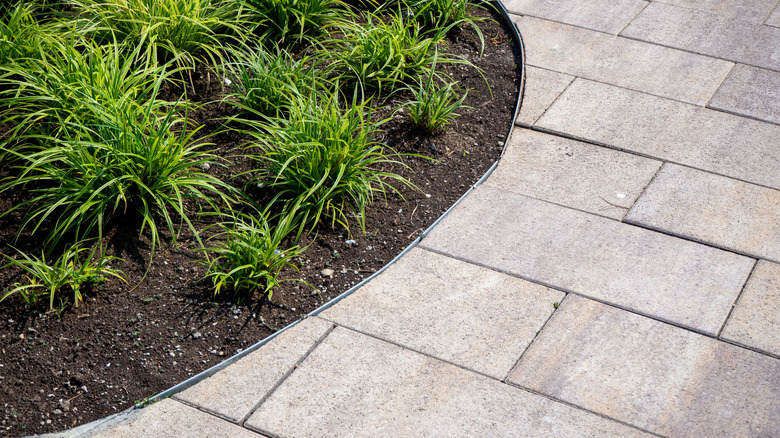
There are a few important things to keep in mind when it comes to keeping grass from growing around pavers by installing steel edging. The first is picking a product that is flexible enough to wrap along the edges of curved paver walkways or patios but thick enough to create a strong underground barrier. The second is making sure the product you choose can be installed continuously, since one of the peskiest traits of grass is that it will wiggle its way into any crack or crevice it finds. You'll have much better results with steel edging that comes in longer lengths, or that can be slightly overlapped before being hammered into the ground.
And that's where installing metal lawn and landscape edging can make the biggest difference in the fight against unwanted grass, as long as you install it deeply enough to actually disrupt the roots. Not going deep enough is one of the biggest mistakes people make, so aim for your steel edging to be at least four to six inches underground. The process definitely requires a little elbow grease, but pre-soaking the ground around your pavers can make the process a little easier.
For a super-clean finish and longer-lasting results with your steel edging, it's also a good idea to carefully define the edge between your pavers and areas that will stay grassy. Use a spade to completely remove the surrounding grass before starting the installation process. Remember to leave one to two inches of your steel edging exposed above ground to make it easier to spot when mowing, so you can direct grass clippings in the other direction.