

Does Cleaning Vinegar Kill Poison Ivy?
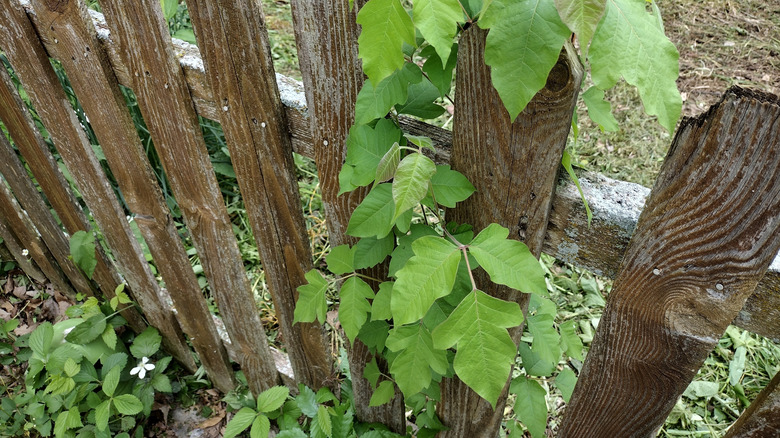
Nobody wants to deal with pesky weeds popping up in their yard or garden beds. However, there's one weed that causes issues beyond competing with desirable plants and having poor aesthetics. If you've ever accidentally brushed up against poison ivy, then you already know how a quick encounter with it can turn into days of intense itching. Most people are allergic to urushiol, the chemical compound within the poison ivy plant. Because touching poison ivy comes with an obvious downside, hand-pulling isn't the most appealing method of eliminating it. Cleaning vinegar is often touted for being a common kitchen staple that also kills weeds, but does it work on poison ivy? Well, yes and no. While it can kill poison ivy vines on contact, it's rarely enough to make it disappear for good.
Cleaning vinegar contains acetic acid, which works as a contact herbicide that ruptures any plant cells it touches. While it can kill young poison ivy leaves, it isn't very effective on larger infestations. That's because the vinegar in your cabinet only contains about 6% to 8% acetic acid, so it's not strong enough to have much of an effect. To make it more powerful, you may have seen recipes that include cleaning vinegar as an ingredient rather than the sole weed-killing agent. While additions like salt may increase the overall effectiveness, there are benefits and drawbacks of using homemade weed killers worth considering before using them on poison ivy.
Controlling poison ivy with vinegar
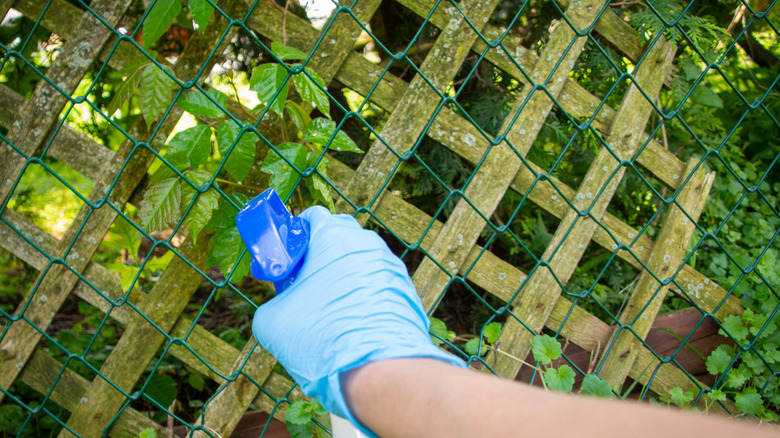
In most cases, cleaning vinegar isn't the best way to permanently kill poison ivy. With such a low concentration, it's most useful for tackling newly emerged seedlings. Additionally, contact herbicides like acetic acid don't reach the roots, so repeat applications are necessary when new growth inevitably emerges. Although ingredients like salt can make it somewhat more effective, they can also create more problems than they solve. Sodium can build up in soil, which can make it harder for desirable plants to grow — and make it easier for weeds to pop up. So, be careful with what you include if you attempt to create a DIY herbicide to kill poison ivy.
If you'd still prefer to try using vinegar to tackle poison ivy, horticultural vinegar is a better option. It contains as much as 30% acetic acid, so it dries out and kills poison ivy leaves and stems more rapidly and effectively than cleaning vinegar. Horticultural vinegar works best on annuals that aren't yet fully established, but it's one natural option for scaling back a hardy perennial like poison ivy. Unlike most broad-spectrum herbicides, horticultural vinegar breaks down quickly, so it's generally considered an eco-friendly solution to kill poison ivy and other weeds.
Remember, though: just because horticultural vinegar is a safer alternative in the garden doesn't mean it's harmless. The high concentrations of acetic acid can cause irreversible damage to the skin and eyes. So, make sure to don gloves and goggles before handling horticultural vinegar.