

Swap Creeping Thyme For A Purple, Weed-Resistant Landscaping Option

Are you tired of looking at your brown and bare garden after mulching or adding layers of wood chips? You may be considering colorful flowering ground covers that attract pollinators while also keeping weeds at bay. Creeping thyme (Thymus serpyllum) is a popular choice as a weed-resistant replacement for grass, and is extensively used as an accent in landscaping. It is a great option for gardens getting full sun throughout the day. However, it won't thrive well in shady areas with wet soil. If your garden fits this bill, check out creeping mazus (Mazus miquelii), another vibrant ground cover with stunning purple flowers.
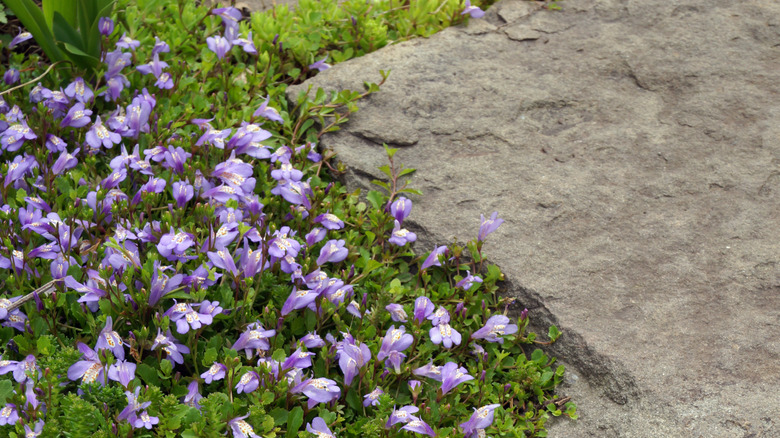
Creeping mazus plants have dense leafy foliage and grow 2 to 3 inches tall. They're planted along the edges of rock gardens, in between stepping stones, and near garden beds as ground cover. Thanks to their shade tolerance, the plants also thrive under trees. Suitable for USDA zones 5 to 8, the perennials are considered semi-evergreen — they can remain evergreen in warmer places. Note that creeping mazus is a non-native plant and can be considered invasive in some parts of the United States.
Known for its prolific growth, creeping mazus can quickly cover the ground in a tight blanket, suppressing weeds. The plants are a sight to behold in late spring and early summer, when they are speckled with orchid-like flowers along stepping stones or in your garden beds. However, mazus is not just ornamental, but also beneficial. In addition to attracting pollinators and curbing weed growth, it prevents soil erosion.
Fairytale landscaping with creeping mazus
The quickest way to start your mazus landscaping project is to buy seedlings from the nursery. You can also try to grow them from seeds, especially if you want to save money, but this can be difficult: The tiny seeds are delicate and need extra care and protection. Plant them in a sunny spot with moist, well-draining soil to produce a lot of flowers. Although they grow well in shade, the flowers may not be as dense.
It is essential to water mazus regularly during the growing season, as the plants will turn brown and die if the soil is consistently dry. They are generally okay with some foot traffic, and can handle if your kids or pets occasionally step on them. You may need to occasionally prune mazus to stop it from creeping into other plants in your garden. Interested in propagating creeping mazus? Follow the stem cutting method: Cut a stem from the parent plant and plant it in your preferred location. You can also simply uproot a small plant and replant it elsewhere. Another fact you'll appreciate about these low-maintenance landscaping plants is that they are less prone to diseases and pests.