

Rat Poop Vs. Mouse Poop: How To Easily Tell The Difference
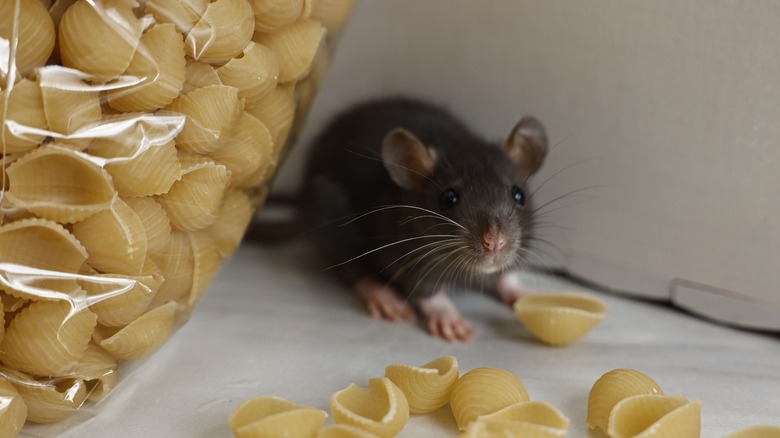
Rats and mice are both rodents, and rats looks like they could simply be adult versions of mice, but they are different species. They eat differently, do different kinds of damage to your house, and they leave different droppings. If you want to be able to identify the pest that wanders your kitchen and pantry at night so you can get rid of it, checking the droppings is a good place to start. Just don't get too close, because both types of poop can spread diseases like hantavirus.
Because they are smaller than rats, mice produce smaller poop pellets. They are typically about the size of a grain of rice (from ⅛ to ¼ inch long), and pointed on both ends. Rat poop pellets look different. They can be as much an an inch in length, and they are more bulbous and have rounded ends. Both rat and mouse droppings are usually black, but they can be colored differently depending on what the creature ate.
It isn't just the appearance of the poop that can tell you which rodent produced it, but where you find it. Mice tend to scurry around in search of food, leaving mouse droppings wherever they go. Rats, on the other hand, leave their droppings in hidden places like basement corners, inside wall cavities or near places they find food.
Why identification is important and how to clean up
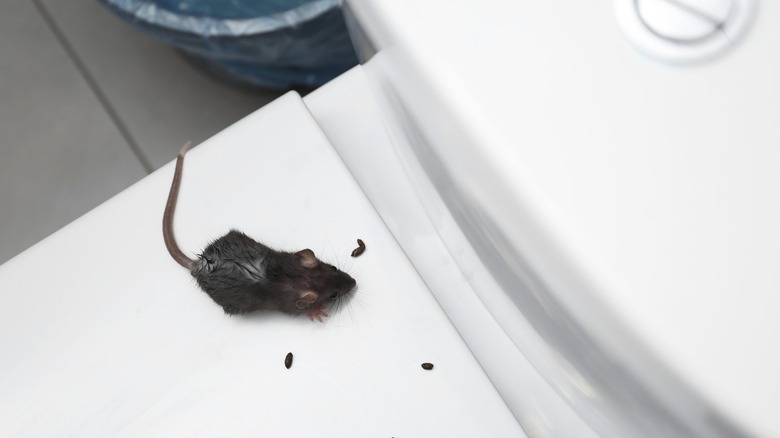
Distinguishing between rat and mouse poop is important if you want to trap the rodent. Neither lethal nor live rat traps typically catch mice, because they are too small to trigger the mechanisms, and rats are too big for mouse traps. Moreover, rats can cause a lot more damage to your house because of their size, which adds urgency to a rat problem. On the other hand, mice can squeeze through smaller openings, so if you know you have a mouse infestation, you have to make extra effort to look for and seal those openings.
Rat and mouse poop can both contain pathogens, and while the pathogens may be different, they are hazardous, and that calls for caution when cleaning up the poop. Most people simply sweep it up, but you expose yourself to potentially dangerous dust when you do that. If you want to clean up poop safely, you should follow a routine recommended by pest control experts. It takes a little more time than sweeping, but it's worth it if it safeguards your health.
Kacy Nowak, a Utah Department of Health and Human Services epidemiologist, recommends taking several precautions before removing rodent poop. Ventilate the area where you found the droppings. Put on a mask and some gloves, moisten the poop with a disinfectant spray, and pick it up with paper towels. When you've got it all, dispose of it safely in a closed tray container and finish up by spraying more disinfectant.