

Rat Poop Looks Different: Here's How To Identify It In Your Home Or Yard
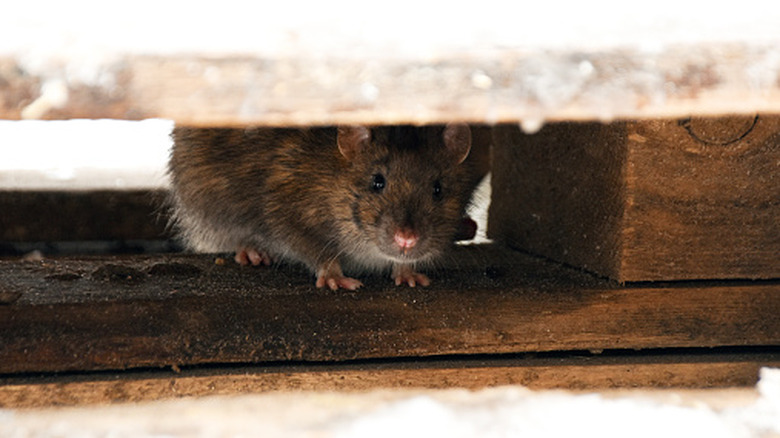
When you find pest droppings on your property, accurately identifying what produced them can go a long way towards helping you get rid of the culprit. The first step to getting rats out of the house, that is, is to know you are actually dealing with rats. For example, rat poop looks quite different than mouse or squirrel poop. To start, it's a lot bigger and heftier than mouse droppings, while a little leaner than what squirrels leave behind. It's about ½ inch long and ⅛ inch wide. In general, rats also have very uniform droppings, while squirrels' come out a bit differently depending on what they eat. If it's fresh, the poop is also usually dark black, although it's not matte. You might notice a bit of a shine to it. If it's older, it'll be dried out. So it'll likely be duller and a bit gray, too.
While there are many different species of rats around the world, there are two that you are most likely to come across in the United States. The first is the Roof rat (Rattus rattus), also sometimes called a ship rat or a black rat. The second is the Norway rat (Rattus norvegicus), also called the brown rat. Fortunately, you don't need to identify the exact species to recognize rat droppings. Both leave behind similar-looking pellets. It's just that the Norway rat's waste can be a touch shorter and wider than that of the Roof rat.
Where you are most likely to find rat poop in your home and yard
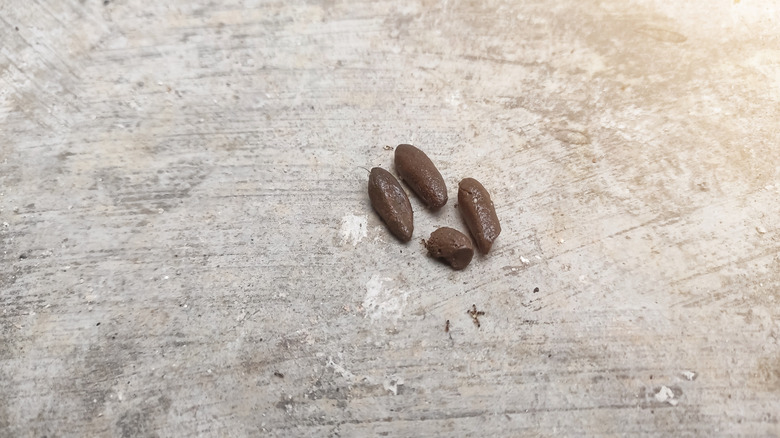
The location of any droppings you find can also go a long way towards identifying them. Rats, regardless of their species, will leave behind waste in places where they seek food and shelter. Their poop also won't be randomly scattered around your property because rats like to use the same routes every day. Inside, you'll probably find them behind appliances in the kitchen (as they are dark and near food), as well as spaces easily accessible from outside, like the attic or basement. Although you might also find mice droppings in these locations, you now know how to spot the difference. Outside, the area around your trash cans is a prime spot, as are any wood piles or nooks near sheds or patios.
Seeing droppings in these places can help you begin the process of getting rid of rats without killing them, even if you haven't even seen the animal yet. That said, the number of droppings and their appearance can tell you a lot about any potential infestation. If there is only poop in one spot and it looks pretty old, you might just be dealing with a passerby. If you find fresh pellets in multiple spots, it's likely rats have already moved in.