

The Universally Hated Ceiling Design You Still See Everywhere

There's a lot to love about home design trends of decades past, but there's one retro feature that today's homeowners aren't so keen on embracing: the popcorn ceiling. Also known as an acoustic ceiling, this heavily textured finish became a common sight in mid-century homes and throughout the 1990s, but the last 30 years have seen a sharp decline both in builder use and public opinion. These days, you can replace dated kitchen cabinets, get new flooring, and repaint every wall, only to look up and see that bumpy "cottage cheese" texture still looming overhead, marring the appearance of an otherwise up-to-date (and vintage where it counts) home interior.
Popcorn ceilings used to be seen as an inexpensive and allegedly attractive way to finish a ceiling while disguising imperfections, eliminating some of the meticulous work required to achieve a smooth, blemish-free surface. The texture also helped absorb echoes and muffle noises from below, hence the "acoustic ceiling" nickname. While these benefits still hold true today, the cons outweigh them. Besides the outdated look, this type of ceiling is hard to clean, paint, and patch. Worst of all, many popcorn ceilings made between 1945 and the 1990s contain asbestos,a well-known carcinogen.
Why popcorn ceilings are still around today
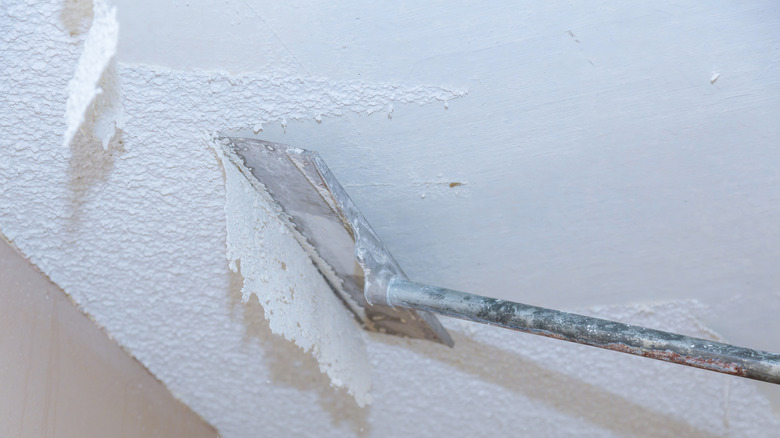
So, why are popcorn ceilings still so ubiquitous if just about everyone wants to get rid of them? For starters, due to their once-popular status, there are a lot of them left. Secondly, leaving them be is much easier than removal. Removing popcorn ceilings is a messy and labor-intensive ordeal that even the most dedicated renovators hesitate to take on, plus it can uncover the imperfections that the texture was originally meant to hide.
The asbestos also further complicates removal. If asbestos is present, scraping, sanding, or otherwise disturbing the ceiling can release hazardous fibers into the air, turning an already arduous project into one that requires specialized precautions and, in most cases, professional intervention. Since it was so common, any popcorn ceiling that dates back earlier than 1995 should always be tested, adding yet another layer to the budget and hassle of removal.
All that considered, if you're stuck with a dated popcorn ceiling, fret not: There may be coverage options that don't call for hours of scraping. Depending on the condition and construction of the existing ceiling, you may be able to cover the popcorn ceiling texture with thin drywall sheets, plaster, wood paneling, or similar overlay materials. However, you'll still want to take proper precautions when working on the ceiling and test for asbestos beforehand.