

12 Valuable Vintage Porcelain China Pieces To Look For At Estate Sales & Thrift Stores
We may receive a commission on purchases made from links.
You want your next gathering to look like a million bucks. Setting the table with porcelain is one way to instantly elevate your dinner party, giving it an expensive look and vibe. But, depending on the pieces and the pattern, the porcelain you find may actually be rare and valuable.
There are a few ways to tell if china dishes are valuable, from learning to recognize the material, looking for identifying marks on the underside, and becoming familiar with the most popular patterns. Knowing the names of the companies that produce valuable vintage dinnerware — like Wedgwood, Spode, and Royal Copenhagen — will also help you spot hidden treasures on thrift store shelves or tucked away at estate sales. While you may get a full dinnerware set for a song from a vendor who just wants to get it off of their hands, in some cases, a single plate may be worth more than $1,000. Familiarize yourself with some of the priciest porcelain patterns out there so you'll know when you've found the real deal.
Bernardaud Chenonceaux Cobalt
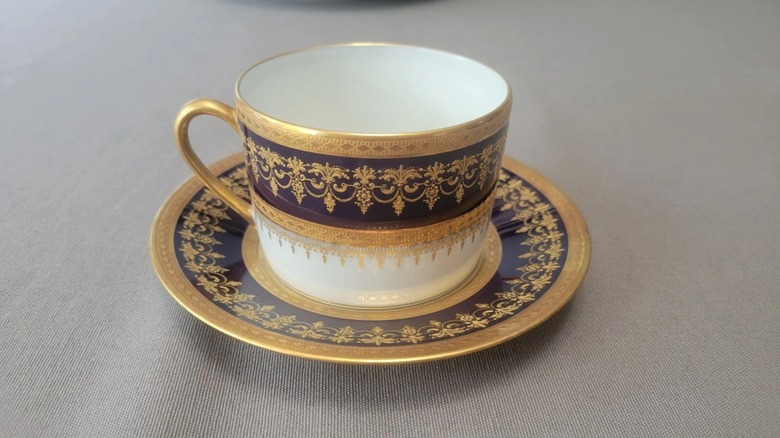
Limoges is the French capital of porcelain production, and Bernardaud is one of the major porcelain houses in the city. The company dates to 1863, and produced the Chenonceaux Cobalt starting in 1986. It has since been discontinued. Despite the pattern being relatively recent vintage, it's highly valuable, with single salad plates selling for nearly $1,200. The pattern features a band of deep blue adorned with a delicate, gilded floral garland. While still considered valuable, more recent Bernardaud pieces are decorated with decals, rather than hand-painted.
Tiffany Cirque Chinois
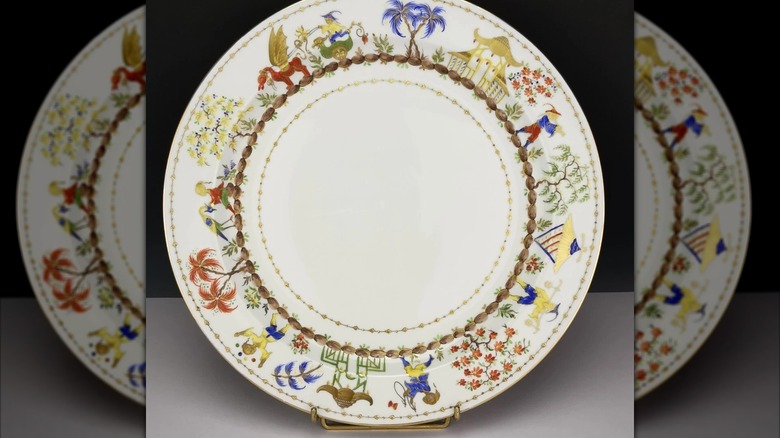
Camille Le Tallec, a French artist, created the Cirque Chinois design that adorns Tiffany's porcelain dinnerware. Interestingly enough, Tiffany didn't release the Cirque Chinois collection until 2001, and Le Tallec passed away in 1991. The hand-painted pattern features colorful florals and vines, pagodas, and people around the borders of the plates and around the circumference of teacups, pitchers, and bowls. Individual dinner plates can sell for $1,500 and an entire dinnerware collection had an estimated value between $10,000 and $15,000 at auction.
Royal Copenhagen Flora Danica
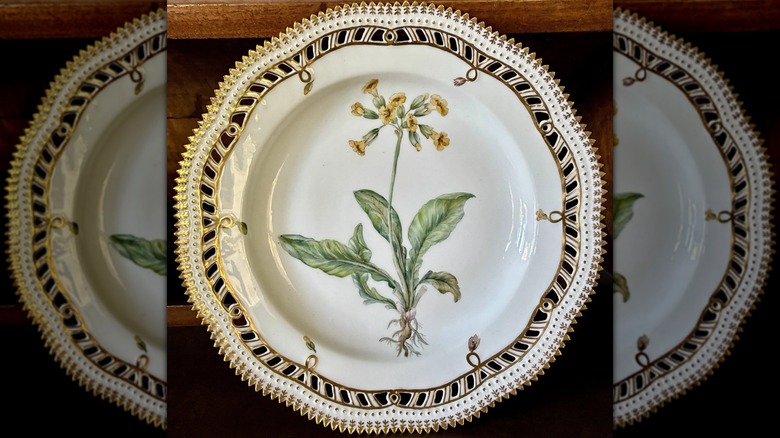
Royal Copenhagen has been in the porcelain business for centuries, dating back to 1775. And Flora Danica, its exquisite, hand-painted collection, is among one of the most valuable out there. The company began the collection way back in 1790, after the prince of Denmark commissioned it as a gift for Empress Catherine II of Russia. Floral Danica remains in production today, and each piece is still hand painted. You can special order a collection of your own, or track down existing pieces through auction houses or online. Prices vary based on age and piece, but expect to spend at least $1,000 per plate.
Hermes Le Jardin de Pythagore
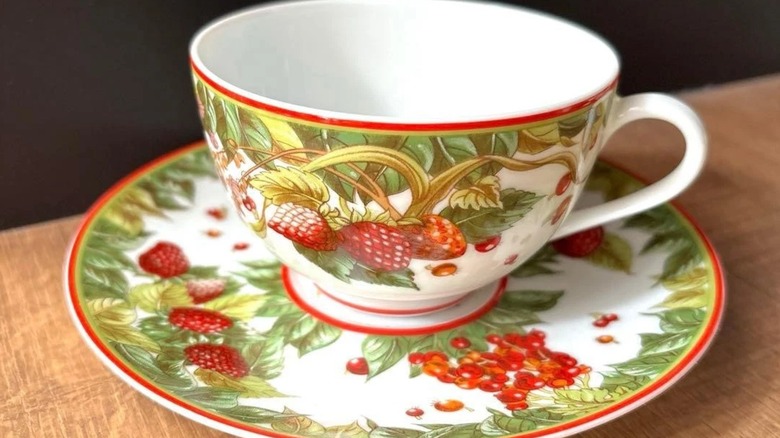
Is it any surprise that a brand known for producing one of the most valuable (and coveted) handbags also produces porcelain that's worth a pretty penny? Hermes' Le Jardin de Pythagore porcelain features red berries and green foliage, giving it a festive vibe. The collection was originally produced from 2000 until 2014 and is now discontinued. A single cup and saucer may cost you as much as $600 while a five-piece place setting will set you back nearly $2,400.
Meissen Swan Service
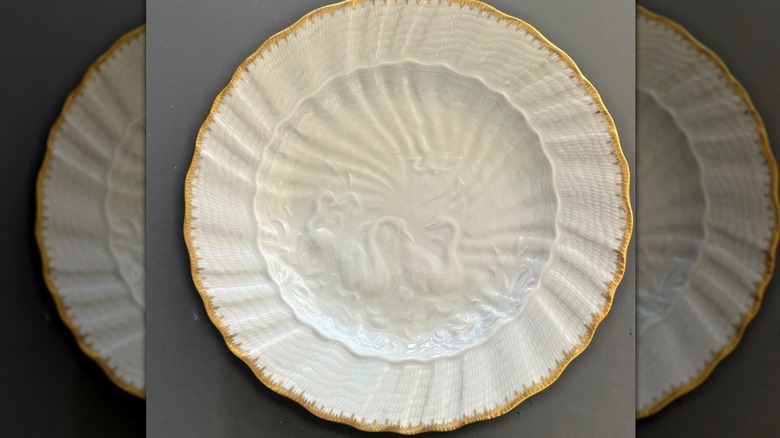
Meissen is another old porcelain factory and its Swan Service is another very old pattern. The company dates to 1710 and the Swan Service pattern to 1737. Similar to Flora Danica, it was initially a commission from the government, in this case, the prime minister. The first dinner service with the pattern consisted of 2,200 pieces, enough to feed 100 people. Unlike other porcelain patterns, Swan Service is impressed, with the pattern in relief, rather than painted. The pattern is still in production, with new plates costing around $145. Antique pieces can sell for five figures.
Bernardaud Parthenon
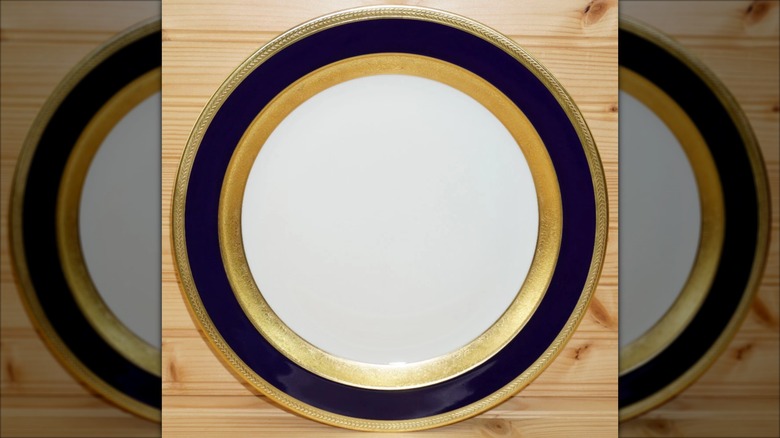
If you want to bring a bit of 1980s gilded charm to your dinner table, and dropping nearly $1,000 per plate isn't a deterrent, take a look at Bernardaud's Parthenon collection. The discontinued pattern, created in 1986, features a deep blue border, ringed by gold on the inner and outer rim. Like other Bernardaud pieces, Parthenon plates are made from porcelain sourced from Limoges in France. Also like other Bernardaud plates, the Parthenon decoration is created by attaching a decal and using gold leaf to the surface.
Raynaud Allee Royale
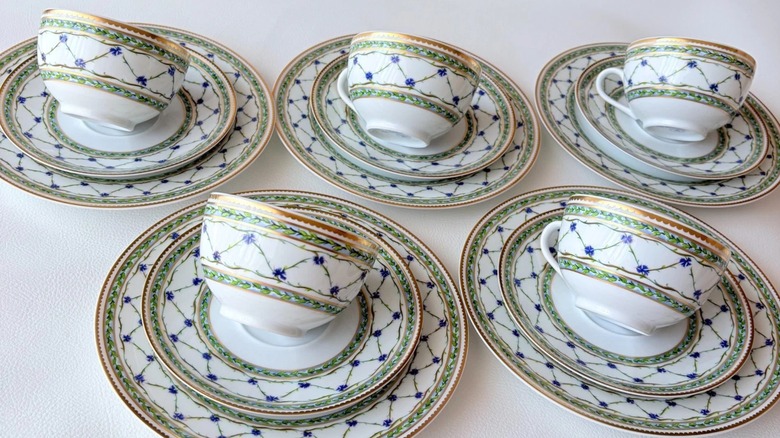
Another porcelain factory from Limoges, Raynaud introduced its delicate and dainty Allee Royale pattern in 1995. Although of relatively recent vintage, the pattern is valuable, with a full, five-piece place setting selling for nearly $1,800. At auction, a large, 300-piece set sold for $21,000. Also known as Allée du Roy, the pattern features a border of delicate blue corner flowers, surrounded by rings of tiny green leaves and gilt edging.
Royal Worcester Blind Earl
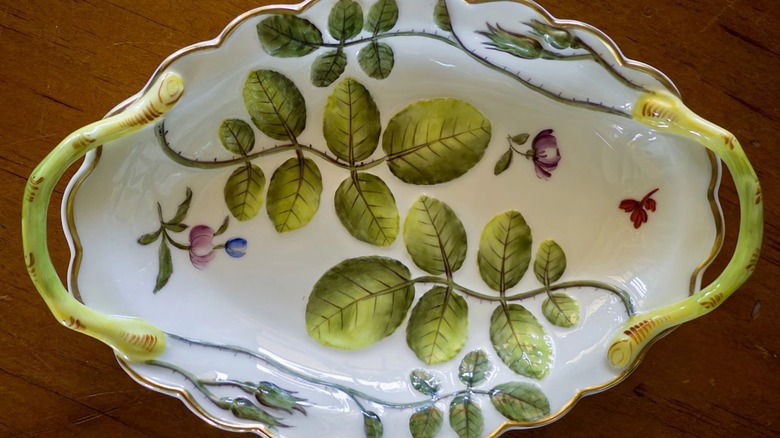
England also has its fair share of old, still-in-operation porcelain factories. And of them, Royal Worcester is one of the oldest, dating to 1751. Its Blind Earl pattern dates from around the time of the factory's opening, in the 1750s. However, the story behind the Blind Earl pattern, which claims that the design was named for George William Coventry, the fifth Earl of Coventry, who lost his sight in a hunting accident, dates to the 1780s, and is likely a piece of fiction. How valuable the Blind Earl pattern is depends on its age. Antique pieces are worth about double those made in the 20th century.
Wedgwood Fairyland Lustre
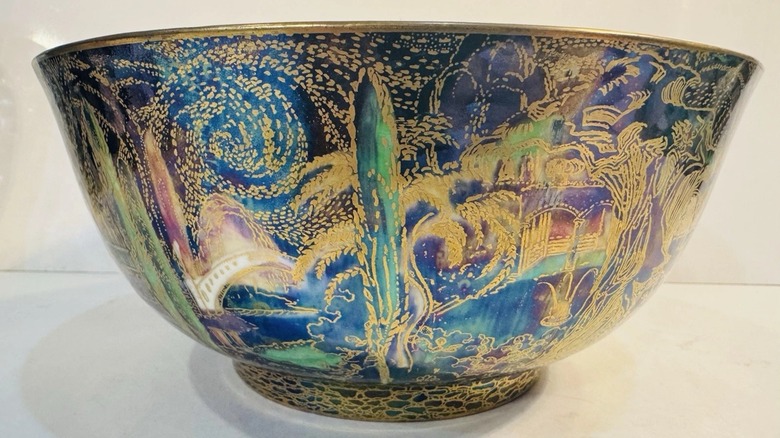
No list of valuable porcelain is complete without Wedgwood, the maker of the valuable Quince dishes and Jasperware. Perhaps the company's most valuable collection is the Fairyland Lustre pattern, created by Daisy Makeig-Jones for Wedgwood in the early 20th century. Tapping into the Art Deco style, which was all the rage at the time, Makeig-Jones created complicated designs, some of which needed multiple firings in the kiln to be completed. To create her patterns, the designer took inspiration from the illustrations featured in the "12 Colored Fairy Books" and stories by Hans Christian Anderson. A single Fairyland Lustre bowl today can sell for more than $5,000 at auction.
Royal Copenhagen Blue Fluted
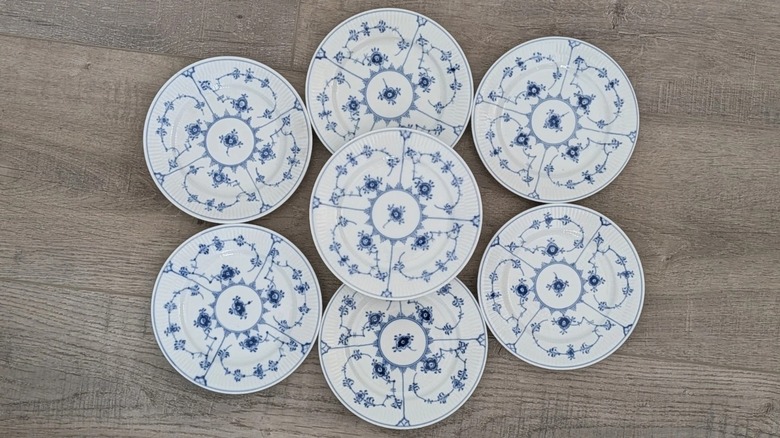
Blue-and-white porcelain is pretty ubiquitous. But, some blue-and-white dishware is more valuable than others. Take Blue Fluted by Royal Copenhagen — the first pattern ever created by the company, way back in 1775. Still in production today, the design is available in three formats: plain, full lace, and half lace. The lace patterns have cut-out borders, which are made by hand. All three border designs feature hand-painted, delicate floral patterns. New dinner plates cost $200 with the plain border or around $600 with the full lace border. Antique dinner sets have sold at auction for five figures.
Haviland and C. Parlon Matignon
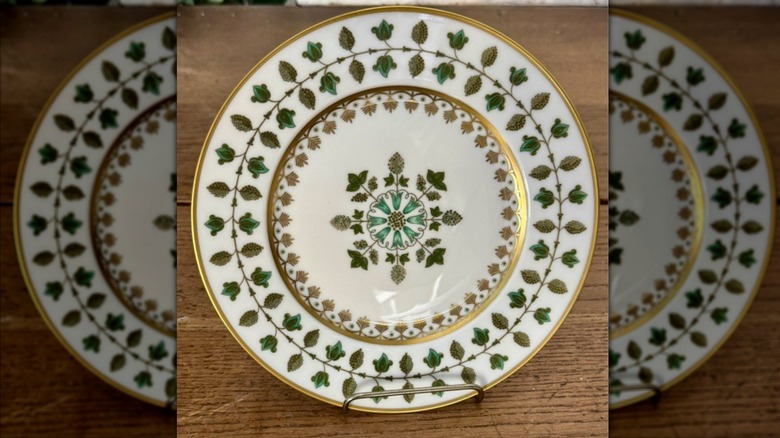
There are many porcelain companies operating out of Limoges, France. And, to add to the confusion, there are multiple porcelain companies operating under the name Haviland. And those multiple companies have produced patterns called "Matignon." The one at issue here, though, is the one commissioned by the wife of Jacques Chirac when he was the Prime Minister of France and created by Robert Haviland and C. Parlon. Available in two colorways, green and red, the pattern features foliage surrounded by two gold rings. A 150-piece set of the pattern sold at auction for $14,000 while individual plates cost around $450.
Spode Stafford Flowers
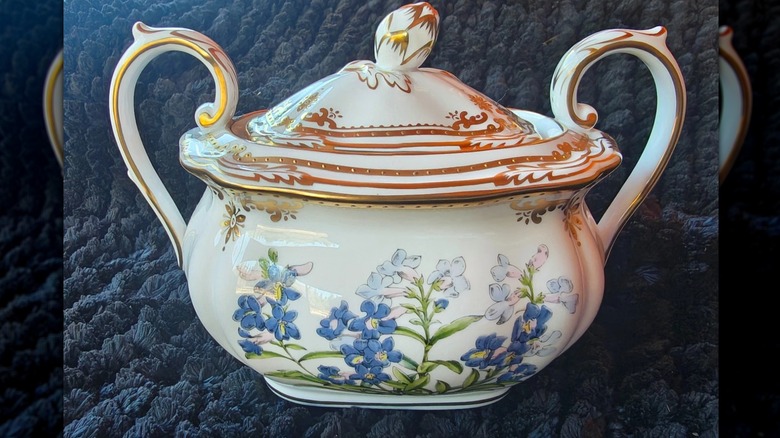
Even though the collection dates to the late 20th century, the flowers printed on Spode's Stafford Flowers collection come from illustrations created in the 18th century. Spode, an English porcelain company that dates to 1776, is known as one of the first to create designs using an underglaze transfer printing. The company produced the Stafford Flowers collection from 1989 until 2015, and it remains popular and valuable today. A large, 150-piece set sold at auction for $8,500 while individual plates can sell for over $300. Accessories in the collection, such as a sugar bowl, can sell for $250.