

Forget Mulch — A Prettier, Weed-Resistant Landscaping Option
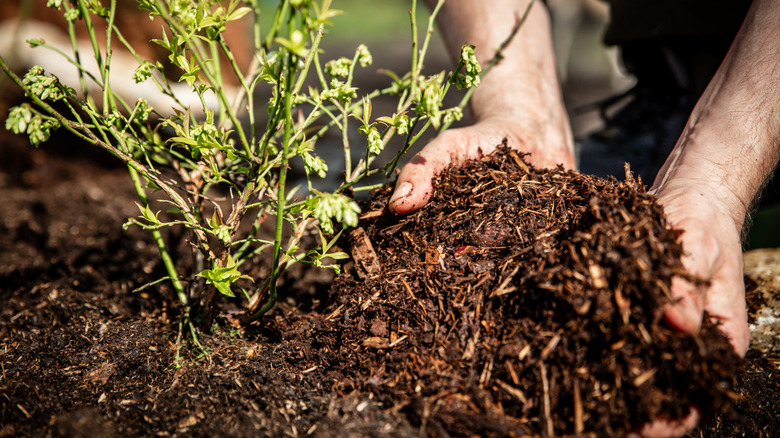
There are a few options for getting rid of weeds in your garden, but they aren't exactly fun. If hand pulling makes you sore just thinking about it and spraying chemicals makes you nervous, then you're likely looking for a way to keepunwanted growth from taking over in the first place. While there's no 100% guaranteed solution, you can use a physical barrier like mulch to reduce the amount of weeds that spring up. But traditional mulch needs to be replenished, and it doesn't always add much visual interest. Luckily, you can swap it for a living carpet of greenery that's both attractive and effective at shading the soil. Sweet woodruff (Galium odoratum) is a flowering perennial that forms dense carpets in shady areas, helping suppress weeds around trees, beneath shrubs, or along the edges of your home.
Sweet woodruff is a delicate-looking perennial with thin leaves and tiny white flowers in spring and summer. However, it is surprisingly hardy, able to resist many pests and thrive in shade beds where other plants struggle. Its dense mat of foliage blocks sunlight from reaching the soil, making it harder for many unwanted plants to get established. This low-growing cover can grow between half a foot and 1 foot tall and will spread over time to around 2 feet wide. That means a handful of starts can eventually fill a larger area.
One potential downside to its durable and spreading nature is that it can become invasive in some areas. You should refer to your state's invasive plant list before planting, and keep an eye on its growth to ensure it stays in check.
Planting and growing sweet woodruff
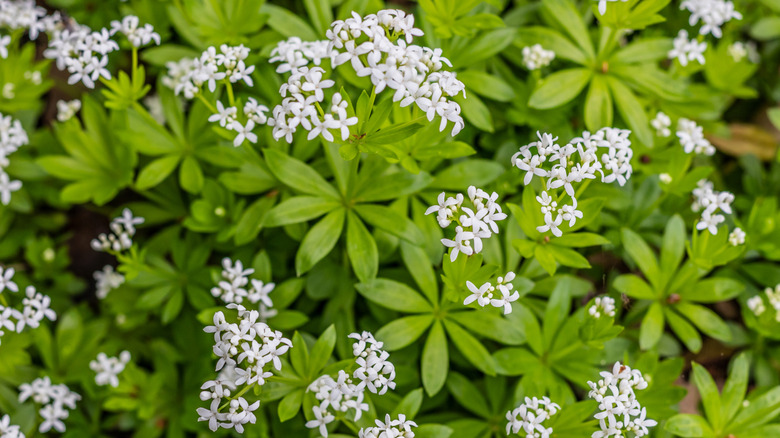
Start by making sure you know how to grow sweet woodruff, since healthy plants are better at forming a dense, weed-suppressing carpet. It thrives in USDA hardiness zones 4 through 8, and is best planted in full to partial shade. If you need to prevent weeds in a sunnier area, you'll likely have to replace the sweet woodruff with another ground-covering plant. However, sweet woodruff is one of the best flowering ground covers to plant around trees, structures, or other highly shaded areas. Since it spreads, you don't need to completely cover the area you want to keep weed-free right away. Instead, start with a few plants spaced one to two feet apart and let them meet in the middle.
Your planting doesn't need much help repelling weeds, but you do need to control its size. Sweet woodruff spreads through rhizomes, so physical barriers and pruning are two of the best ways to keep the covering in check. Since you likely want it to spread somewhat to keep the weeds at bay, place your barrier around the edge of your ideal growing space, then cut back any stems or sprouts that start to reach over it. Don't worry about accidentally cutting too much, either. It can be cut back or even mowed over to control its height and expansion, and it will generally regrow without issue. Just make sure you leave enough of the plant standing to shade the ground underneath it.