

Skip Standard Gravel For A Patio Option That's Sleek And Simple

You've worked hard on your beautiful DIY patio design, so don't skimp when it's time to consider the base. Standard options, like pea gravel, may be affordable and comfortable underfoot, but can make furniture feel wobbly. The loose stone can make it difficult to maintain your patio edges and, without high-quality landscape fabric underneath, weeds can sprout. Then, the gravel needs to be smoothed and leveled regularly. Moreover, different maintenance is required throughout the year. During spring, you need to replenish the gravel to keep appropriate levels, while summer calls for regular watering to clear debris. Fall requires pulling leaves from pebbles, and in winter you'll need to stay on top of drainage maintenance. It can also be a hassle to understand how much gravel to use. Instead, opt for low-maintenance concrete slabs.
This hard building material made from cement, sand, water, and stones makes the perfect patio base. Concrete is relatively quick to install and stands up to extreme weather conditions, making it durable and long-lasting. It not only provides a stable surface for furniture and walking, but it can also be more attractive than gravel since there is typically less weed growth. The sleek and simple appearance of concrete is inviting and provides a subtle tone and texture that make the perfect canvas for designing the rest of your patio. Concrete is also easier to maintain with regular sweeping and occasional spraying with water. Plus, there are many options to choose from, such as stamped concrete patio ideas and designs.
Design considerations for your concrete slab patio
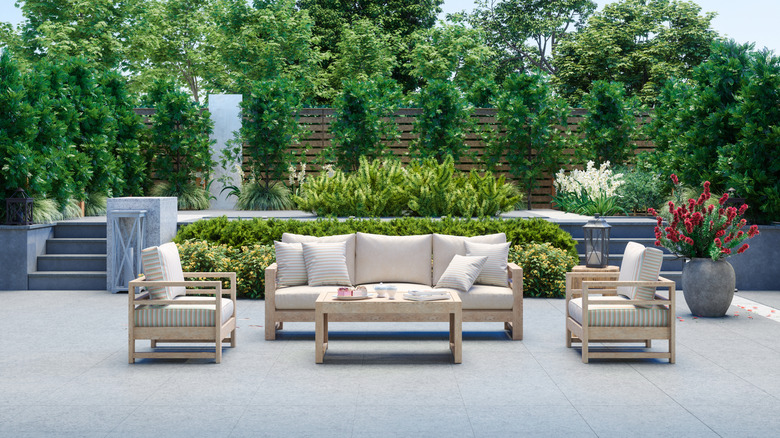
Concrete provides the ideal surface for your patio. Gone are the days of uninspiring, lifeless, industrial-looking slabs — today, a wide variety of colors, textures, and patterns can elevate your backyard oasis. While you can still opt for gray, there are multiple versions of this neutral standby to choose from. If you're feeling bolder, consider any number of lovely earthy tones, such as tan, gold, terra cotta, and even shades of blue and green. As for textures, you'll find options that resemble tile, cobblestone, wood, and much more. Patterns add even more options, like complex medallions and designing with your control joints.
Once you've decided what your base will look like, consider the patio design and layout. Think about how you'll use the patio. Knowing its function will shape its form. For instance, will you use it to gather with friends and family for outdoor meals? Concrete slabs provide a flat, slip-resistant surface — an important safety consideration for guests. Furthermore, concrete can be made to fit just about any shape and should support the weight of a DIY outdoor kitchen. If you intend your patio to be a getaway for lounging, concrete slabs offer a reassuring, stable platform for relaxing in comfortable patio furniture. Just remember to design with your lifestyle in mind, add only architectural elements that complement your home's exterior, and consider the property's future needs.