

WD-40 Vs. Silicone Spray: Do They Work The Same?
We may receive a commission on purchases made from links.
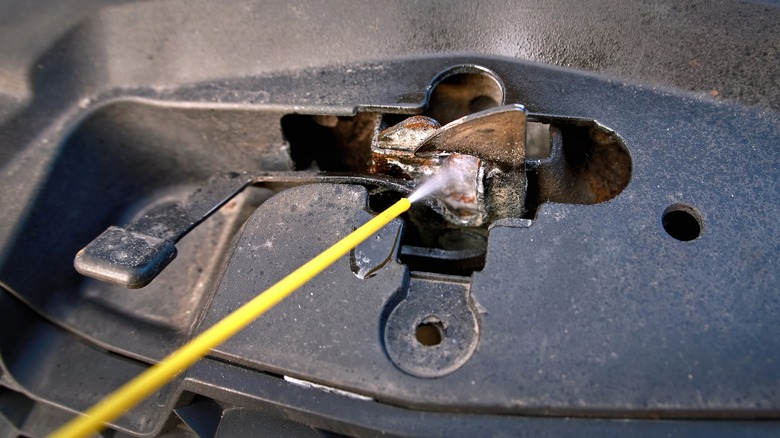
WD-40 and silicone spray are not the same thing. People use classic WD-40 to clean metal parts and loosen surface rust. Silicone spray doesn't do any of these things. It deposits a slippery coating that reduces friction between metal parts. In short, it's a lubricant.
WD-40 has many surprising — even genius — uses, but there's some controversy about whether or not it's a lubricant. The WD-40 company claims that it is, but TRH Technical Services, a company that supplies medical equipment, says no. Popular Mechanics believes that the issue of lubrication is complex and application-specific. WD-40 can help free stuck metal parts by penetrating around rust and corrosion, but its light residue doesn't replace a long-lasting lubricant. In fact, it tends to collect dust and can end up doing the opposite over time.
To improve lubrication, WD-40 now sells products distinct from its original formula, including WD-40 Specialist with Silicone, which offers rust prevention, but not rust loosening. The company also sells items with white lithium grease and a no-drip dry lube.
Products like CRC Heavy Duty Silicone Lubricant prevent rust with a durable coating and lubricate. However, they don't clean metal or loosen rust the way WD-40 does.
How to use WD-40 and silicone spray
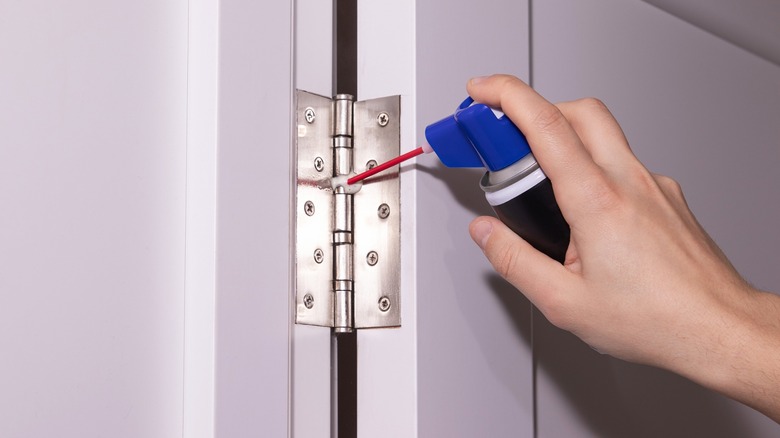
Since WD-40 and silicone spray are different, you might be wondering when you should use a particular product. Consider the case of the rusty hinge that squeaks. By loosening rust, cleaning the metal, and providing some lubrication, Multi-Purpose WD-40 will quiet the squeaking. Still, because it provides minimal lubrication, the hinge will soon squeak again. A silicone spray lubricant will stop the squeaks for a longer time, but it won't loosen rust, which will keep on eating away at the metal.
You can also spray Multi-Purpose WD-40 to loosen and remove rust, let the solvents evaporate (for an hour or so), then use silicone spray. This might be an even better strategy than using an all-in-one product. If the metal is clean, rust-free, and dry before you spray the silicone coating, it will adhere and wear better, quieting squeaks longer. Others substitute multi-purpose oil for silicone spray and use this procedure anywhere metal parts are rubbing against each other and making noise.
Before you get to work, know that controversy exists about whether petroleum distillates in WD-40 and some off-the-shelf silicone sprays can damage rubber. To be safe, avoid spraying either product on belts, gaskets, and other functional rubber components.