

Ditch Regular WD-40: There's A Smarter Way To Fix Your Squeaky Door Hinge

We may receive a commission on purchases made from links.
A squeaky door can be really annoying, especially if it's one that people use all the time. The cause is usually dirty or rusty hinges, and the go-to remedy for that is good old regular WD-40. WD-40 has many uses around the home and garden, and it'll stop the squeaking for a while. Originally developed for the airline industry, its initial purpose was to dissolve rust, but it does provide some lubrication, according to the company's website. And squeaky hinges need lubrication to stay quiet, which is why silicone spray is a smarter alternative.
How much lubrication original WD-40 provides, how long it lasts, and the nature of the lubricating agent aren't public knowledge, because the company keeps the formula secret. The quality of the lubrication is controversial, however, with one poster on a machinist's forum claiming that it's "terrible," and that the best use of WD-40 is as a solvent. In other words, its ability to dissolve rust, dirt, and grime — and not its lubrication properties — is why WD-40 is so good for loosening metal parts and quieting squeaky hinges.
The main purpose of silicone, on the other hand, is to lubricate. When you use a silicone spray to quiet your door hinges, it leaves a thin, slippery film that allows the metal parts to slide past each other effortlessly. Even the makers of WD-40 recognize this quality, which is why they market WD-40 Specialist Silicone Lubricant. This is the stuff to use on your squeaky hinges.
How to stop squeaks for good
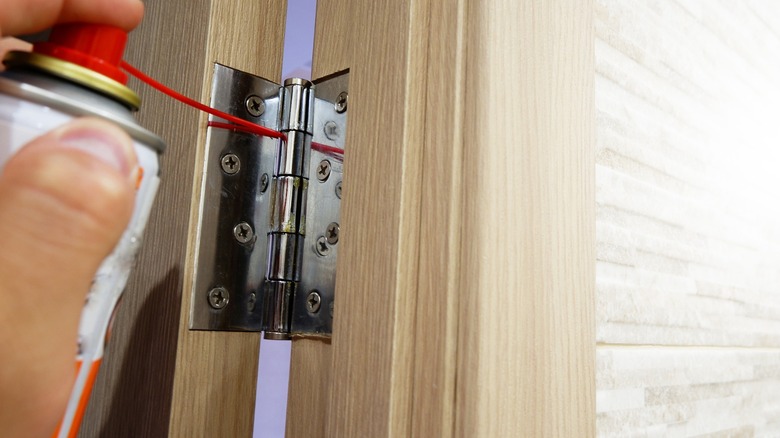
You can definitely fix a squeaky door with silicone spray, and you don't need to use a WD-40 product. Many other silicone sprays, such as Blaster Silicone Lubricant, will work. They reduce friction, but they don't include the rust-busting ability of original WD-40. However, if you already have a can of WD-40, you can use that first to dissolve the rust, dirt, and grime that cause squeaking and sticking and follow it up with another brand of silicone spray for lubrication.
It stands to reason that you have to get the spray to the part of the hinge that's squeaking, and that isn't always as easy as it sounds. One way to do this is to close the door and tap each hinge pin up by an inch. You can do this by inserting a nail into the hole at the bottom of the hinge and tapping the nail with a hammer. Now you can spray under the head, and let the lubricant seep down along the pin.
If you really want to stop squeaks for good, an even better idea is to remove the hinge pins, give them a good cleaning with steel wool, spray them with silicone, and put them back. If you keep the door closed, you can remove the pins one by one, clean each one, and put it back without worrying about the door falling. When each pin is out, don't forget to spray inside the hinge.