

Is It Okay To Hose Down A String Trimmer?
We may receive a commission on purchases made from links.
Picture this: Your lawn looks pristine, the flowers are thriving, and your curb appeal has shot up exponentially. All of that handiwork has left you with photo-worthy results, but chances are your lawn care tools look like they've been through the wringer. Maintenance is essential, not only to get the equipment clean but to ensure it works properly and safely the next time you fire it up. After cutting grass and weeds, you might feel inclined to hose down your string trimmer, but fight the urge, as it's not the best method.
Many landscapers (and Reddit users) are in favor of this quick, no-fuss approach. However, spraying a large amount of high-pressure water can potentially damage delicate parts of the tool . In particular, it poses a safety threat for mechanisms,such as an electrical trimmer's power cord and/or battery, which could lead to a shock hazard when moisture builds up. Although a gas string trimmer may be less delicate, you have to be careful not to let the tool's engine get wet. And, regardless of what type of equipment you're using, it's advised to avoid moisture around the motor, as specified in owner manuals. If you're spraying water solely on the head of a trimmer, it could also lead to rust if it's not dried properly. All this to say that a refined cleaning approach is preferred, lest you'll find yourself with more string trimmer problems than simply clearing off debris.
How to properly clean a string trimmer
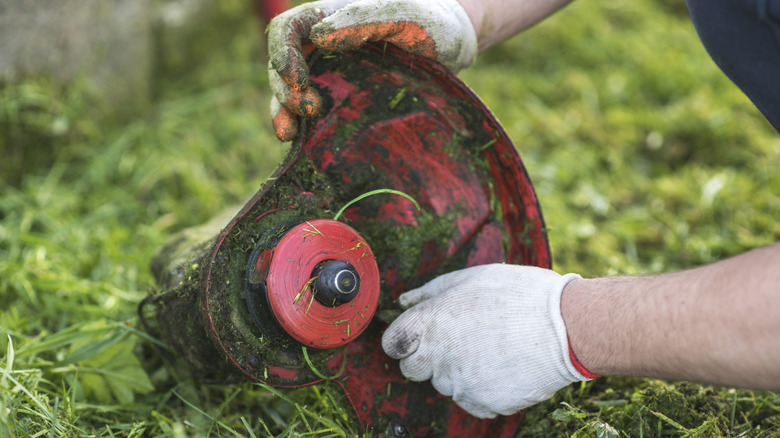
Regardless of how you decide to clean your string trimmer, make sure it is off first. For a gas string trimmer, turn off the power, empty the gas tank, and disconnect the spark plug wire. For an electric string trimmer, power it off and remove the battery.
Some lawn care DIYers argue that cleaning a string trimmer head with a hose is completely fine, provided you don't get liquid inside of the electrical parts. Whether you're working with a gas or electric tool, ensure you are targeting the head and opt for a low-pressure shower setting on your hose. Some people will also spray the shaft of the dirty tool while trying to avoid those sensitive components, but keep in mind that treading close to the motor can present problems.
You should clean the head after every use. That way, the buildup won't be as heavy and rust-prone. The gentler and preferred approach avoids the hose. To begin, use a steel brush like the 14-inch Maxman Wire Brush to remove buildup. Then, take a towel and use a mixture of water and dish soap or a light detergent to remove those stubborn remains, but never submerge it in water. Ensure that the head isn't loose or damaged, as this can cause performance and safety issues when in use. No matter what clever landscaping ideas you're cooking up next, factor in time to properly care for your tools. Your garden will thank you.