

14 Unexpected Ways To Use Pam Around The House (Besides Cooking)
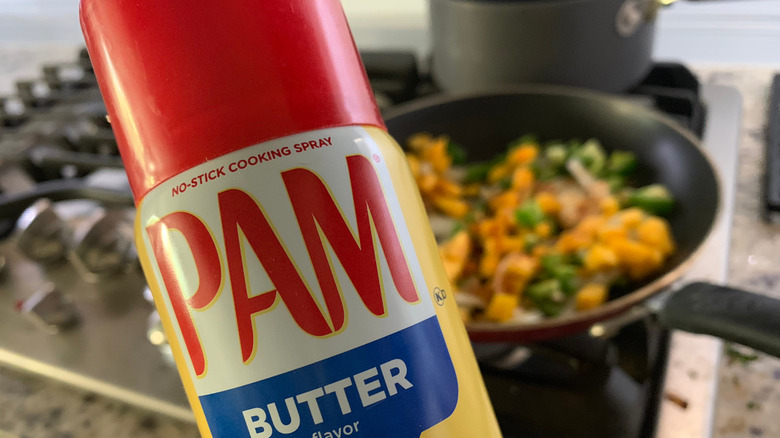
Pam and similar cooking sprays are probably not particularly necessary for cooking, but they get used a lot for one simple reason: The spray-can format really works for quickly and lightly coating pans. And, for exactly the same reason, Pam can be useful in treating everything from fingernails to mower blades to bike chains. Wondering why you'd want your fingernails to smell like some chemist's idea of butter? Don't worry ... they won't, unless you want them to.
The original formulation of Pam doesn't actually contain any flavorings, "butter" or otherwise. It's mostly some oils (canola, coconut, and palm oils, to be specific), a few additives, and propellants. That means that, in your decade-old can of Pam, you have a few lubricants long overdue for something to lubricate, and you need look no further than our list.
There's a lot of "it's not ideal, but it works" in this list. That sounds negative at first, but "not ideal but it works" is part of the functional description of nearly everything these days, from dog food to dandruff shampoo to automobiles. If you have something that works better, by all means do that. This especially includes any application that involves heat. Remember those propellants we mentioned? It turns out that two of those are butane and propane in food-safe amounts, which are rather more on the explodey side than most kitchen gear. (Note that organic varieties of Pam use carbon dioxide as a propellant.) So when you see a guy happily spraying Pam on a smoker he's trying to recondition, take cover; he's about to recondition his eyebrows and, if he's lucky, that's all.
Keep grass clippings from sticking to your mower deck and blades
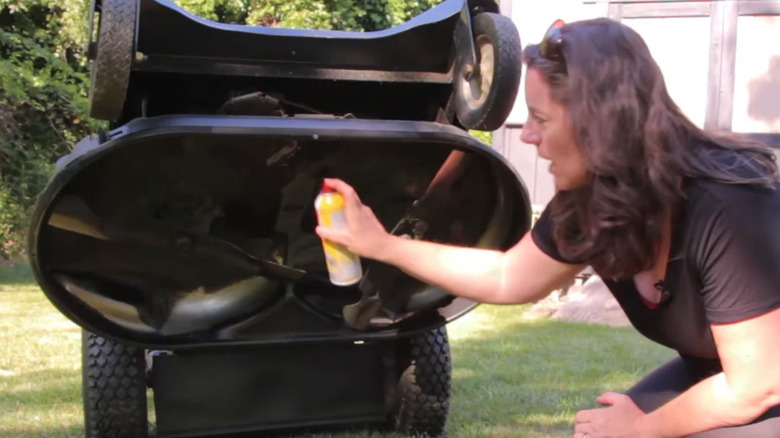
Let's start with the lowest-hanging fruit of America's favorite crop: turfgrass. When you're mowing, grass clippings tend to collect on the underside of your mower deck. Left unchecked, these will conspire to hold their moisture against your mower's steel bits until rust forms and the clippings turn into a kind of papier-mâché mold of your mower that can only be removed with a scraping blade, unmitigated anger, or both. A spritz of Pam apparently keeps the grass from sticking as easily.
Easily remove a stuck ring
Perhaps you've had it with your spouse's refusal to help keep the mower deck clean. Or perhaps you've just realized that you're the only person on earth who wears a class ring. If it's taken a while for these realities to sink in, you might find your fingers are larger today than when you first donned your ring, and a spray of Pam can help oil the works when you're trying to rid yourself of the thing ... or just making meatloaf.
Make soap scum easier to remove
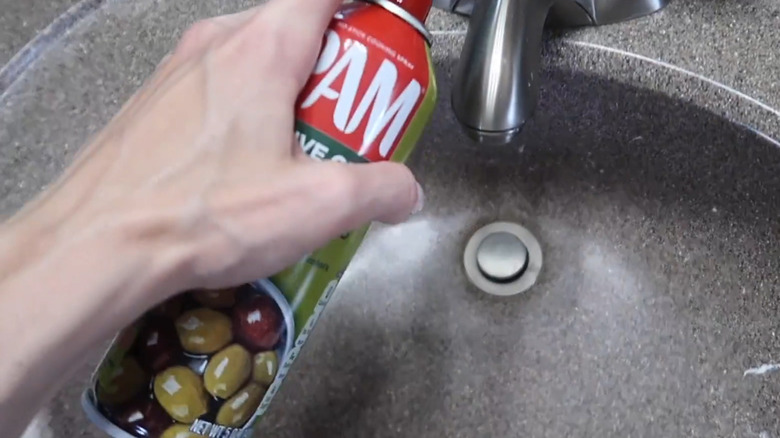
Soap is the worst form of scum, even including pond scum and those guys on Internet forums who insist on telling you about all the logical fallacies you use. Yes, soap scum is worse, but it is easily removed by the simple expedient of cooking spray and some elbow grease ... no moderator required. Make sure you clean up afterward to keep things in your tub or shower from getting even more slippery than the logic guy. But note that this one might be in the "not ideal" category, since major soap scum cleaners don't contain oils.
Block the bumper bugs
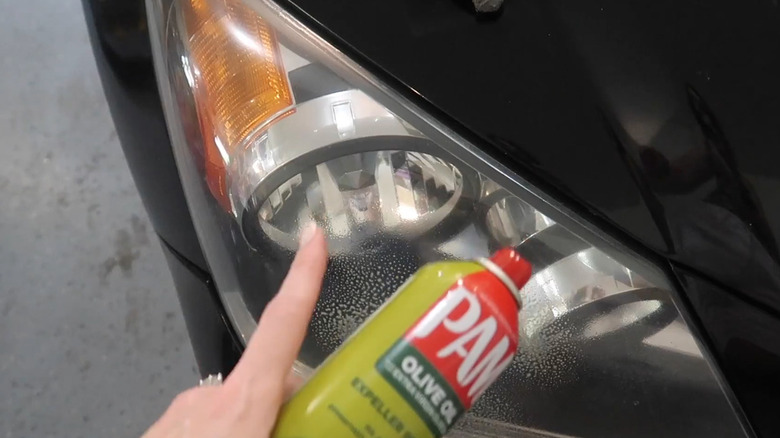
It's too close to lunchtime, so we're not going to delve into the substances and chemistry involved, but it appears that Pam can also remove bugs and tree sap from your car's bumper and other forward-facing parts. This also reportedly works on something called "bug stains," about which we shall not speak. If you've ever driven through a mayfly hatch, you know that the next rain shower will do the trick as well, but it's doubtless more thorough when you buff 'em out with a microfiber cloth. You'll probably want to avoid using Pam on your windshield.
Keep your car door from freezing shut in winter
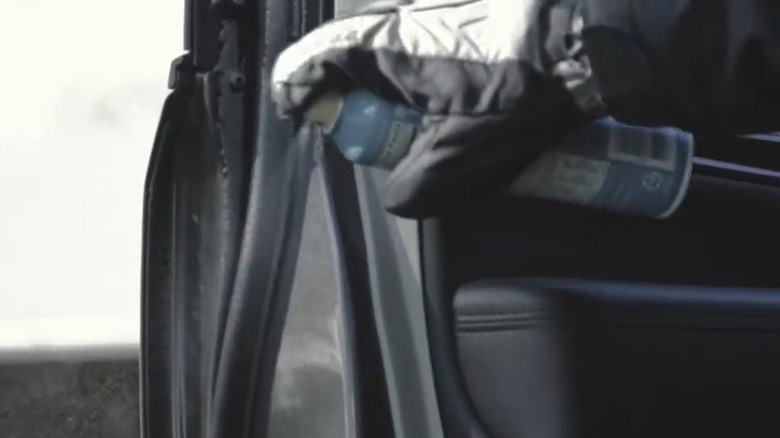
If, speaking hypothetically, you've never lived north of South Carolina, it might seem bizarre that your car door could freeze shut in winter. This is obviously either a failure of engineering or life choices. Fortunately, you can spray cooking oil on your car door's rubber seal to create a water- and ice-repellent barrier that will usually prevent the door from making you late for work. Save this messy trick for an emergency situation and be sure to wipe off any excess oil to keep it off your clothing.
Lubricate and restore rubber
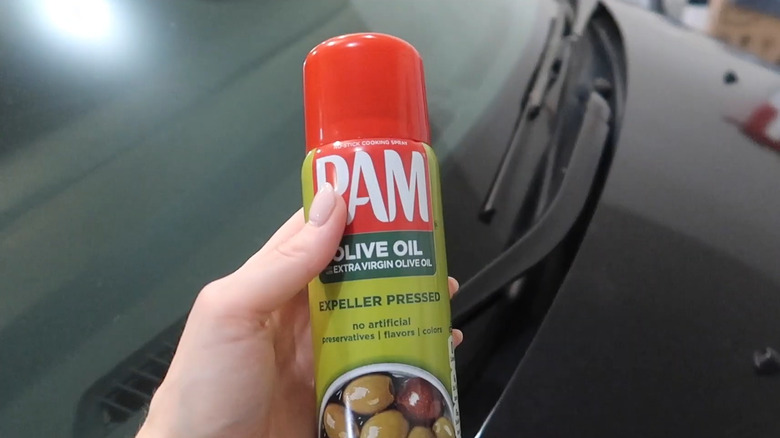
If you can improve your car door's rubber seal, how about your windshield wiper blades and other rubber parts? Some of the elasticity of rubber can be restored with oil, at least in the short term. There are specific rubber conditioners that will perform better for some rubber components. And keep in mind that oil isn't recommended for treating silicone rubber, although significant problems are usually only caused by petroleum-based products, in high-temperature environments, or when very low-quality silicone is involved.
Keep your snow shovel (and more) moving
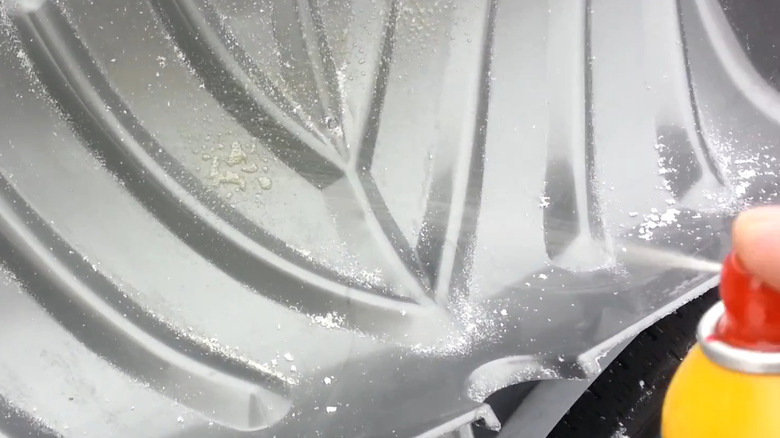
Cooking oil sprays seem to have a lot of benefits whenever snow and ice are involved. You can reportedly prevent snow from sticking to your snow shovel with cooking spray – and also help your sled and snow blower work better than ever — mostly because of the lubrication effects of its oils and the naturally hydrophobic qualities of oil in general. When it comes to the snow blower, though, just remember that spraying a hot blower might be risky, since heat and Pam are enemies as surely as oil and water are.
Keep snow off your satellite dish

Cooking spray does seem to keep snow moving, and some claim that this works on satellite dishes as well as shovels and sleds. The idea seems to be that lubricating the surface causes snow to slide off more easily. While it does seem to work to some degree, some who have tested it have found that the results are a bit underwhelming. And remember that spraying oil on an outdoor surface is like asking for dust and dirt to stick to the thing you're trying to keep clean.
Oil squeaky door hinges
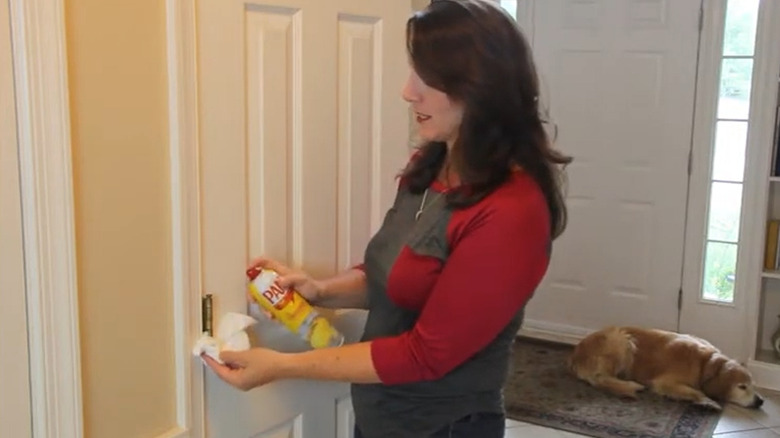
The same caution applies to this trick. A drop of oil will, no doubt, keep your hinges from complaining so loudly when you open and close a door. Just keep in mind that you might eventually experience some buildup and gumminess that can actually make the door harder to use. Best to save this one for emergencies that require sneaking out after everyone else is in bed ... going to buy a last-minute Mother's Day card, for example.
Lubricate a bike chain

Cooking spray oils will obviously lubricate a bike chain and will, perhaps more importantly, keep water from reaching the steel the chain is made of and turning it into a rust-colored stick. However, this is another quick fix you shouldn't over-rely on. Not only do the usual caveats about polymerization and stickiness apply, but oil has another characteristic that comes into play with a bike chain: Stuff tends to stick to it. And since you obviously don't want a bike chain coated with dust and dirt, consider using a dry bike chain lubricant for everyday use.
Dry fingernail polish
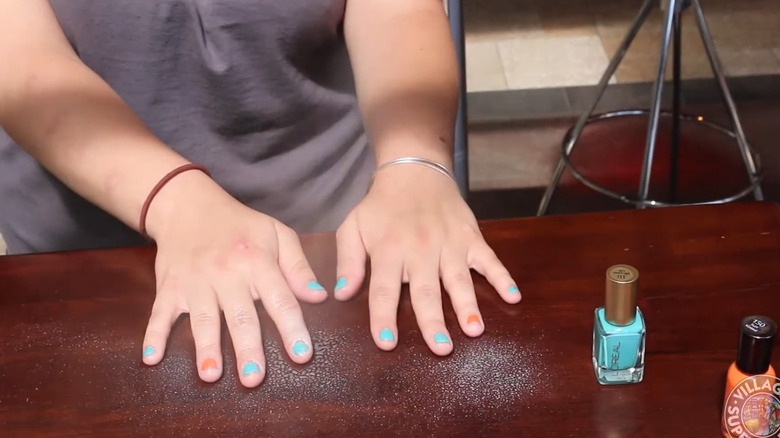
We can accept a lot of things without question. Pam can help you sneak out of your house or even lubricate your bike chain in a pinch, but how on earth does cooking spray help your fingernail polish dry faster? Perhaps it's enough to know that it works even if experts don't understand why. Some have posited that the propellant acts as a drying agent, though we found that propane and butane often need help with drying and sometimes need to be dried out themselves. Also, neither seems to be widely used for this purpose.
Clean your greasy hands
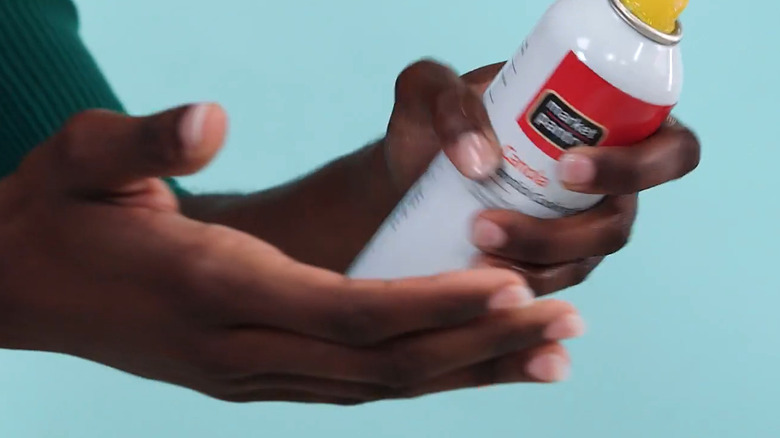
While we're putting Pam on our fingers, why not go for the whole hand? This will come as no surprise to anyone who has removed stickers from glass with peanut butter or pre-washed their hands with olive oil after an afternoon of wrestling with a mower engine, but oil is a good solvent for other oils and so can be really helpful when degreasing your hands. It also reportedly works for paint as well, but that's more mysterious and might depend on the type of paint.
Use as anti-spatter spray for welding
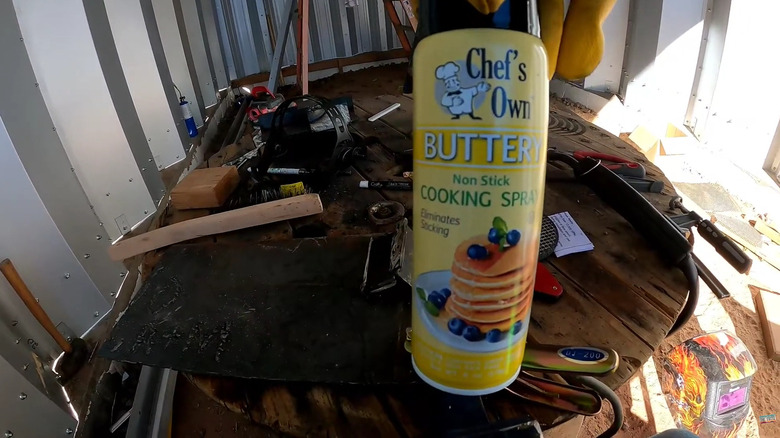
Another potential garage-oriented use for Pam cooking spray is a bit narrow, and illustrates the whole "not ideal, but it works" thing. Some welders claim that cooking spray makes a fair stand-in for anti-spatter spray, and, of course, the most obvious question is: "What on earth is anti-spatter spray?" With certain types of welding, molten metal gets scattered about and ends up solidifying on nearby surfaces as "BBs" that have to be ground off. Anti-spatter sprays make this stuff easy to remove, and cooking spray is reportedly better than nothing ... but only just.
Use it as an emergency mold release
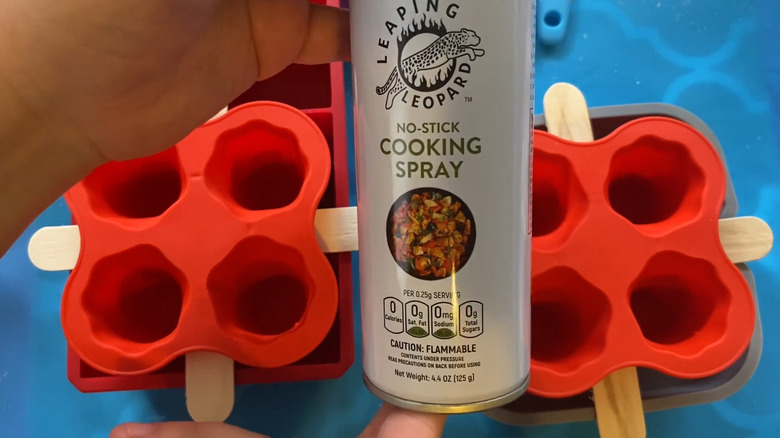
We now move from the garage to the craft room for another specialized use. Crafty types sometimes make things with DIY molds, often made of silicone. The trouble with most (though not all) DIY mold projects is that the molds can be difficult to peel away from the finished work. Cooking spray can be a substitute mold release agent, and dedicated mold release sprays do sometimes contain oils. Results are mixed, but it might be useful in a pinch. Just remember that long-term exposure of silicone to oils can sometimes cause it to break down.