

Move Over, Landscape Fabric: This Tougher Alternative Is Better For Gravel Driveways
We may receive a commission on purchases made from links.
When installing a new gravel driveway, it's highly recommended to add a fabric base for various reasons. A roll of fabric helps suppress weeds, keep soil in place, and provide overall support for a project. Keep in mind that all landscape fabrics are not the same, and when designing a DIY gravel driveway, you should leave flimsy landscape fabric behind. Instead, opt for driveway fabric, which is also known as geotextile stabilization fabric.
Stabilization fabric is very heavy-duty and specifically designed to prevent gravel driveways from sagging and losing shape over time. It reduces the need for additional rock and gravel subbases, saving homeowners from having to purchase several more bags of materials. This keeps a project more budget friendly and reduces how long it takes to complete. As long as it's buried beneath a few inches of gravel, manufacturers claim that this fabric lasts anywhere from 30 to 50 years.
This specific landscaping fabric is often made of synthetic materials, like polyester and polypropylene. When laid beneath a driveway surface, it prevents poured gravel from slowly seeping into the base layer of soil below. This reduces the frequency with which you have to replace the rocks and improves their chances of staying in place. The stabilization fabric is also designed to prevent erosion from natural rainfall, keeping a driveway in decent, drivable condition long-term.
How to successfully install stabilization fabric as a gravel driveway base
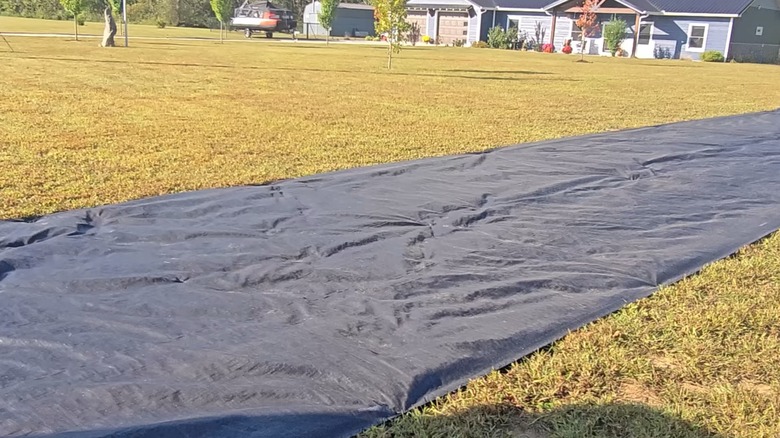
Stabilization fabric is installed similarly to traditional landscaping fabric. Start by prepping the proposed gravel driveway area by smoothing and leveling it. Renting an excavator will make things easier, but you can also level the dirt using hand tools, like shovels and hand tampers. Make sure you dig out a space a few inches deep, so you can pile enough gravel on top to sufficiently cover the stabilization fabric.
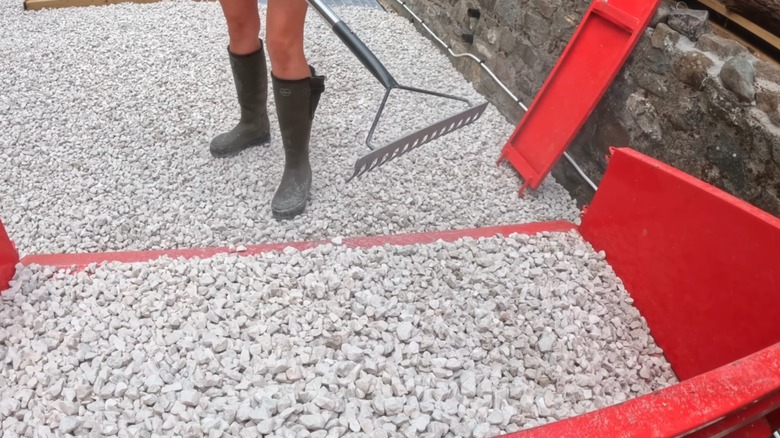
Lay the fabric down over the space, being sure to choose a fabric that can cover the width of your driveway. Residential driveways range from 9 to 12 feet wide for single vehicles. Therefore, you would need to double up on an option like the Mutual Industries Polypropylene Woven Stabilization Fabric. If it's longer than you need, you can always trim the fabric with an electric hot knife. Secure the fabric with landscape staples or pins every 3 feet, then add enough gravel to fill the area. Once the gravel is poured, a landscape rake and drag harrows are effective tools you can use to smooth and level it. Use these as needed over the years to keep a gravel driveway looking new and to keep the underlayment safe from excessive sunlight and heat.
Keep in mind that some of the pros and cons of traditional landscape fabric can also extend to geotextile fabric. Bright sunlight and high outdoor temperatures can cause the synthetic material to deform and shrink over time. This could inevitably lead to uneven texture in a driveway. Stabilization fabric is also pricier than landscape fabric, since it's more heavy duty. Despite these drawbacks, this tougher alternative is the superior option for gravel driveways.