

What Should You Put On Your Lawn In September?

Your lawn might get the most attention during the warmer months, whether you're enjoying time outside or keeping up with how often you need to mow, but fall is a crucial time of year for lawn maintenance, too. In fact, it's arguably the most important time for cool-season grass lawns. When September rolls around and the weather begins to change, there are several key steps to promote a healthy lawn that will be prepared for the winter and rich, green, and healthy come spring. Some of those tasks go beyond mowing, however — it's also about what you put on your lawn throughout the month. The primary maintenance required can be sorted into three categories: fertilizer, weed killer, and grass seed.
Before sprinkling and spraying an array of products on your lawn, it's important to know the types of grass you could be working with, as this dictates minor differences in the recommended upkeep. Those who live in the northern U.S. states – specifically the upper two-thirds of the country — likely have cool-season grass lawns, which include varieties like Kentucky bluegrass, perennial ryegrass, fine fescue, and tall fescue. Those who live in the South likely have warm-season grass, which includes Bermuda, zoysia, and bahiagrass. There's also a transition zone running across the middle part of the country, where cool- and warm-season grasses can overlap.
What to put on cool-season grass lawns in September
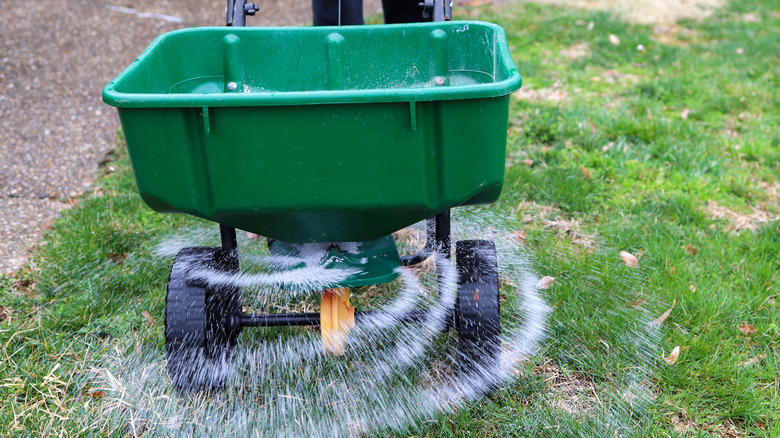
When it comes to cool-season grass lawns, September is especially important because the grass is simultaneously recovering from the hot summer weather and rearing to grow as it's exposed to more temperate and ideal conditions. You can take advantage of the seasonal opportunity by fertilizing your lawn first. Spread a slow-release fertilizer to provide your lawn with key nutrients. However, you may want to conduct a soil test before you start fall fertilizing to determine your lawn's pH levels. While it's not a requirement, it can help you decide which fertilizer to use based on a ratio of nitrogen, phosphorus, and potassium, as well as other soil amendments. As far as the amount of fertilizer goes, the general rule of thumb is to apply roughly 1 pound of nitrogen for every 1,000 square feet of your lawn.
You can then spray a selective post-emergent herbicide to eliminate existing weeds. Always consult the manufacturer's instructions before using any herbicide, as there will be recommendations for the best temperature, moisture levels, and lawn compatibility. Early fall, well before the first frost, is also a great time to overseed a lawn. Cool-season grasses grow well in temperatures ranging from 60 to 75 degrees Fahrenheit, so overseeding at this time, especially in patches that are thin and worn-out, can make your lawn lush the following spring. Just be sure to space out spraying herbicides and overseeding, as some herbicides can inhibit seed growth.
What to put on warm-season grass lawns in September
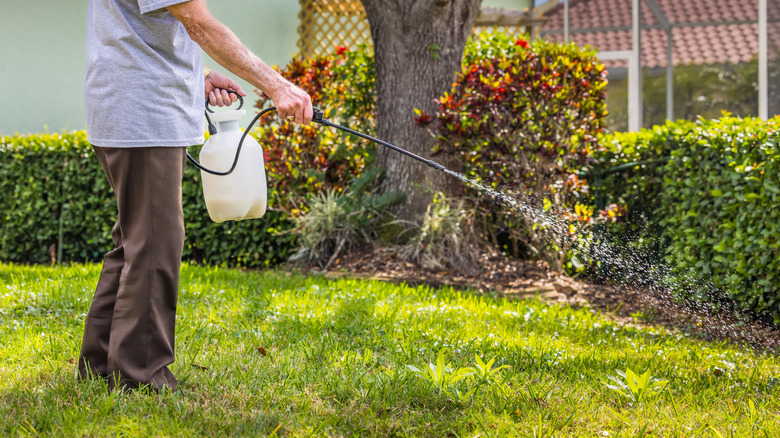
For warm-season grass lawns, September is still an important month, since you can prepare for winter dormancy, but it's not quite as crucial as it is for cool-season grass. The reason is that summer is the peak growing month for warm-season grass, while cool-season grass thrives in spring and fall. As a result, September is a good time to apply weed killers to warm-season grass. You can apply a combination of pre-emergent and post-emergent herbicides to the lawn, as long as you're not overseeding around the same time. A pre-emergent herbicide can prevent new weeds from growing during the winter, while a post-emergent herbicide eliminates existing weeds.
You can also apply fertilizer to your lawn at this time, but it's generally recommended that the fertilizer be low in nitrogen because grass growth slows down as temperatures drop. A high-potassium winterizing fertilizer can help bolster your lawn throughout the winter without over-encouraging new growth. For these same reasons, it's generally best to avoid overseeding warm-season grass in September, opting instead for when the weather warms up in late spring and early summer. No matter what type of grass you have in your lawn, it's worth treating it in some capacity in September, whether it's to recuperate from summer, withstand winter, or grow lush in spring.