

Don't Start Fall Fertilizing Until You Have Done This To Your Lawn First
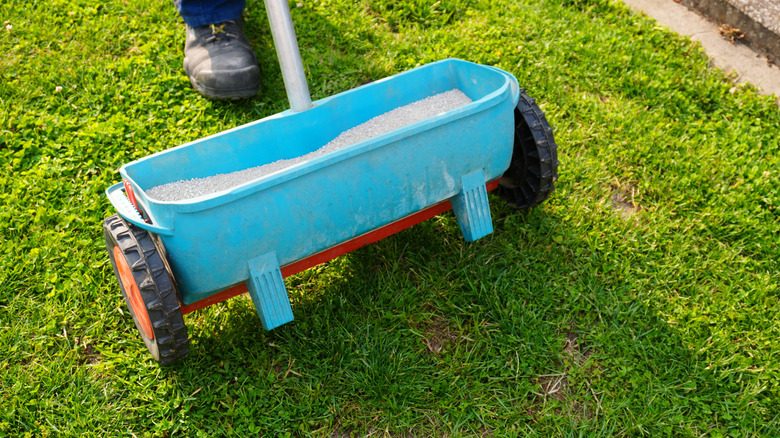
Fall's arrived, and you're getting your lawn ready for the cold winter ahead. If you have cool-season grass September to November is the ideal time to add fertilizer. For warm-season grasses, fertilize sooner, no later than early September if you are applying nitrogen. But before feeding your lawn, there's something else you need to do — test the soil.
Without a soil test, you're essentially feeding your lawn blind. You don't know what nutrients it needs or not. You also don't know the pH, and whether you need to add amendments to raise or lower it. You may end up under- or over-feeding it, wasting time and money, and potentially doing more harm than good. A soil test also lets you know the overall quality of your lawn's soil, such as whether it has a sufficient amount of organic matter or if it compacts easily.
Whether you need to fertilize or not, fall is often the ideal time to soil test your lawn, notably because it gives you time to apply lime, should your lawn need it. The soil is also drier, which can make it easier to collect samples, and the labs may be less busy, so you get your results faster. Therefore, before you break out the fertilizer, take samples of your lawn for soil testing.
How to test your lawn's soil
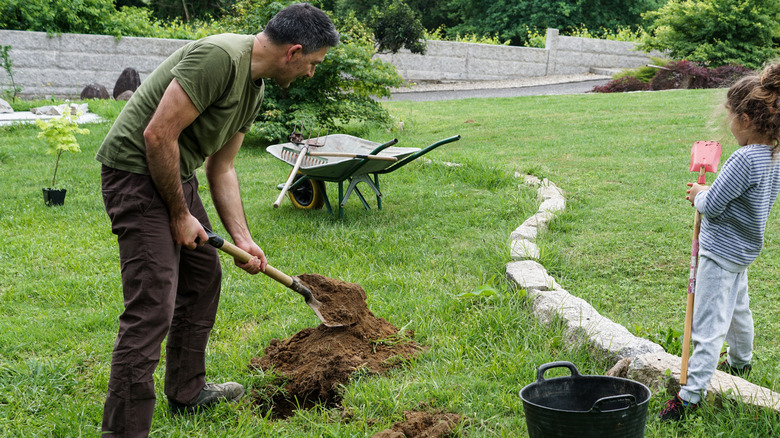
You have two options for testing your lawn's soil — a DIY soil test kit or submitting samples to a lab, such as your local university extension. You'll generally get a more accurate and comprehensive report from a lab, but DIY kits give you a quick and dirty read on the health of your lawn's soil. Whether you go the DIY route or submit your soil to a lab, the collection process is the same.
To get an accurate representation of the soil's health, collect samples from at least 15 areas, digging to a depth of 6 inches in each spot with a spade and shaving a slice off the side of the hole. Place the soil in a clean bucket and mix to combine. Preferably, the soil will be dry when you collect it. If not, allow it to dry before continuing. If you're sending the samples to a lab, place about one pint of soil in a sample bag, following the instructions of your local extension office. To test the soil with a DIY kit, follow the instructions on the kit.
Once you get your results, it's important to know what they mean. Lab results will tell you the pH, soil quality, amount of organic matter, and nutrient levels. It should also include recommendations for fertilizer and any amendments that may be needed, so you can choose the best lawn fertilizer.